London , United Kingdom – July 16, 2026
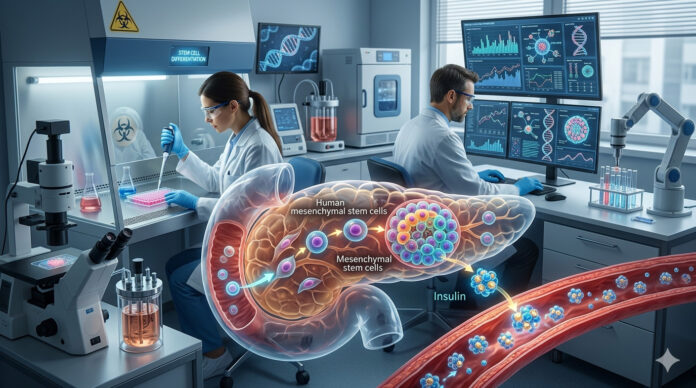
Stem Cell Therapy for Type 1 Diabetes has shown promising early results after researchers successfully restored insulin production in three patients whose insulin-producing beta cells had been completely destroyed. The findings represent an important step toward developing regenerative treatments for Type 1 diabetes, although researchers emphasize that larger clinical trials are still needed before the therapy can become part of routine medical care.
The study has been published in the peer-reviewed medical journal The Lancet Diabetes & Endocrinology.
Patients Showed Significant Improvement
Researchers treated three individuals with advanced Type 1 diabetes using two different stem cell-based approaches.
- One patient received insulin-producing cells developed from their own stem cells.
- Two patients received insulin-producing cells derived from donor stem cells.
Following the treatment, all three patients demonstrated:
- Improved blood glucose control.
- Signs of renewed insulin production.
- Better metabolic function compared with their condition before treatment.
The researchers reported that the results suggest transplanted cells were able to perform the role previously carried out by damaged pancreatic beta cells.
A Major Milestone in Diabetes Research
Type 1 diabetes develops when the body’s immune system destroys the insulin-producing beta cells located in the pancreas.
Without these cells, patients must rely on lifelong insulin therapy to regulate blood sugar levels.
Researchers say the new findings indicate that stem cell-derived beta cells may eventually provide an alternative approach by replacing the lost insulin-producing cells rather than simply managing the disease.
However, they cautioned that this remains an early-stage clinical study, and further research is required to confirm long-term effectiveness and safety.
Why Using a Patient’s Own Stem Cells Matters
One of the study’s notable achievements was the successful use of autologous stem cells—cells obtained from the patient’s own body—to generate insulin-producing cells.
According to the researchers, this approach may reduce the likelihood of:
- Immune rejection after transplantation.
- Dependence on donor tissues.
- Some complications associated with conventional transplant procedures.
If validated in larger studies, personalized stem cell therapies could improve compatibility between transplanted cells and individual patients.
Donor Stem Cells Also Showed Encouraging Results
The study also demonstrated positive outcomes in two patients who received insulin-producing cells generated from donor stem cells.
Researchers believe this suggests the therapy may be adaptable for different clinical situations, potentially providing treatment options for a broader group of patients.
Further investigations will be needed to determine which approach offers the best balance of effectiveness, safety, and long-term durability.
Experts Urge Caution
Although the results are encouraging, the research team stressed that the treatment should not yet be considered a standard therapy.
Before widespread clinical use, the therapy must undergo:
- Larger randomized clinical trials.
- Long-term safety evaluations.
- Regulatory review.
- Independent validation by additional research groups.
Scientists also need to determine how long the transplanted cells continue producing insulin and whether additional treatments may be required over time.
Potential Impact on Future Diabetes Care
If future clinical studies confirm these findings, stem cell therapy could represent a major advance in the treatment of Type 1 diabetes.
Potential future benefits may include:
- Restoration of natural insulin production.
- Improved blood sugar regulation.
- Reduced dependence on external insulin.
- Better quality of life for eligible patients.
Researchers emphasize that additional evidence is necessary before these outcomes can be confirmed in larger patient populations.
Study Highlights Growing Role of Regenerative Medicine
The study adds to a growing body of research exploring regenerative medicine as a potential treatment for chronic diseases.
By using stem cells to replace damaged or destroyed tissues, scientists hope to develop therapies that address the underlying cause of disease rather than only managing symptoms.
The latest findings provide encouraging evidence that stem cell technology may one day play an important role in treating Type 1 diabetes.