NEW YORK, August 18, 2026 —
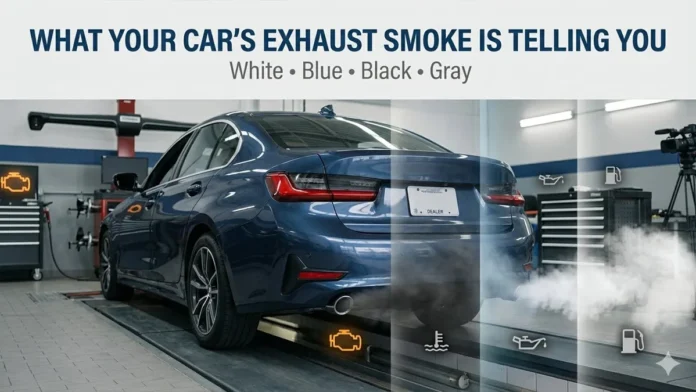
Car Exhaust Smoke Meaning can reveal more about your vehicle than many drivers realize. If your car has suddenly started producing noticeably more smoke from the exhaust or tailpipe, dismissing it as normal could eventually lead to an expensive repair.
The color of exhaust smoke can sometimes provide an early clue about what is happening inside the engine, even before a dashboard warning light appears.
White, blue, black and gray exhaust smoke can each be associated with different mechanical or combustion problems. However, smoke color alone cannot provide a final diagnosis. Drivers should also pay attention to engine temperature, oil level, coolant level, fuel economy, power loss and unusual noises.
In some situations, continuing to drive a vehicle that is producing heavy smoke could make an existing engine problem considerably worse.
White Exhaust Smoke: When Should You Worry?
A small amount of thin white vapor shortly after starting a vehicle can be completely normal, particularly in cold or humid weather.
Water vapor can accumulate in the exhaust system and become visible as the system heats up. It should normally disappear after the engine reaches operating temperature.
The concern begins when thick white smoke continues after the engine has warmed up.
Persistent dense white exhaust smoke can be associated with coolant entering the engine’s combustion chamber.
Possible causes may include:
- A damaged head gasket
- A cracked cylinder head
- Internal coolant leakage
- In some cases, damage elsewhere in the engine’s cooling system
Coolant entering the combustion chamber can contribute to engine overheating and potentially serious internal damage if the underlying problem is not addressed.
Drivers should also watch the coolant reservoir. If the coolant level continues dropping without an obvious external leak, an internal engine problem may need investigation.
White Smoke Plus Overheating Needs Immediate Attention
If thick white smoke appears together with an overheating warning, rising temperature gauge or rapidly declining coolant level, continuing to drive can be risky.
Allowing an overheated engine to continue running can increase the possibility of severe engine damage.
Blue Exhaust Smoke Usually Points Toward Burning Oil
Blue or blue-gray exhaust smoke commonly suggests that engine oil is entering the combustion process and being burned along with the fuel-air mixture.
Several mechanical problems can allow oil to reach the combustion chamber.
Possible causes include:
- Worn piston rings
- Damaged or deteriorated valve seals
- Cylinder wear
- Turbocharger oil leakage on turbocharged engines
- Other internal oil-control problems
One of the most useful accompanying clues is increased oil consumption.
If the engine repeatedly requires oil top-ups and blue smoke is visible from the exhaust, the vehicle should be inspected rather than simply continuing to add oil.
Why Burning Oil Can Become Expensive
Engine oil is designed to lubricate internal components, not to burn continuously inside the combustion chamber.
Excessive oil consumption can eventually contribute to:
- Reduced engine lubrication
- Increased internal wear
- Spark plug contamination
- Lower engine performance
- Exhaust and emissions-system damage
- Higher repair costs if the underlying fault becomes worse
A brief puff of blue smoke can also provide useful diagnostic information.
For example, smoke that appears mainly during startup may point technicians toward a different cause than smoke that appears continuously during acceleration.
Black Exhaust Smoke Can Mean Too Much Fuel Is Burning
Black exhaust smoke typically indicates that the engine may be running with an overly rich air-fuel mixture, meaning more fuel is being supplied than can be burned efficiently.
Possible causes include:
- Dirty or malfunctioning fuel injectors
- Faulty fuel-delivery components
- A clogged air filter
- Problems with a mass airflow sensor, or MAF sensor
- Other air-intake or engine-management faults
When too much fuel is being burned, drivers may also notice a sudden decline in fuel economy.
Black Smoke and Falling Mileage Can Be Connected
If black smoke appears at the same time as significantly lower mileage, rough running or a strong fuel smell, the vehicle’s fuel and air-management systems should be checked.
Ignoring excessive fuel consumption can increase running costs and may also place additional stress on engine and emissions components.
Modern cars use multiple sensors to continuously adjust the air-fuel mixture, so black smoke may require electronic diagnostics rather than a simple visual inspection.
What Does Gray Exhaust Smoke Mean?
Gray exhaust smoke can be more difficult to interpret because several different faults can produce a similar appearance.
Depending on the vehicle and engine design, possible causes may include:
- A malfunctioning PCV system
- Oil entering the combustion process
- Turbocharger problems
- Fluid leakage in certain vehicle designs
- Other internal engine or air-management faults
Gray smoke therefore often requires a broader mechanical inspection.
Watch for Power Loss Along With Gray Smoke
Drivers should pay closer attention if gray smoke appears together with:
- Sudden power loss
- Unusual engine noises
- Falling engine oil levels
- Poor acceleration
- Rough idling
- Warning lights
The combination of several symptoms is usually more informative than smoke color alone.
Do Not Diagnose an Engine Problem by Smoke Color Alone
Although exhaust color can be a useful warning sign, it should not be treated as a complete diagnosis.
Different engine designs, fuel types, outside temperatures and operating conditions can affect how exhaust appears.
Drivers should consider several additional warning signs.
Check Whether the Engine Is Shaking
Rough idling or unusual vibration may suggest that the combustion process is not operating correctly.
Check for Loss of Power
A noticeable reduction in acceleration or engine power can indicate that the issue is affecting combustion, airflow, fuel delivery or engine compression.
Watch the Temperature Gauge
If exhaust smoke is accompanied by overheating, the vehicle may have a cooling-system or internal engine problem that requires immediate attention.
Check Engine Oil and Coolant Levels
Repeatedly falling oil or coolant levels can help identify whether the smoke may be linked to fluid entering areas where it should not.
Notice Strong Fuel Smells
A strong gasoline or diesel smell together with dark exhaust smoke can indicate incomplete combustion or excessive fuel delivery.
When Should You Stop Driving?
Heavy exhaust smoke should not always be treated as a problem that can wait until the next scheduled service.
Consider stopping the vehicle if:
- Exhaust smoke becomes extremely thick
- Smoke continues constantly
- The engine begins overheating
- Engine power suddenly falls
- The oil-pressure warning light comes on
- Coolant is disappearing rapidly
- The engine begins making abnormal mechanical noises
If any of these symptoms appear, move the vehicle to a safe location when possible and shut down the engine.
What Should You Check First?
Once the engine is safely stopped and has had adequate time to cool, drivers can check basic fluid levels according to the vehicle owner’s manual.
Important checks include:
- Engine oil level
- Coolant level
- Visible leaks underneath the vehicle
- Dashboard warning lights
- Any unusual smell around the engine compartment
Never open a pressurized radiator or coolant cap while the engine is hot, because hot coolant and steam can cause serious burns.
If the problem cannot be identified safely, calling a qualified mechanic or roadside assistance service is usually better than continuing to drive.
A Small Smoke Warning Can Prevent a Large Repair Bill
Drivers often wait for a dashboard warning light before arranging an inspection, but the exhaust can sometimes provide an earlier clue that something is wrong.
Persistent white smoke may indicate a coolant-related problem, blue smoke can suggest burning engine oil, black smoke can point toward an overly rich fuel mixture, and gray smoke may involve several different mechanical systems.
The key is not to panic over every visible puff of exhaust but to recognize changes that are persistent, unusually heavy or accompanied by other warning symptoms.
Understanding Car Exhaust Smoke Meaning can help drivers identify those warning signs earlier and potentially prevent a relatively manageable problem from developing into major engine damage.
Quick Exhaust Smoke Guide
| Exhaust Color | What It May Indicate | Other Signs to Watch |
|---|---|---|
| White | Coolant entering combustion chamber | Overheating, falling coolant level |
| Blue | Engine oil burning | Falling oil level, increased oil consumption |
| Black | Excess fuel or poor air-fuel mixture | Lower mileage, fuel smell, rough running |
| Gray | Oil, PCV, turbo or other mechanical issue | Power loss, noise, oil consumption |
Useful Official Automotive Safety Links
For general vehicle safety information, recalls and owner guidance, drivers can use these official resources:
National Highway Traffic Safety Administration (NHTSA):
https://www.nhtsa.gov/
NHTSA Vehicle Recall Lookup:
https://www.nhtsa.gov/recalls
U.S. Environmental Protection Agency — Vehicle and Engine Information:
https://www.epa.gov/vehicle-and-engine-certification
Drivers should also consult their vehicle manufacturer’s official owner’s manual or authorized service center for model-specific guidance.