New Delhi/Jaipur, October 15, 2026 — International research professor and digital policy expert Prof. DP Sharma has written to Prime Minister Narendra Modi proposing a policy concept called “Digital India, Digital Protest.” The proposal calls for exploring ways to combine limited physical participation at demonstrations in Delhi with wider online and virtual engagement.
The idea aims to make democratic participation more accessible while reducing disruptions to emergency services, traffic, education and everyday economic activity. Sharma has suggested that the government examine the feasibility of a model that allows people across India and abroad to support public causes through live broadcasts, online participation and digital signatures.
The proposal is a recommendation submitted for consideration, not an announced government policy. Any implementation would require examination by the relevant authorities, public consultation and legal review.
What Is the ‘Digital India, Digital Protest’ Proposal?
Sharma argues that India’s growing digital capabilities could be used to expand opportunities for citizens to express their views and demonstrate public support for issues of concern.
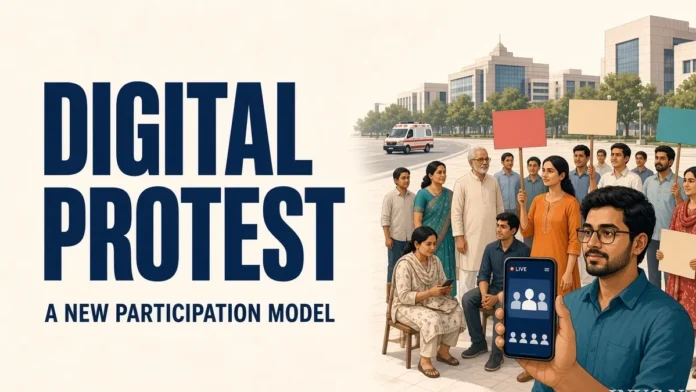
Under the proposed model, demonstrations at designated public grounds in the Delhi National Capital Region could combine an organised physical gathering with digital participation. He has suggested examining a physical attendance range of 100 to 500 people under normal circumstances.
The proposed number is an initial suggestion for feasibility studies, not a mandatory limit or a universal rule. The appropriate arrangements, if any, would depend on the nature of the demonstration, the venue’s capacity, safety considerations, traffic conditions and decisions by the competent authorities.
The concept would allow a demonstration’s objectives, principal demands and organisers’ details to be displayed at the site. Live internet broadcasts could enable people unable to attend in person to follow proceedings and participate remotely.
Other proposed options include online expressions of support, digital signatures and virtual engagement with the issues raised by demonstrators.
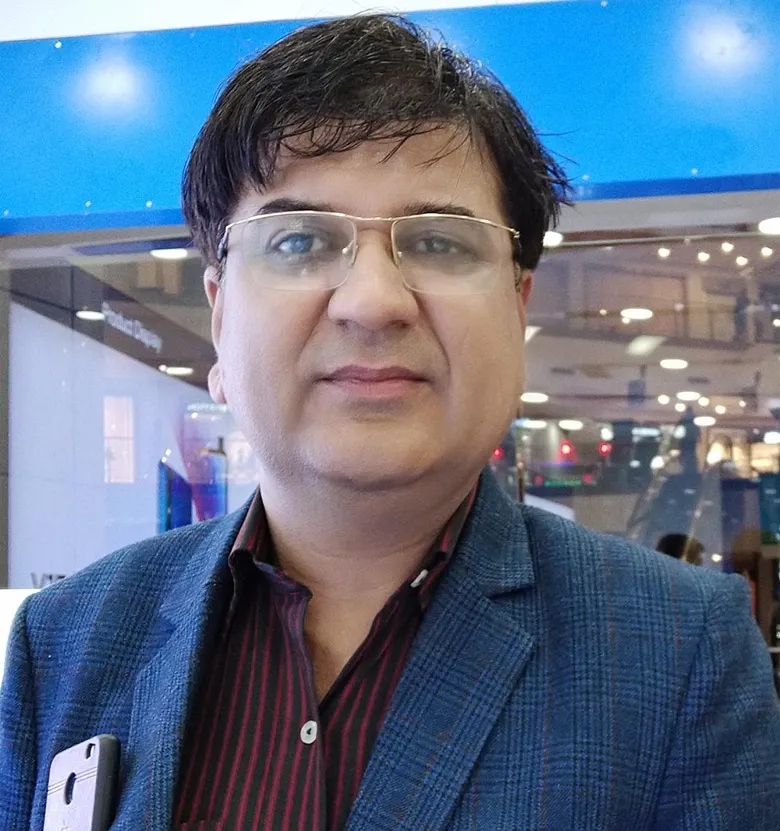
International Research Professor and Digital Policy Expert
Email: dp.shiv08@gmail.com
Why Has Sharma Proposed Digital Participation?
According to Sharma, large demonstrations can sometimes disrupt traffic and public services. In serious cases, blocked roads may delay ambulances and affect patients travelling to hospitals.
Traffic disruptions can also affect students, examinations, schools, colleges, universities, offices and commercial activity. Sharma argues that authorities should consider ways to reduce such effects while respecting citizens’ democratic rights.
His proposal calls for clear arrangements to protect emergency access, maintain ambulance routes and support the safe movement of students and other members of the public.
The broader objective is to explore whether digital tools can widen participation without requiring every supporter of a cause to be physically present at a protest site.
However, the effects of demonstrations vary by location, scale and circumstances. Digital participation would not, by itself, eliminate the need for traffic planning, emergency access arrangements or appropriate policing at physical gatherings.
Would Digital Protests Replace Street Demonstrations?
Sharma has explicitly said that digital participation should complement peaceful physical protests, not become a compulsory substitute for them.
This distinction is central to the proposal. Peaceful assembly and freedom of expression are protected under Article 19 of the Indian Constitution, subject to the applicable constitutional provisions and lawful restrictions.
A policy framework would therefore need to consider whether any proposed arrangements are proportionate, legally justified and consistent with constitutional protections. Digital participation should expand opportunities for civic engagement rather than become a means of excluding people from public demonstrations.
The practical details would also matter. Authorities and policymakers would need to consider accessibility for people with limited internet access, the reliability of digital participation systems, privacy protections, verification of online support and the risk of excluding communities that face technological barriers.
Digital signatures and online expressions of support can indicate participation, but their legal significance would depend on the context and the rules applicable to the particular process.
Sharma Calls for a Feasibility Study
Sharma has requested that the proposal be examined through consultations involving relevant Union ministries, the Delhi government, Delhi Police, emergency and healthcare professionals, educational institutions, civil society organisations, digital-rights specialists and legal experts.
Such a review could assess venue arrangements, crowd management, emergency access, digital infrastructure, accessibility and constitutional safeguards before any pilot model is considered.
It could also examine how online participation would be recorded, how organisers’ information would be presented and how public feedback could be gathered without compromising privacy or freedom of expression.
No implementation decision or official government response is established by the proposal itself.
The Larger Question: Can Technology Expand Democratic Participation?
The concept raises a wider policy question: can digital tools help citizens participate in public debates while making demonstrations easier to follow for people who cannot attend in person?
Live streams and online forums can broaden the reach of a public gathering. Digital participation may also help people with mobility constraints, work commitments or geographical limitations engage with an issue.
At the same time, online participation is not identical to physical assembly. A digital platform may widen access, but it cannot automatically reproduce the experience, visibility or collective presence of people demonstrating together in a public place.
Any workable model would therefore need to protect both forms of participation and avoid treating public order and democratic expression as competing objectives that can be resolved through technology alone.
What Happens Next?
The next step would be a formal assessment of the proposal by the relevant authorities, followed—if considered appropriate—by consultation with legal experts, protest organisers, civil society groups and public-service agencies.
Until such a process produces an official decision, the suggested attendance range and digital participation model remain proposals rather than binding rules.
The bottom line: Prof. DP Sharma’s “Digital India, Digital Protest” concept seeks to combine wider virtual participation with better planning for physical demonstrations. Its viability will depend on whether a practical model can protect peaceful assembly and free expression while improving emergency access, public safety and the day-to-day movement of citizens.