NEW DELHI, India | September 29, 2026 — The Congress SIR row escalated on Tuesday as the party demanded the resignations of Prime Minister Narendra Modi, Union Home Minister Amit Shah and Chief Election Commissioner Gyanesh Kumar. Its working committee also sought an immediate halt to the Special Intensive Revision of electoral rolls. With INDIA bloc leaders due to meet on Wednesday, the dispute now moves toward a decision on a joint opposition campaign. For voters, the central questions concern transparency over changes to electoral rolls and opportunities to challenge exclusions.
INVC NEWS | BEYOND THE HEADLINE
What happened. Why it matters. What comes next.
THE 60-SECOND BRIEF
- Congress demanded the resignations of PM Modi, Amit Shah and CEC Gyanesh Kumar.
- The party sought suspension of SIR and restoration of names it alleges authorities wrongly removed.
- Kharge called for disclosure of voter-list changes and meaningful opportunities to appeal.
- INDIA bloc leaders will meet in Delhi on September 30 to discuss their response.
- The Election Commission has previously defended its procedures, while the BJP has rejected the opposition’s allegations.
What Happened
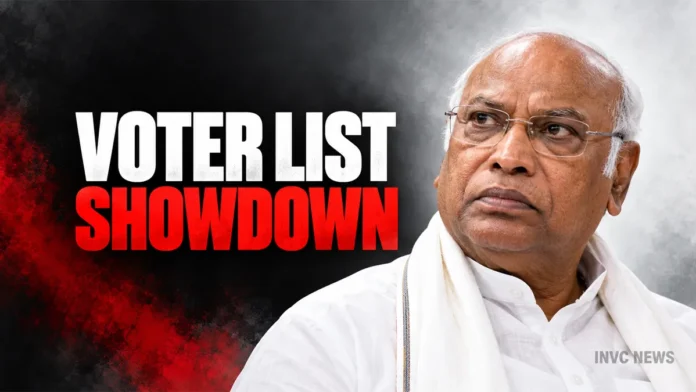
The Congress Working Committee adopted its position after a meeting in New Delhi on Tuesday. Party president Mallikarjun Kharge accused the government and the Chief Election Commissioner of undermining the independence of the electoral process.
Congress leaders KC Venugopal and Jairam Ramesh subsequently outlined the party’s demands. They linked the resolution to Rahul Gandhi’s campaign alleging irregularities in electoral rolls and election administration.
However, these remain allegations that the party must substantiate. The resolution does not itself establish electoral manipulation or change the status of the officials Congress wants to leave office.
The immediate development is political: Congress has expanded its demands and will seek support from its opposition partners.
Why It Matters for Voters
The dispute concerns the records that determine who appears on electoral rolls, how officials make changes and how affected citizens can question those decisions.
Consequently, the most practical issues extend beyond resignation demands. Voters need clear information about changes affecting their entries, the reasons behind those changes and the process for seeking corrections.
Congress argues that greater disclosure would help citizens and political parties examine the revision exercise. Meanwhile, the Election Commission maintains that its procedures follow established requirements.
Neither position settles every disputed case. Evidence about individual entries, decision-making and the handling of objections will remain important as the controversy develops.
What Congress Wants Disclosed
Kharge set out five transparency demands during his address.
First, he sought public access to data on major changes to voter lists. Second, he demanded complete information and an opportunity to appeal for people whose names authorities removed.
Third, he called for political parties to receive electoral rolls and related information promptly in accessible formats.
Fourth, he sought independent, time-bound investigations into serious discrepancies. Finally, he demanded greater transparency in election-related decisions and data.
These proposals accompany the party’s broader demands for suspension of SIR and changes in leadership.
What the Election Commission and BJP Say
The Election Commission has previously said the relevant SIR decisions reflected unanimous agreement within the panel. It has also described operational questions raised by commissioners as part of normal institutional deliberations and defended its established procedures.
Congress disputes that explanation and has continued to question how the commission reached particular decisions.
Separately, BJP leader J.P. Nadda rejected Rahul Gandhi’s allegations in the wider controversy and accused the opposition of targeting constitutional institutions.
Those positions predate Tuesday’s CWC resolution. They should not be treated as fresh, detailed responses to every demand Congress announced after the meeting.
Numbers That Matter
- September 29: Congress adopted its latest position at the CWC meeting.
- September 30: INDIA bloc leaders are due to discuss their joint response.
- Five: Transparency demands Kharge outlined concerning electoral data, appeals and scrutiny.
The next political milestone is therefore close. However, a meeting announcement does not establish that every opposition party has accepted the same demands or protest strategy.
The Bigger Picture
The competing arguments raise two distinct questions: whether officials followed proper procedures and whether particular changes wrongly excluded eligible voters.
Internal disagreement alone does not prove electoral wrongdoing. Equally, a general assurance about procedure cannot resolve every specific complaint.
For public confidence, the quality of the evidence and the clarity of the answers matter. That includes explaining disputed changes and showing how the system handles challenges.
What Happens Next
Wednesday’s INDIA bloc meeting will indicate whether Congress can turn its demands into a coordinated opposition campaign. Leaders are expected to consider their response to alleged electoral irregularities, including the possibility of nationwide action.
Further explanations from the Election Commission and responses from the government or BJP could also shape the debate.
INVC NEWS Bottom Line
Congress has raised the stakes by demanding the departure of the Prime Minister, Home Minister and Chief Election Commissioner. Tomorrow’s opposition meeting will test support for its next move. For voters, the essential issue remains concrete: whether electoral records are accurate, decisions are transparent and genuine mistakes receive an effective remedy.