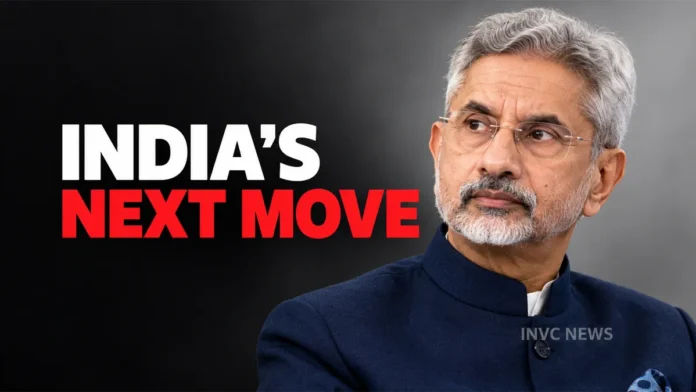
NEW YORK, United States | September 29, 2026 — S. Jaishankar’s assessment of the Trump–Xi meeting puts India’s choices at the center of a changing global trade landscape. Speaking at an Asia Society event on Monday, India’s external affairs minister said Washington and Beijing remain competitors despite areas of agreement. He emphasized reducing risks and diversifying partnerships. For Indian businesses, the practical question is whether closer US–China engagement changes competitive conditions while New Delhi pursues its own trade negotiations with Washington.
INVC NEWS | BEYOND THE HEADLINE
What happened. Why it matters. What comes next.
THE 60-SECOND BRIEF
- Jaishankar said US–China cooperation has limits despite their leaders’ engagement.
- He stressed the importance of wider partnerships and reducing dependence.
- His comments came in New York on September 28.
- India continues separate trade negotiations with the United States.
- Exporters need confirmed terms and implementation dates before assessing commercial benefits.
What Happened
Jaishankar offered his assessment after US President Donald Trump and Chinese President Xi Jinping met in Washington.
“There are limits to what the two of them can agree upon vis-a-vis the rest of the world,” he said.
He described a competitive relationship in which other countries must continue making their own arrangements. His emphasis was on finding partners, managing exposure and extracting greater value from existing relationships.
That approach suggests continued engagement across several relationships rather than dependence on the outcome of a single summit.
Why It Matters for Indian Businesses
Changes in US–China trade terms can affect the competitive environment in which Indian exporters operate.
If particular Chinese products receive improved access to the American market, Indian suppliers selling comparable goods may need to reassess their pricing and market position. However, that effect depends on the products covered, the size of the tariff change and when the rules take effect.
Therefore, a broad announcement cannot establish that every Indian exporter gains or loses.
Businesses also consider production costs, delivery reliability, quality and customer relationships. Tariffs matter, but they form only one part of a buyer’s decision.
The immediate task is to examine confirmed product-level changes rather than treat diplomatic warmth as a complete commercial reset.
What the US–China Agreement Covers
Washington and Beijing have announced plans for reciprocal tariff reductions covering approximately $60 billion in goods, divided between the two countries.
The plans concern selected non-sensitive products. They do not amount to a comprehensive settlement of the economic and strategic competition between the two powers.
Reporting has also highlighted uncertainty over implementation timing. Consequently, the value of goods covered should not be confused with an equivalent amount of tariff savings.
For companies, the operative details will be the final rates, eligible products and effective dates.
Where India–US Trade Talks Stand
India’s negotiations with Washington remain a separate process.
Commerce and Industry Minister Piyush Goyal’s announced US visit runs from September 29 to October 5. The government has said he will hold bilateral discussions and participate in the G20 trade ministers’ meeting in Wisconsin.
The visit aims to advance the proposed bilateral trade agreement and work toward an interim arrangement.
Those objectives indicate continuing negotiations. They do not establish that the two countries have signed a final agreement or activated new tariff concessions.
Security Concerns Also Shape the Relationship
Jaishankar separately argued that partners’ understanding of India’s concerns about cross-border terrorism affects bilateral ties.
His remarks underline the broader setting for India–US engagement. Commercial negotiations take place alongside security priorities and differences in diplomatic judgment.
Progress on trade would therefore address an important part of the relationship, while other concerns could continue to require discussion.
The Bigger Picture: What Diversification Means
Diversification gives a country or business more options when one market, supplier or route becomes difficult to use.
For an exporter, that can mean developing customers in additional markets. For a manufacturer, it can mean qualifying alternative suppliers. At the national level, it involves maintaining a wider range of economic and diplomatic partnerships.
These choices can reduce exposure to sudden disruption, although they also require investment, time and commercially viable alternatives.
Jaishankar’s emphasis on managing risk reflects that challenge: countries must preserve opportunities while preparing for changes they cannot control.
What Happens Next
Watch for specific outcomes from India’s US trade discussions and formal implementation details from the US–China announcements.
Indian exporters will need to compare actual tariff schedules and product coverage. Diplomatic statements can indicate direction, but operating rules determine the commercial effect.
Further engagement will also show whether the two largest economies can expand cooperation while managing their continuing disagreements.
INVC NEWS Bottom Line
Jaishankar’s message leaves India focused on its own negotiations and wider partnerships. For Indian businesses, the decisive developments will be concrete market-access terms, reliable supply relationships and effective dates. A summit can change expectations; implemented agreements change trading conditions.