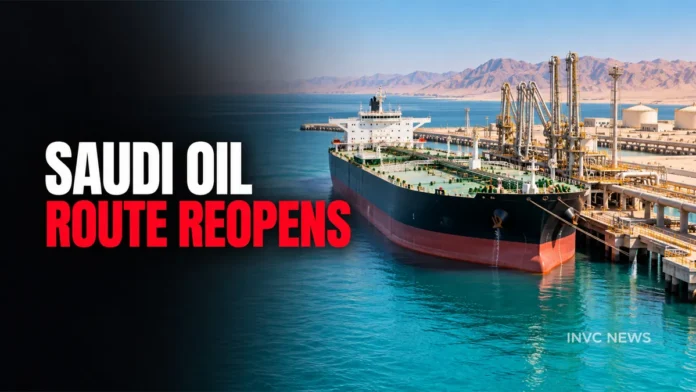
SINGAPORE, Singapore | September 29, 2026 — Saudi Arabia has resumed Yanbu oil exports following the restart of its East-West Pipeline, according to trade sources and shipping data, restoring an important alternative to the Strait of Hormuz. The development offers oil buyers a concrete supply improvement as regional disruption continues to unsettle markets. However, renewed loading does not establish a full recovery. For India and other importing economies, the next test is whether the route can deliver sustained volumes at manageable transport costs.
INVC NEWS | BEYOND THE HEADLINE
What happened. Why it matters. What comes next.
THE 60-SECOND BRIEF
- Oil loading has resumed at Saudi Arabia’s Red Sea export hub of Yanbu.
- The East-West Pipeline carries crude across the kingdom, allowing these exports to bypass Hormuz.
- Tuesday’s reporting describes a recovery already underway, rather than a restart announced that afternoon.
- Pipeline throughput and tanker exports measure different stages of the supply chain.
- More dependable shipments could ease supply pressure, but Indian retail fuel prices will not automatically fall.
What Happened
The return of tanker loading follows efforts to restore flows through Saudi Arabia’s East-West Pipeline.
Earlier reporting had distinguished between restarting the pipeline and resuming exports. That distinction matters: moving crude toward the coast does not necessarily mean a ship has loaded it and departed.
The latest reports indicate progress at the export stage. Consequently, buyers now have evidence of renewed loading as well as the pipeline restart.
However, the available reporting does not establish that the route has recovered its full pre-disruption operating level.
Why Yanbu Matters
Yanbu sits on Saudi Arabia’s Red Sea coast. The East-West Pipeline connects that coast with the kingdom’s eastern oil-producing region.
This gives Saudi Arabia an export option that avoids sending the same cargo through the Strait of Hormuz.
That flexibility becomes especially valuable when disruption affects Gulf shipping. It allows exporters to use another route rather than depend entirely on passage through one chokepoint.
Nevertheless, an alternative route still needs functioning infrastructure, available tankers and a viable onward voyage. Moving oil to the Red Sea changes the shipping route; it does not eliminate every regional transport risk.
Numbers That Matter
Kpler estimates current pipeline throughput at approximately 2.65 million barrels per day and projects a possible increase to 3 million–4 million barrels per day in the coming days.
Those figures describe pipeline flows. They should not be presented as identical to completed tanker exports or deliveries received by overseas refiners.
The projected increase also remains a forecast. Actual throughput will show whether the recovery advances as expected.
Could This Bring Relief to India?
A more reliable flow of crude can help importing economies by improving supply options and reducing uncertainty.
For Indian refiners, however, the relevant cost extends beyond the headline oil price. Freight, insurance, currency movements, crude quality and contractual terms all influence the expense of securing a cargo.
Therefore, resumed exports provide a favorable supply development without guaranteeing an immediate reduction in India’s import bill.
The effect will depend partly on the scale and durability of the recovery—and whether problems elsewhere offset the additional availability.
Why Petrol and Diesel Will Not Automatically Become Cheaper
A tanker loading at Yanbu is one step in a longer chain.
Crude must reach a refinery, undergo processing and move through distribution networks before it becomes fuel available to consumers. Retail pricing also reflects factors beyond the purchase price of that particular cargo.
As a result, the resumption does not establish a date or amount for a petrol or diesel price cut.
For households and businesses, the meaningful developments would be a sustained improvement in procurement costs and an actual change in domestic fuel prices.
The Bigger Picture
Oil markets continue to weigh improving export flows against uncertainty surrounding the wider regional conflict.
Additional shipments can reduce concerns about physical shortages. At the same time, complicated transport arrangements can keep costs elevated even when more barrels reach the market.
That explains why a supply recovery and continuing price pressure can exist together.
The strongest signal would be repeated, dependable deliveries through functioning routes. One loading update cannot establish that the wider energy disruption has ended.
What Happens Next
Three developments will help show whether the improvement lasts.
First, pipeline throughput needs to remain stable and increase. Second, tanker loading and departures need to continue. Third, buyers need to receive cargoes without fresh delays that undermine the benefit.
Shipping and insurance conditions will also influence how much of the operational recovery translates into lower delivered costs.
INVC NEWS Bottom Line
Yanbu’s return gives Saudi Arabia a valuable route around Hormuz and offers oil buyers a tangible sign of improving supply. The next question is delivery at scale. Sustained shipments would matter more to importing economies than the restart alone—and consumer fuel-price relief would require further changes.