Washington, D.C., United States | July 17, 2026
Trump Visa Restrictions have been expanded under a new immigration policy announced by the Trump administration, introducing additional visa bans on foreign nationals accused of supporting designated violent organizations or related activities.
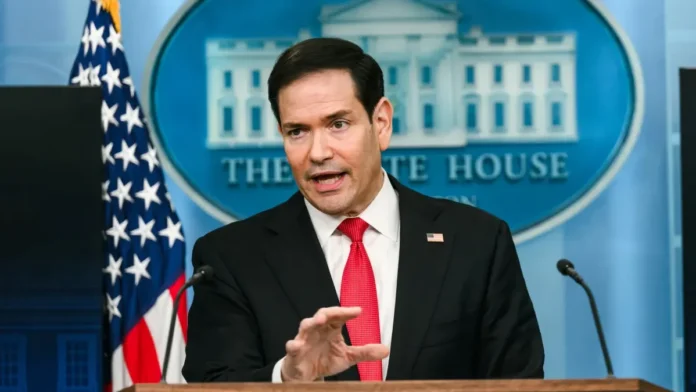
The announcement came as U.S. Secretary of State Marco Rubio opened a ministerial meeting attended by representatives from more than 60 countries. According to the State Department, the meeting focuses on strengthening international cooperation to address the re-emergence of politically motivated terrorism and improve cross-border law enforcement coordination.
The administration says the new visa restrictions are intended to strengthen U.S. national security by preventing individuals linked to violent extremist activities from entering the United States.
Who Could Face the New Visa Restrictions?
According to a statement released by the U.S. Department of State, the policy authorizes visa restrictions against foreign nationals who are alleged to have:
- Supported or encouraged terrorist activities.
- Backed violent criminal acts.
- Provided financing, recruitment, or logistical assistance to groups the administration has designated as violent terrorist organizations or affiliated networks.
- Assisted in coordinating violent activities through such organizations.
The administration said these measures are designed to close immigration pathways that could be exploited by individuals considered security threats.
Marco Rubio Says National Security Is the Priority
Secretary of State Marco Rubio said protecting American citizens remains the government’s foremost responsibility.
He stated that foreign nationals who finance, recruit for, encourage, or otherwise assist violent extremist or terrorist organizations will not be permitted to enter the United States.
Rubio added that the new policy is intended to prevent such groups from using U.S. immigration channels to threaten public safety, undermine economic stability, or coordinate violent activities on American soil.
The visa restrictions are being implemented under Section 212(a)(3)(C) of the Immigration and Nationality Act, which allows the government to deny entry to certain foreign nationals on foreign policy grounds.
Global Counterterrorism Meeting Brings Together More Than 60 Countries
The announcement coincided with a ministerial conference hosted by the U.S. State Department, where officials from governments across the Western Hemisphere, Europe, and Asia gathered to discuss international counterterrorism cooperation.
According to the State Department, participating governments aim to:
- Improve intelligence sharing.
- Strengthen mechanisms for exchanging security information.
- Prevent terrorist travel across international borders.
- Expand international law enforcement cooperation against transnational extremist networks.
The meeting reflects broader efforts to address evolving security challenges through multinational partnerships.
Rubio Calls for Broader Counterterrorism Strategy
During the conference, Rubio argued that counterterrorism efforts should address all forms of politically motivated violence.
He said governments must recognize emerging security threats and continue strengthening counterterrorism frameworks to respond effectively.
Rubio also announced that the United States has already designated four violent extremist organizations as Foreign Terrorist Organizations (FTOs) under current U.S. law.
According to Rubio, the administration has also authorized Rewards for Justice offers of up to $10 million for information that disrupts financing networks supporting those organizations.
He added that additional designations could be announced in the future.
White House and Treasury Outline Enforcement Measures
White House Deputy Chief of Staff Stephen Miller said National Security Presidential Memorandum-7 directs federal law enforcement and intelligence agencies to work together to identify, investigate, disrupt, and prosecute networks involved in politically motivated violence.
Meanwhile, Treasury Secretary Scott Bessent said the Treasury Department will use:
- Financial sanctions.
- Anti-money laundering measures.
- Financial intelligence tools.
to target networks suspected of supporting violent activities.
Bessent emphasized that enforcement actions will be based on suspected criminal conduct rather than political ideology.
State Department Highlights International Cooperation
According to a State Department fact sheet, participating governments agreed to strengthen cooperation by:
- Sharing intelligence more effectively.
- Preventing suspected terrorists from traveling internationally.
- Expanding cooperation against transnational extremist organizations.
- Enhancing cross-border investigations into financial support networks.
Officials said international coordination remains essential because many extremist organizations operate across multiple jurisdictions.
Immigration Policy Linked to Broader Security Strategy
The administration said the expanded visa restrictions form part of a broader national security strategy that combines:
- Immigration enforcement.
- Counterterrorism operations.
- Financial sanctions.
- Intelligence sharing.
- International law enforcement cooperation.
Officials argue that integrating these tools will improve the government’s ability to respond to evolving security threats while protecting U.S. borders.
Policy Reflects Ongoing Focus on Border and National Security
The latest measures continue the Trump administration’s emphasis on tightening immigration controls alongside expanded counterterrorism initiatives.
Officials say the policy is intended to prevent foreign nationals accused of supporting violent organizations from entering the United States while reinforcing partnerships with allied governments to counter international extremist networks.
The administration has indicated that additional enforcement actions and organizational designations may follow as part of its continuing national security agenda.