BENGALURU, India | September 2, 2026 —
Simple Wave electric scooter launch today brings a new challenger into India’s booming family electric-scooter market as Bengaluru-based Simple Energy expands beyond its performance-focused One lineup with a more practical everyday EV.
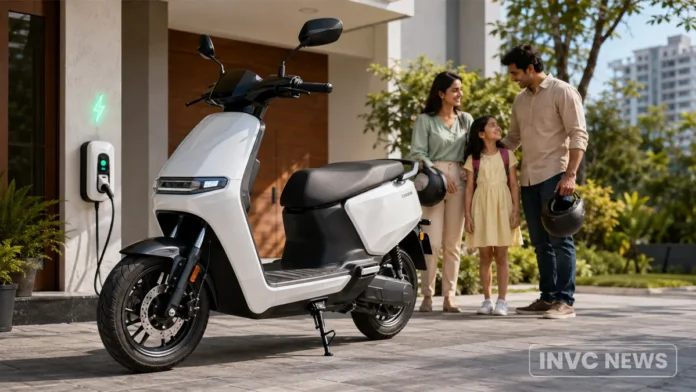
Simple Energy has positioned the Wave around family use, storage, comfort and urban commuting rather than outright performance alone.
The company’s official product information now reveals three versions — Simple Wave+, Simple Wave and Simple Wave S — with claimed IDC ranges stretching from 132 km to 243 km.
The top Wave+ can reach 90 km/h, accelerate from 0-40 km/h in 3.3 seconds and offer as much as 70 litres of storage, giving Simple Energy a direct entry into the practical scooter battle currently dominated by names such as Ather Rizta, TVS iQube, Bajaj Chetak and Ola’s electric lineup.
Simple Wave Launches Into India’s Family EV Battle
Simple Energy built much of its earlier identity around performance and long-range electric scooters.
The Wave changes that strategy.
Instead of focusing primarily on riders looking for sporty acceleration and headline performance numbers, Simple Energy is targeting households that want one electric scooter for office commutes, grocery runs, school trips and routine city travel.
That approach places the Wave in one of India’s most competitive two-wheeler categories.
Family scooters succeed when they combine comfortable seating, usable floorboard space, storage, predictable range and manageable running costs.
Simple Energy now wants to compete directly on those factors.
Three Simple Wave Variants Revealed
The official lineup includes three versions.
Simple Wave+
The Simple Wave+ sits at the top of the range.
It offers:
Up to 243 km IDC range
90 km/h top speed
0-40 km/h in 3.3 seconds
It also receives the broadest colour selection and targets buyers who want maximum range without moving into the more performance-oriented Simple One family.
Simple Wave
The standard Simple Wave delivers:
Up to 171 km IDC range
90 km/h top speed
0-40 km/h in 3.3 seconds
This version could become the volume model if Simple Energy prices it aggressively.
A 171 km claimed range places it comfortably above the daily commuting requirement of most urban users.
Simple Wave S
The entry-level Simple Wave S offers:
Up to 132 km IDC range
75 km/h top speed
0-40 km/h in 4 seconds
The lower performance figures clearly show that Simple Energy designed this version around cost-conscious city commuting rather than speed.
70-Litre Storage Could Become Wave’s Biggest Weapon
One specification immediately stands out.
Simple Energy lists storage capacity of up to 70 litres for the Wave family.
Storage has become one of the biggest battlegrounds in India’s electric-scooter market.
Family buyers want enough room for helmets, bags, groceries, charging cables and everyday items.
That requirement gives practical scooters an advantage over machines designed mainly around sporty styling.
If the usable storage matches the headline figure in real-world conditions, the Wave could offer one of the strongest utility propositions in its segment.
243 Km Range Raises the Stakes
The top-spec Wave+ claims up to 243 km of IDC range.
IDC figures come from controlled testing conditions, so actual riding range will vary according to speed, traffic, rider weight, weather, terrain and riding mode.
Still, a claimed figure above 200 km gives Simple Energy a powerful marketing advantage.
Range anxiety remains one of the biggest concerns among buyers shifting from petrol scooters to electric vehicles.
A larger usable battery range can reduce the frequency of charging and make longer daily journeys easier.
Simple Wave Targets Ather Rizta
The Ather Rizta represents one of the Wave’s most obvious competitors.
Ather deliberately designed the Rizta as a family scooter rather than another sporty 450-series machine.
Simple Energy is now following a similar market logic.
Both brands want buyers who prioritise practicality while still expecting connected technology and strong electric performance.
The final battle will depend heavily on price, actual range, charging convenience, service coverage and long-term reliability.
Bajaj Chetak Brings Brand Power
The Wave must also compete with the Bajaj Chetak.
Chetak carries one of India’s most recognisable scooter names and benefits from Bajaj Auto’s established presence.
Its combination of conventional scooter styling, metal-bodied variants and expanding retail reach makes it a formidable rival.
Simple Energy cannot rely on range figures alone.
It will need to convince buyers that servicing, spare parts and ownership support can match larger competitors.
TVS iQube Remains a Major Rival
TVS has turned the iQube into another major family-electric-scooter player.
TVS benefits from a vast dealership and service network that newer EV companies are still trying to build.
That means Simple Energy’s product specifications may attract buyers online, but physical retail and after-sales availability could ultimately decide conversions.
The company has been expanding its dealer network across Indian cities as it prepares for broader growth.
Wave Design Focuses on Everyday Use
The Wave uses a more conventional family-scooter design than Simple Energy’s earlier products.
The scooter gets a broad seat, practical floorboard and upright riding position.
That should make it easier for riders to use the scooter for daily commuting rather than treating it as a niche enthusiast product.
The design also avoids excessively futuristic styling.
That decision could help Simple Energy appeal to traditional petrol-scooter owners considering their first EV.
Digital Features Will Matter
Indian EV buyers increasingly expect connected technology even on practical scooters.
The Wave family uses a digital instrument interface, while connected features are expected to form part of the broader ownership package.
Navigation, smartphone connectivity, ride information and vehicle monitoring have become common selling points across premium electric scooters.
However, Simple Energy will need to ensure that software remains stable and useful.
A long feature list means little if the app or connected functions fail during everyday use.
Charging Network Becomes Another Key Factor
Simple Energy says its charging ecosystem now includes hundreds of charging points spread across more than 100 cities.
Charging availability can influence EV purchase decisions almost as strongly as battery range.
Many scooter owners primarily charge at home, but public charging provides valuable backup during longer journeys or unexpected usage.
The company will need to keep expanding that network as Wave sales increase.
Price Will Decide Whether Wave Becomes a Hit
The most important number for Indian buyers remains the final price.
Before launch, market estimates broadly placed the new family scooter around the ₹1.30 lakh region, but prospective buyers should treat unofficial price estimates cautiously until Simple Energy formally confirms variant-wise pricing.
The difference between ₹1.20 lakh, ₹1.30 lakh and ₹1.50 lakh can completely change the competitive equation.
At the lower end, the Wave could aggressively target mainstream family EV buyers.
At a significantly higher price, buyers will compare it more closely with established rivals offering stronger service networks.
EV Competition Is Getting Fiercer
India’s electric two-wheeler market has evolved rapidly.
Consumers can now choose among products from:
TVS
Bajaj Auto
Ather Energy
Ola Electric
Simple Energy
and several emerging manufacturers.
The market has consequently moved beyond the stage where simply offering an electric scooter guarantees attention.
Buyers now compare battery warranties, range, charging speed, boot space, software, reliability and resale confidence.
Should Buyers Wait Before Booking?
The Wave looks promising on paper, especially for buyers who want range and storage.
However, consumers should compare the final ex-showroom price, warranty terms and variant equipment before booking.
They should also check whether Simple Energy operates an authorised showroom and service centre in their city.
A test ride will matter because family scooters depend heavily on seat comfort, suspension quality, low-speed balance and pillion usability.
Those factors cannot be judged from specifications alone.
Simple Energy Makes Its Biggest Mainstream Push
The Simple Wave electric scooter launch today represents an important change in strategy for Simple Energy.
The company is no longer competing only for performance-focused EV buyers.
It now wants a place in Indian family garages.
With up to 243 km claimed IDC range, up to 70 litres of storage and three distinct variants, the Wave brings serious specifications into the segment.
But India’s family scooter market is unforgiving.
Ather, Bajaj and TVS already have strong products and expanding networks.
Simple Energy has therefore supplied the Wave with the numbers needed to grab attention.
The final price and real-world ownership experience will determine whether that attention turns into meaningful sales.