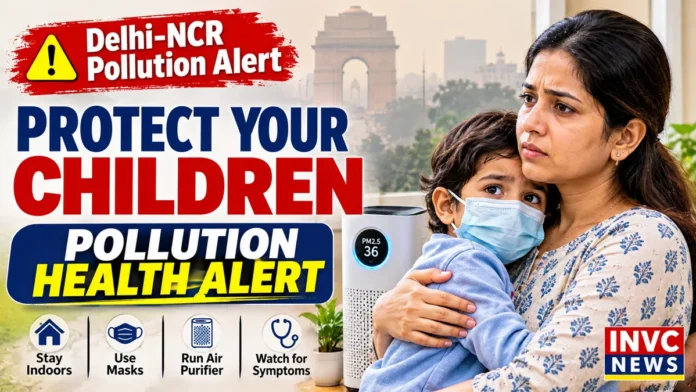
New Delhi | November 9, 2026 : The celebrations of Diwali may be over, but the health concerns surrounding the festival are far from over for families in Delhi-NCR. A sharp deterioration in air quality following the festival has raised concerns about the health of infants and young children, whose developing lungs make them particularly vulnerable to air pollution. Parents are increasingly limiting outdoor activities, keeping children indoors and using air purifiers to reduce their exposure to polluted air.
With pollution levels reaching the Very Poor category in Delhi, doctors are urging families to take preventive measures rather than wait for symptoms to appear. Persistent coughing, breathing difficulties and respiratory infections are among the concerns being reported by healthcare professionals.
The key question for parents is whether keeping children indoors and running an air purifier is enough. Medical experts say that reducing exposure requires a combination of precautions, including monitoring air quality, improving indoor air conditions and seeking medical attention when warning signs appear.
Why Are Children More Vulnerable to Air Pollution?
Children are particularly sensitive to polluted air because their lungs and respiratory systems are still developing. They also breathe more air relative to their body weight than adults, which can increase their exposure to airborne pollutants.
Fine particulate matter, especially PM2.5, can penetrate deep into the respiratory system. Exposure to polluted air can irritate the airways, trigger coughing and wheezing, aggravate asthma and worsen existing respiratory conditions.
According to the Ministry of Health and Family Welfare’s National Centre for Disease Control (NCDC), children below five years of age are among the population groups particularly vulnerable to the health effects of air pollution.
Infants, toddlers and children with asthma, allergies or other respiratory conditions need additional protection during periods of elevated pollution.
Pediatrician Warns Parents About Rising Respiratory Problems
Pediatrician Dr. Gargi Mathur has highlighted the growing respiratory concerns among children following the deterioration in air quality.
In comments reported by Aaj Tak on November 9, Dr. Mathur said doctors had observed an increase in respiratory complaints, including persistent coughing and chest infections, over the previous week.
She advised parents not to send children outdoors to play when AQI levels are high. Small pollution particles can enter the lungs through breathing and contribute to respiratory problems.
Dr. Mathur also recommended using air purifiers, appropriate masks when necessary and extra precautions for children with existing allergies or asthma.
8 Essential Ways to Protect Children From Air Pollution
1. Avoid Outdoor Play When AQI Levels Are High
One of the most important precautions is to reduce children’s exposure to polluted outdoor air.
Avoid sending children to parks, playgrounds or open spaces when air quality is Poor, Very Poor or Severe. Outdoor sports, running, cycling and strenuous physical activities should also be postponed until conditions improve.
Parents should check the local AQI before planning school journeys, outdoor activities or family outings.
2. Use an Air Purifier in Children’s Rooms
Outdoor pollution can also enter homes, affecting indoor air quality. An air purifier may help reduce airborne particles, particularly in rooms where children spend most of their time.
Dr. Mathur recommends using an air purifier suited to the size of the room and prioritizing the space where the child sleeps or spends the most time.
A few precautions are important:
- Choose a purifier with an effective particle filtration system, such as HEPA filtration.
- Select a model suitable for the room’s size.
- Keep its filters clean and replace them according to the manufacturer’s instructions.
- Avoid ozone-generating air purification devices.
An air purifier can reduce indoor particle pollution, but it cannot eliminate every pollutant or replace other protective measures.
3. Keep Indoor Air Free From Smoke
Parents should pay particular attention to indoor pollution, especially when outdoor air quality is poor.
Avoid smoking inside the house and reduce the use of incense sticks, camphor, mosquito coils and other products that release smoke.
Cooking fumes can also affect indoor air quality. Avoid unnecessary activities that generate smoke and use appropriate kitchen ventilation when conditions permit.
The objective is to create a cleaner indoor environment where children can spend time with less exposure to harmful particles.
4. Keep Windows and Doors Closed During Pollution Peaks
When outdoor pollution is particularly high, keeping windows and doors closed can help reduce the entry of polluted air.
However, homes also need appropriate ventilation. India’s NCDC air pollution advisory recommends avoiding the opening of external doors and windows during morning and late-evening pollution peaks on Poor-to-Severe AQI days. If ventilation is necessary, the advisory suggests considering the afternoon period between noon and 4 PM, depending on local air quality.
Parents should check pollution levels before opening windows and use air conditioning in recirculation mode where appropriate.
5. Take Extra Care of Babies and Infants
Newborns and infants require special attention because their respiratory systems are still developing and they cannot communicate breathing discomfort clearly.
Parents should:
- Keep babies away from balconies, busy roads and outdoor smoke.
- Avoid taking infants outside unnecessarily during severe pollution.
- Maintain a clean indoor environment.
- Keep babies away from smoking, incense and mosquito-coil fumes.
- Contact a pediatrician if the baby develops coughing, unusual breathing patterns or feeding difficulties.
Important: Do not put masks or respirators on babies and young infants. For older children, ask a pediatrician whether a properly fitting respirator is appropriate for their age and health condition.
6. Use Appropriate Masks When Outdoor Exposure Is Unavoidable
Sometimes children may need to leave home for school, medical appointments or other essential reasons.
Dr. Mathur has recommended good-quality N95 or N99 masks to help reduce exposure to airborne particles.
However, a mask must fit properly to provide meaningful protection. Loose-fitting masks, cloth coverings and scarves do not offer equivalent filtration.
Mask use in children depends on age, fit and individual health needs. It should never be treated as a substitute for avoiding unnecessary exposure. Infants should not wear masks.
7. Pay Special Attention to Children With Asthma and Allergies
Children who already have asthma, allergies, sinus problems or respiratory sensitivities may be more vulnerable during periods of high pollution.
Parents should keep prescribed medicines and inhalers available and follow the treatment plan provided by their child’s doctor.
Do not change medication doses or begin new treatments without medical advice.
If a child develops more frequent coughing, wheezing or breathing discomfort, contact a healthcare professional promptly.
8. Watch for Warning Signs and Seek Medical Help
Parents should not ignore symptoms that appear or worsen during periods of high air pollution.
Watch for:
- Persistent coughing
- Wheezing or noisy breathing
- Shortness of breath
- Chest discomfort or tightness
- Unusual tiredness or reduced activity
- Eye, nose or throat irritation
Seek urgent medical care if a child has difficulty breathing, visibly struggles to breathe, develops bluish lips or becomes unusually drowsy. Infants who have difficulty feeding or show changes in their normal breathing also need prompt medical assessment.
Do not wait for symptoms to become severe before contacting a doctor.
Is Staying Indoors Enough to Protect Children?
Staying indoors can reduce exposure, but it does not guarantee protection if polluted outdoor air enters the house or indoor activities generate additional smoke and particles.
Parents should combine several measures: check local AQI readings, reduce outdoor exertion, use appropriate air filtration, avoid indoor smoke and follow medical advice.
It is equally important to remember that air purifiers are supportive devices, not medical treatments. They cannot reverse the effects of pollution exposure or replace professional healthcare.
What Should Parents Do During the Coming Days?
As Delhi-NCR continues to deal with post-Diwali air pollution, parents should make decisions based on local air quality conditions rather than following a fixed daily outdoor routine.
Check the AQI before sending children outside, postpone outdoor sports during high-pollution periods and pay particular attention to infants and children with pre-existing respiratory conditions.
Schools and parents can also coordinate to move outdoor assemblies, sports and physical activities indoors when air quality deteriorates.
The Bottom Line
Post-Diwali air pollution is a serious concern for families with infants and young children. Developing lungs, existing respiratory conditions and prolonged exposure can increase health risks. Pediatricians recommend limiting outdoor activities, maintaining cleaner indoor air, using appropriate air filtration and watching for early respiratory symptoms.
For parents, the most important message is simple: do not wait for a child to develop a persistent cough or breathing difficulty before taking precautions. Reducing exposure and seeking timely medical advice can make an important difference to children’s health.