By Team INVC | INVC NEWS
Published: September 1, 2026 |01 : 32 PM IST
BISHKEK, Kyrgyzstan | September 1, 2026 —
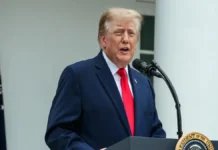
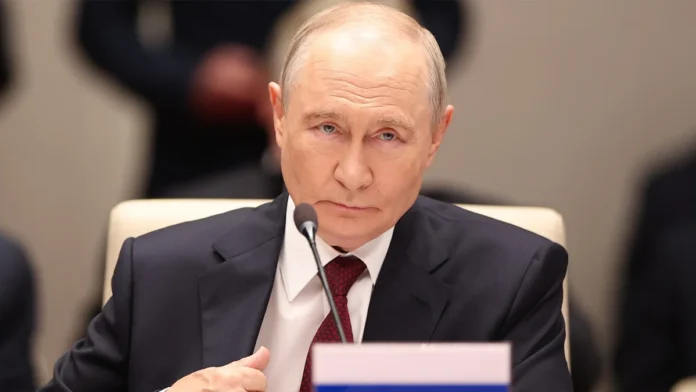
The Putin SCO Summit 2026 address combined a warning drawn from the history of World War II with a call for deeper economic and financial cooperation among Shanghai Cooperation Organisation members, as Russian President Vladimir Putin used the Bishkek gathering to outline Moscow’s vision for a stronger and more independent Eurasian bloc.
Speaking at the 26th SCO Summit on Tuesday, Putin drew attention to the significance of September 1, the date in 1939 when Nazi Germany invaded Poland and World War II began in Europe.
He used the anniversary to argue that governments must work to prevent provocations and political confrontations from escalating into armed conflict.
The Russian leader also described the SCO as an increasingly influential force in the emerging multipolar world and highlighted its economic weight, growing membership and expanding role in international affairs.
Putin Uses September 1 Anniversary to Warn Against New Conflicts
Putin’s historical reference gave the speech a broader security dimension.
He reminded the leaders gathered in Bishkek that September 1 carries one of the darkest associations in modern history because it marks the beginning of World War II in Europe.
Putin said the lesson should be clear: the international community must do everything possible to prevent provocations or confrontations capable of creating conditions for another armed conflict.
He linked that message directly to the purpose of cooperation among SCO members, presenting dialogue and coordination as safeguards against instability.
The reference was particularly significant at a summit taking place against a backdrop of continuing wars, geopolitical rivalry and growing pressure on the global security system.
Rather than focusing exclusively on one current conflict, Putin framed his argument around the broader need to prevent escalation and preserve stability across Eurasia.
Putin Says SCO Has Become a Major Global Power Center
A substantial part of Putin’s address focused on how dramatically the SCO has expanded since its creation.
The organization was established in 2001 by six countries — Russia, China, Kazakhstan, Kyrgyzstan, Tajikistan and Uzbekistan.
India and Pakistan later joined, followed by Iran and Belarus, turning the grouping into a much larger Eurasian organization.
Putin said the SCO had evolved from a relatively small association into one of the independent and influential centers of the emerging multipolar world.
He characterized it as the world’s largest regional organization, pointing to the enormous population and economic resources represented by its members.
SCO countries together account for roughly half of the global population, while their combined economic output represents around one-third of the world economy by some measures used by member governments.
That scale gives the organization growing influence over trade, energy, infrastructure, security and financial cooperation across a vast portion of Eurasia.
From Six Founders to a Much Larger Eurasian Bloc
Putin emphasized that the SCO’s transformation over the past 25 years had been gradual but substantial.
What began as cooperation among six states now connects some of the world’s largest economies and most populous nations.
China and India bring enormous demographic and economic weight. Russia remains a major energy and military power, while Central Asian members occupy strategically important territory connecting Europe, China, South Asia and the Middle East.
Iran’s membership has added another major energy producer, while Belarus has expanded the organization’s geographic reach further into Europe.
For Moscow, that expansion supports the argument that global economic and political power is becoming more widely distributed rather than remaining concentrated in a small group of Western economies.
Putin presented the SCO as one of the institutions reflecting that shift.
SCO Development Bank Moves Higher on Economic Agenda
The Russian president also placed significant emphasis on financial cooperation.
Putin backed progress toward an SCO Development Bank, an institution that has been under discussion among member countries as they explore ways to finance infrastructure, development and cross-border projects.
His comments went beyond the question of simply creating another multilateral lender.
Putin argued that any future financial institution associated with the SCO should operate independently of financial systems that can be used as instruments of political or economic pressure.
That position reflects Moscow’s broader effort to reduce its exposure to Western-dominated financial infrastructure following years of sanctions and restrictions imposed on Russia.
The proposed development bank could eventually provide SCO members with another financing channel for infrastructure, trade, industrial projects and regional connectivity.
However, important questions surrounding its structure, capital, governance and lending framework still need to be settled by participating countries.
Why an SCO Bank Could Matter
An SCO Development Bank could become particularly important because many member states have large infrastructure and investment requirements.
Transport corridors, railways, energy networks, digital infrastructure, logistics centers and industrial projects require enormous amounts of long-term capital.
A dedicated financial institution could help coordinate some of those investments within the SCO framework.
It could also complement existing institutions operating across Eurasia.
For Russia, the attraction is clear: a larger financial architecture centered on SCO countries could reduce dependence on payment and lending systems vulnerable to sanctions or geopolitical pressure.
For China and other members, the calculations are more complex because they already participate in several major regional and international financial institutions.
The final design of any SCO bank will therefore be important.
Russia-SCO Trade Exceeds $400 Billion
Putin also highlighted the rapidly growing economic relationship between Russia and other SCO countries.
Russia’s trade with SCO members has moved above the $400 billion level, illustrating how significantly Moscow’s commercial relationships have shifted toward Asian and Eurasian partners.
Trade with China accounts for a major share of that total, while India has also become an increasingly important economic partner, particularly in energy.
Russia has simultaneously expanded commercial ties with Central Asian countries and other members of the organization.
This change has accelerated as Moscow has redirected trade away from several traditional European markets.
Energy, machinery, agriculture, metals, chemicals, technology and consumer products all form part of the wider Russia-SCO commercial relationship.
The scale of that trade gives economic cooperation an increasingly important place alongside the SCO’s original security agenda.
National Currencies Gain Ground in SCO Trade
Another important change has been the growing use of national currencies in settlements between Russia and its SCO partners.
Moscow has increasingly encouraged companies to conduct trade without relying heavily on the US dollar or euro.
For Russia, this is partly a response to financial sanctions and restrictions on access to Western payment infrastructure.
But the trend also fits a broader debate inside organizations such as the SCO and BRICS over whether emerging economies should develop alternative payment mechanisms.
Putin’s call for a financially independent SCO structure therefore fits into a wider Russian policy aimed at creating payment and financing channels that are less vulnerable to external restrictions.
That does not mean the dollar is disappearing from global trade.
Instead, Russia and several partners are gradually increasing the share of transactions conducted in rubles, yuan, rupees and other national currencies.
Security and Economics Increasingly Intertwined
The Putin SCO Summit 2026 speech showed how far the organization’s agenda has expanded beyond its original security focus.
Counterterrorism and regional stability remain central themes, but trade, development finance, transportation, energy and international payment systems now occupy an increasingly prominent position.
For Russia, those issues are closely connected.
Moscow sees economic independence as part of national security and argues that countries should not be vulnerable to financial systems that can be restricted during political disputes.
That approach has gained greater urgency since the escalation of tensions between Russia and Western governments.
At the same time, SCO members do not always share identical political or economic priorities.
India, China, Russia and the Central Asian states maintain different relationships with the United States, Europe and one another.
The organization’s ability to turn broad declarations into workable economic institutions will therefore be an important test of its future influence.
Putin Links SCO’s Future to a Multipolar World
The larger theme running through Putin’s address was the changing balance of global power.
He described the SCO as an increasingly important center in a multipolar international system, where major political and economic decisions are no longer shaped by a single group of countries.
For Moscow, the organization provides a platform to deepen ties with China, India, Iran, Central Asia and other partners while reducing dependence on Western institutions.
For other SCO members, the grouping provides access to a wide regional network without necessarily requiring them to adopt Russia’s position on every international issue.
That distinction remains important.
The SCO brings together countries that cooperate in many areas but also have their own strategic interests, disputes and competing economic priorities.
A 25-Year Organization Faces Its Next Test
The Bishkek summit comes as the SCO marks 25 years since its establishment.
The organization has clearly grown in size, population, economic weight and geopolitical visibility.
Its next challenge will be translating that scale into practical outcomes.
Putin’s support for a development bank, deeper trade links and financial mechanisms insulated from political pressure points toward the type of institutional expansion Russia wants to see.
At the same time, his World War II reference placed security at the heart of the discussion.
The message from Moscow was that economic development and regional stability cannot be separated.
A quarter-century after the SCO began with six founding members, its leaders are now debating questions that reach far beyond border security — from global finance and trade settlements to the future structure of the international order.
For Putin, that transformation is evidence that the organization has become an important pillar of the multipolar world Russia has long advocated.