TOKYO, Japan | August 24, 2026 —
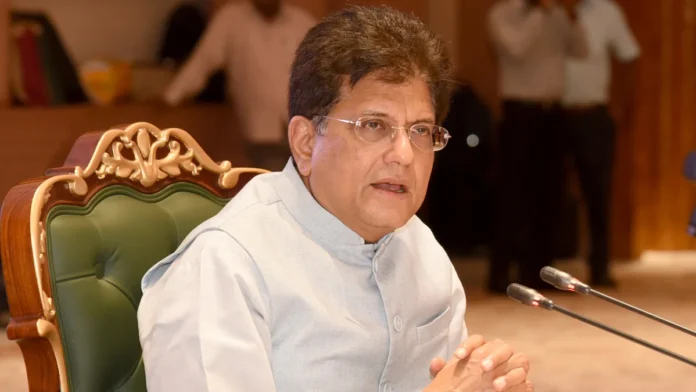
India has launched one of its most ambitious business outreach missions to Japan, with Commerce and Industry Minister Piyush Goyal leading the country’s largest-ever business delegation to Japan, comprising more than 200 representatives from some of the most strategically important sectors of the economy.
The four-day visit from August 24 to 27 will take the Indian delegation through Tokyo, Nagoya and Osaka, bringing together government officials, business leaders and investors for a series of government-to-government and business-to-business meetings.
The mission goes far beyond conventional trade promotion.
India is seeking deeper Japanese participation in advanced manufacturing, semiconductors, clean energy, automobiles, steel, financial services, healthcare, artificial intelligence and startups at a time when New Delhi is simultaneously accelerating its global free-trade strategy.
Goyal has said India is negotiating trade agreements with another eight to nine countries or groups of countries, potentially extending preferential access to economies representing roughly 75% of global trade.
Together, the Japan mission and India’s expanding FTA network reveal a larger economic strategy: attract global capital and technology into India while giving Indian manufacturers and exporters wider access to major international markets.
Why India’s Japan Business Mission Matters
Japan has been one of India’s most important long-term economic partners.
Japanese companies have played major roles in India’s automobile, industrial machinery, infrastructure, electronics and manufacturing sectors.
The relationship is now moving toward a new phase centered increasingly on high-technology industries.
India wants Japanese businesses to invest not only in traditional manufacturing but also in emerging sectors such as:
- Semiconductors
- Artificial intelligence
- Data centers
- Clean-energy technology
- Advanced manufacturing
- Electric mobility
- Healthcare
- Financial services
- Industrial automation
- Startup ecosystems
This shift is significant because India is attempting to become a larger part of global manufacturing and technology supply chains.
The government has already been accelerating its industrial corridor strategy to bring more factories, investment and manufacturing into production.
Japanese investment and manufacturing expertise could strengthen that push considerably.
More Than 200 Indian Business Leaders Join the Mission
The scale of the delegation itself is notable.
More than 200 business representatives are participating, making it the largest Indian business delegation sent to Japan so far.
Companies and industry representatives span sectors including manufacturing, semiconductors, clean energy, steel, automobiles, financial services, healthcare and startups.
That broad mix suggests the government is not seeking one or two headline investments.
Instead, the goal is to create a much wider pipeline of commercial partnerships between Indian and Japanese companies.
Meetings across Tokyo, Nagoya and Osaka are expected to connect Indian businesses with Japanese corporations, investors and industry institutions.
Nagoya is particularly important because it sits at the center of one of Japan’s major manufacturing regions and has deep links with automotive and industrial companies.
Osaka, meanwhile, is another major commercial and industrial hub.
India Wants Japan to Invest More
India-Japan bilateral trade has reached approximately $27.5 billion, while Japan remains one of India’s most important sources of foreign direct investment.
Yet Indian policymakers believe the economic relationship can become considerably larger.
India offers Japanese companies a combination of a rapidly expanding consumer market, manufacturing incentives, infrastructure development and a large workforce.
Japan offers India technology, industrial expertise, patient capital and deep manufacturing capabilities.
That combination is particularly attractive at a time when companies worldwide are attempting to diversify production and build more resilient supply chains.
India has already begun attracting fresh global capital across manufacturing, artificial intelligence and data centers.
Deeper Japanese investment could further strengthen that trend.
Semiconductors Could Be One of the Biggest Opportunities
Semiconductors are likely to be among the most strategically significant areas of India-Japan cooperation.
India is trying to build a domestic semiconductor ecosystem covering chip fabrication, assembly, packaging, testing, equipment and materials.
Japan has enormous strengths across many parts of the semiconductor supply chain.
Japanese companies manufacture critical semiconductor materials, chemicals, machinery and precision equipment used around the world.
That creates a natural opportunity for partnership.
India has already made semiconductor manufacturing part of its wider industrial policy, alongside investments in electronics, infrastructure and advanced manufacturing.
INVC previously reported on the government’s ₹1.52 lakh crore multi-sector economic push covering semiconductors, MSMEs, aviation and infrastructure.
If Japanese companies expand manufacturing or supplier operations in India, the country could potentially move further into higher-value sections of the global electronics supply chain.
Automobiles Remain the India-Japan Success Story
Automobiles provide perhaps the clearest example of what Indian and Japanese economic cooperation can achieve.
Japanese automobile companies have been deeply embedded in India for decades.
Goyal has highlighted Suzuki’s success in India as an example of the scale Japanese companies can achieve by investing for the long term.
India now wants that model replicated across more industries.
The opportunity is becoming even larger as India’s automotive market shifts toward electric mobility and advanced vehicle technologies.
India’s electric passenger vehicle registrations recently recorded strong growth, with EV registrations surging nearly 90% in the first quarter of FY27.
That transition creates new opportunities in batteries, motors, power electronics, charging systems and automotive electronics—all areas where Japanese industrial capabilities could play an important role.
Clean Energy Opens Another Investment Frontier
Clean energy is another major focus of the delegation.
India’s electricity system is undergoing a major transformation as renewable-energy capacity expands and demand for battery storage increases.
Opportunities are emerging across:
Solar manufacturing: Components, advanced materials and production technology.
Battery storage: Grid-scale storage and next-generation battery technologies.
Green hydrogen: Electrolyzers, industrial applications and renewable-powered hydrogen production.
Electric mobility: Vehicles, charging infrastructure and battery systems.
Energy efficiency: Smart industrial systems and advanced manufacturing technology.
India is simultaneously exploring alternatives to conventional lithium-ion batteries.
INVC recently examined how India’s sodium-ion battery technology reaching TRL-7 could open new opportunities in electric mobility and energy storage.
Japanese companies with advanced materials and manufacturing expertise could find significant opportunities as India’s clean-energy supply chain expands.
India’s FTA Strategy Is Becoming Much Bigger
The Japan visit becomes even more significant when viewed alongside India’s rapidly expanding free-trade strategy.
Goyal said India is negotiating agreements with another eight to nine groups of countries or individual nations.
Those potential partners represent economies with approximately $15 trillion in additional GDP.
India has already signed nine trade agreements over the past four years covering dozens of developed economies.
Together with earlier agreements involving countries and regions including Japan, South Korea and ASEAN, India has expanded preferential market access across a large part of the global economy.
If the next round of agreements is completed, Goyal believes India’s FTA network could eventually cover around 75% of global trade.
That would represent a major shift in India’s international trade positioning.
Why FTAs Matter for Indian Companies
Free-trade agreements can reduce or eliminate tariffs on selected products, simplify customs procedures and improve market access.
For Indian companies, that can make exports more competitive.
But signing an FTA does not automatically guarantee higher exports.
Companies still need to:
- Meet quality standards
- Build competitive products
- Understand foreign markets
- Increase manufacturing capacity
- Develop strong supply chains
- Use rules-of-origin provisions correctly
- Invest in branding and distribution
The Japan mission therefore fits into a larger effort to combine trade agreements with manufacturing expansion.
India Wants to Become a Trusted Global Supply-Chain Partner
One phrase increasingly central to India’s trade strategy is global value chains.
Modern products are rarely manufactured entirely inside one country.
An automobile, smartphone or semiconductor may contain components and materials sourced from several nations before final assembly.
Countries that become deeply integrated into these networks attract factories, technology, logistics investment and jobs.
India wants to capture a larger share of those global supply chains.
Its strategy increasingly combines four elements:
Domestic manufacturing incentives
Foreign direct investment
Infrastructure expansion
Free-trade agreements
The government’s industrial corridor program is also being pushed toward faster land allotment, infrastructure completion and actual factory production rather than simply project approvals.
That makes Japan particularly important because Japanese companies operate some of the world’s most sophisticated manufacturing supply chains.
ASEAN, Japan and the Wider Asian Trade Strategy
India’s trade strategy is not limited to individual countries.
Negotiations are also evolving across regional markets.
India and ASEAN continue work on the review of their goods-trade agreement, while Southeast Asia is simultaneously building a new digital economic framework.
INVC has examined how ASEAN’s emerging Digital Economy Framework Agreement could provide India with a model for deeper digital trade cooperation.
Japan adds another important dimension because of its combination of investment capital, advanced technology and established industrial networks across Asia.
Can India-Japan Trade Become More Balanced?
One challenge remains.
India wants the bilateral economic relationship to become more balanced.
Stronger Japanese investment in India can help build manufacturing capacity, but India also wants to increase exports into the Japanese market.
Greater access for Indian pharmaceuticals, food products, engineering goods, textiles, services and technology businesses could help broaden the relationship.
For Indian exporters, Japan is attractive because it is a wealthy, high-value consumer and industrial market.
However, Japanese quality requirements can also be extremely demanding.
Indian companies seeking long-term success there will need to compete on quality, reliability and technology—not simply price.
Data Centers and AI Join the Investment Agenda
Another striking element of India’s pitch is the growing emphasis on digital infrastructure.
Goyal has highlighted investment opportunities in data centers, artificial intelligence and manufacturing.
AI infrastructure requires enormous investment in data centers, processors, energy systems, cooling equipment and networks.
India’s large digital economy and expanding cloud-computing requirements are attracting growing investor attention.
Recent FDI proposals in India already include investments linked to AI and data centers.
That means Japan’s traditional strengths in electronics and industrial technology could increasingly intersect with India’s emerging digital infrastructure market.
What Could Come Out of the Japan Visit?
Not every business delegation produces immediate investment announcements.
The more important outcome may be the pipeline created during the meetings.
Potential developments could include:
New Japanese investment commitments in India
Joint ventures between Indian and Japanese manufacturers
Semiconductor supply-chain partnerships
Clean-energy and battery projects
Technology-transfer agreements
Greater sourcing of Indian components
Startup investment and collaboration
Expansion by existing Japanese companies in India
New market access for Indian exporters
Such projects often take months or years to move from initial discussions to commercial operation.
However, the unusually large size of this delegation indicates how much importance both government and industry are placing on the relationship.
India-Japan Economic Partnership Enters a New Phase
India and Japan already have a mature strategic partnership.
The emerging question is whether their economic relationship can now expand at the same pace as their political and strategic ties.
India wants capital, technology, factories and deeper integration into global supply chains.
Japan wants reliable growth markets, diversified production locations and stronger economic partnerships across Asia.
Those interests increasingly overlap.
The 200-plus-member delegation therefore represents more than a high-profile foreign visit.
It is part of India’s broader attempt to transform itself into a major manufacturing, technology and export hub.
At the same time, the government’s push to expand free-trade agreements toward markets accounting for as much as 75% of global trade could dramatically widen opportunities for Indian businesses.
If India can successfully combine Japanese investment and technology with domestic manufacturing expansion and improved global market access, the economic impact of this week’s meetings could extend far beyond Tokyo, Nagoya and Osaka.