NEW DELHI, August 14, 2026
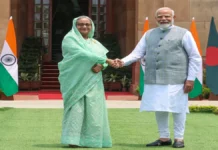
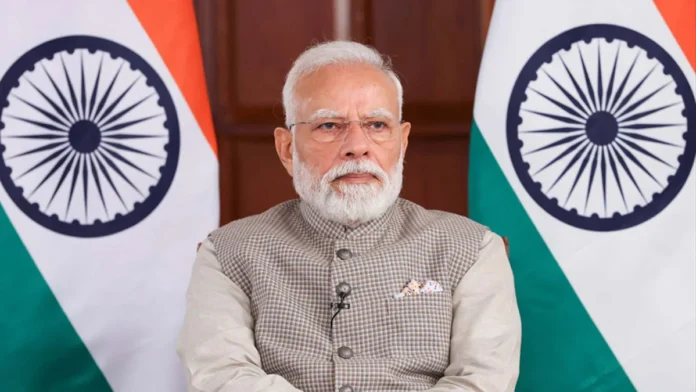
Partition Horrors Remembrance Day was marked across India on Friday as Prime Minister Narendra Modi honored those who endured displacement, violence and personal loss during the country’s 1947 Partition.
Modi remembered the courage and resilience of millions of people whose families were uprooted and whose lives were transformed by one of the largest forced migrations in modern history.
The prime minister said that although Partition caused immense suffering and separated countless people from their homes and loved ones, survivors overcame extraordinary hardships, rebuilt their lives and made significant contributions to India’s development.
He also urged citizens to strengthen the country’s commitment to harmony, fraternity and the collective goal of building a developed India.
‘A Moment in History That Tore Apart Lives’
In a message shared on X, Modi described Partition as a devastating moment in history that destroyed established lives, displaced families and forced people to endure profound grief.
“Today we mark #PartitionHorrorsRemembranceDay. We recall the courage of all those who were impacted by Partition,” the prime minister wrote.
He said families were uprooted, loved ones were lost and immense suffering was endured. At the same time, Modi emphasized that many of those affected started again with almost nothing and transformed adversity into achievement.
The prime minister’s complete message was also published by his official office on Friday. PM Modi’s Partition Horrors Remembrance Day statement.
Survivors Rebuilt Their Lives From Scratch
Modi paid particular tribute to the determination of people who rebuilt their lives after being forced to abandon ancestral homes, businesses, farms and communities.
Many displaced families arrived in unfamiliar places without financial security, permanent shelter or established livelihoods. Despite these circumstances, they created new homes, businesses and institutions while contributing to the social and economic development of independent India.
The prime minister said their life journeys demonstrate the strength of the human spirit and the ability to turn severe hardship into progress.
His message placed equal emphasis on remembering the suffering of Partition and recognizing the resilience of those who survived it.
Appeal to Strengthen Fraternity and Harmony
Modi said the remembrance should strengthen India’s determination to preserve fraternity and social harmony.
He called on citizens to learn from the tragedy and work together toward the creation of a “Viksit Bharat,” or developed India.
Partition Horrors Remembrance Day is intended not only to honor those who died or were displaced but also to remind future generations about the human consequences of communal hatred, social division and violence.
The observance carries a message that historical remembrance should encourage national unity rather than deepen divisions.
Why India Observes the Day on August 14
India observes Partition Horrors Remembrance Day annually on August 14, one day before Independence Day.
Modi announced the observance in 2021 to preserve the memory of people who lost their lives, homes and livelihoods during the division of British India.
The government has said the occasion should remind the country of the need to eliminate social divisions and reinforce unity, harmony and human empowerment.
Commemorative exhibitions, memorial events, silent marches and educational programs are organized in different parts of India to document the experiences of Partition survivors.
Independence Arrived With the Pain of Partition
India achieved independence from British rule on August 15, 1947. The historic occasion represented freedom and the birth of a sovereign nation, but it was accompanied by the division of the subcontinent into India and Pakistan.
New borders divided provinces, communities and, in some instances, individual villages. Hindus, Muslims and Sikhs moved across the newly created frontiers amid communal violence and administrative upheaval.
Families that had lived together in shared communities for generations were suddenly separated. Many people left their homes believing they would eventually return, only to spend the rest of their lives away from their places of birth.
Trains, temporary camps and large columns of refugees became defining images of the migration. Survivors carried memories of lost relatives, abandoned homes and interrupted lives into the newly independent nations.
Millions Were Displaced in 1947
The precise human cost of Partition remains disputed because records from the period are incomplete and estimates differ.
Historical research generally places the number of displaced people between approximately 12 million and 20 million. Some academic assessments cite about 15 million people as having been forced to migrate across the newly created borders.
The scale made Partition one of the largest population movements in modern history. A UN historical record notes that India and Pakistan were each hosting millions of refugees after the division. UNHCR’s historical account of the post-Partition refugee crisis.
Estimates of fatalities also vary widely. For this reason, responsible historical reporting avoids presenting a single death toll as universally established.
Beyond the numerical estimates, Partition’s consequences continued for decades through refugee rehabilitation, property disputes, divided families and lasting trauma.
Remembering Courage Alongside Suffering
Partition Horrors Remembrance Day seeks to ensure that the experiences of survivors are not forgotten as the generation that directly witnessed 1947 grows older.
Modi’s message highlighted both sides of that history: the immense suffering caused by displacement and violence, and the extraordinary courage displayed by families that rebuilt their lives.
By connecting remembrance with fraternity and harmony, the observance encourages citizens to honor the past while working to prevent similar divisions in the future.