Washington, D.C., United States | July 16, 2026
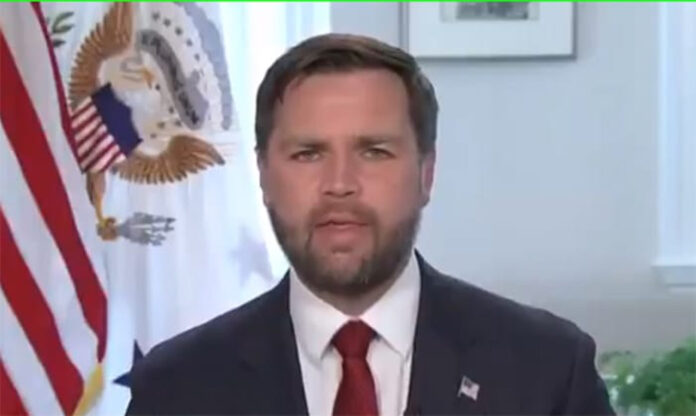
JD Vance Iran Diplomacy took center stage as the US Vice President defended the Trump administration’s negotiations with Tehran, arguing that military force alone cannot secure the Strait of Hormuz or deliver lasting peace in the Middle East.
Speaking during an interview on The Joe Rogan Experience, Vance said the United States is pursuing a balanced strategy that combines diplomacy, economic pressure, and military deterrence to prevent Iran from developing nuclear weapons while ensuring global energy supplies continue through one of the world’s most critical shipping lanes.
Military Force Is Only One Tool, Says Vance
Vance stressed that while military action remains an important option, diplomacy is equally essential in resolving complex international conflicts.
“The military is one tool, but diplomacy is another tool. You have to be willing to talk and genuinely try to understand the problem,” Vance said.
He argued that sustainable peace cannot be achieved through continuous bombing campaigns alone.
Trump Administration Pursuing a Multi-Pronged Strategy
According to Vance, the Trump administration’s Iran policy relies on three coordinated pillars:
- Diplomatic engagement
- Economic sanctions and incentives
- Military deterrence
He said this approach is designed to stop Iran’s nuclear ambitions while keeping the Strait of Hormuz open for international shipping and protecting global energy markets.
Vance Admits Initial Reservations
The Vice President acknowledged that he was initially cautious about the US military campaign against Iran.
However, he explained that once President Donald Trump made the decision, his responsibility shifted from offering advice to ensuring the administration’s strategy was implemented successfully.
“My job isn’t to keep debating a decision made months ago. My job is to make it as successful as possible,” Vance said.
Negotiations Aim to Secure the Strait of Hormuz
Vance revealed that discussions between Washington and Tehran have focused on reopening the Strait of Hormuz, reducing regional violence, and creating a framework for negotiations over Iran’s nuclear program.
He said an initial memorandum of understanding helped restore commercial oil traffic through the strategic waterway.
However, renewed attacks on commercial shipping later complicated the situation after Iranian hardliners reportedly opposed concessions made during negotiations.
‘Carrot and Stick’ Approach
Describing the administration’s policy, Vance said Washington is using both incentives and pressure.
“We’re pursuing a delicate diplomatic balance. We use both carrots and sticks. We engage with pragmatic Iranian leaders, but when violent actions occur, we respond,” he explained.
The strategy, he said, is intended to encourage constructive negotiations while maintaining strong deterrence against hostile actions.
Iran’s Nuclear Facilities Still Severely Damaged
Vance claimed that Iran’s nuclear infrastructure remains significantly degraded following previous military operations.
He also argued that oil and natural gas shipments through the Strait of Hormuz continue at sufficient levels, preventing a broader global energy crisis despite ongoing regional tensions.
According to Vance, negotiations on a long-term solution to Iran’s nuclear program remain active.
Criticism of Calls for Endless Military Action
The Vice President strongly criticized foreign policy commentators advocating continuous military escalation.
He argued that many critics support bombing campaigns without offering a realistic long-term strategy for regional stability.
“Their proposal is simply more bombing. Frankly, they don’t really have a solution,” Vance said.
Rejects Ground Invasion and Regime Change
Vance also dismissed suggestions that the United States should deploy ground troops to overthrow Iran’s government.
Drawing lessons from previous US interventions in the Middle East, including Libya, he warned against another large-scale military occupation.
“We’re not sending 150,000 ground troops to change another government. That’s not what we’re doing anymore,” he said.
Focus Remains on Stability and Deterrence
The Vice President concluded that the administration remains committed to preventing Iran from acquiring nuclear weapons while avoiding another prolonged military conflict in the region.
He said diplomacy, backed by credible military strength and economic leverage, offers the best opportunity to reduce tensions, protect international energy supplies, and maintain long-term regional stability.
Key Highlights
- JD Vance defended ongoing US diplomatic engagement with Iran.
- He said military action alone cannot secure the Strait of Hormuz.
- The Trump administration is combining diplomacy, sanctions, and military deterrence.
- Vance acknowledged he initially had reservations about military action.
- He confirmed negotiations continue over Iran’s nuclear program.
- The Vice President rejected calls for a US ground invasion or regime change.
- He warned against repeating mistakes made during previous Middle East interventions.
- Vance said maintaining global energy supplies remains a top US priority.