DUBAI, United Arab Emirates | September 3, 2026 —
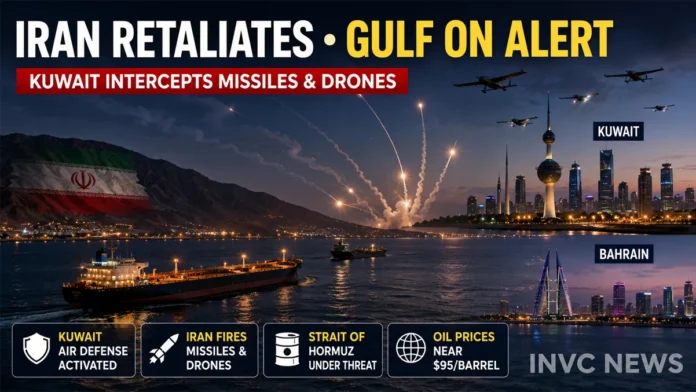
Iran War Today entered another dangerous phase early Thursday as Kuwait activated its air defenses against incoming missiles and drones while Tehran continued retaliatory attacks across the Gulf following a fresh wave of US strikes on Iranian military targets.
Iran has now targeted US-linked military positions and American allies across Bahrain, Kuwait, Jordan and Iraq during the latest escalation, bringing the six-month conflict back to one of its most volatile points since July.
Kuwaiti authorities said air defenses intercepted hostile missile and drone threats during the early hours of Thursday. Bahrain has also reported attacks during the renewed Iranian campaign.
The military exchanges have returned the Strait of Hormuz to the center of the crisis, raising fresh concerns over global oil supplies, shipping security and the possibility of a wider regional war.
Iran Continues Attacks for Second Consecutive Night
Tehran has continued its retaliation after the United States launched another series of strikes on targets inside Iran.
Iranian forces fired missiles and drones toward locations connected with US military operations across the Gulf region.
Kuwait again activated air defenses early Thursday as sirens warned residents of incoming threats.
The latest assault followed an earlier series of Iranian attacks against Bahrain, Kuwait, Jordan and locations in Iraq.
Kuwait and Bahrain host significant US military facilities, making both countries strategically important in the confrontation between Washington and Tehran.
The renewed attacks have dramatically reduced hopes that the latest fighting would remain a short-lived exchange.
Kuwait Intercepts Missiles and Drones
Kuwait’s military said its air-defense network responded to missile and drone threats during the latest attack.
Authorities did not immediately announce casualties from the early Thursday interceptions.
Kuwait has strongly condemned Iran’s attacks and treated them as direct aggression against the Gulf state.
The renewed security alert comes after repeated Iranian strikes on countries hosting American forces during the wider conflict.
Air-defense sirens and interception activity across the Gulf now underline how rapidly the US-Iran confrontation has expanded beyond Iranian territory.
Bahrain Also Comes Under Iranian Attack
Bahrain has also faced Iranian attacks during the latest escalation.
The country hosts the US Navy’s Fifth Fleet and remains one of Washington’s most important military partners in the Gulf.
Iran has repeatedly linked attacks on regional locations to the presence of American forces.
Tehran argues that US military infrastructure across neighboring countries supports operations against Iran.
Gulf governments, however, have condemned Iranian strikes on their territory and warned that attacks threaten regional security.
This widening battlefield creates a major risk: every new strike increases the possibility that another Gulf state could become more directly involved.
US Strikes Iran Again
The latest Iranian retaliation followed new US military attacks on Iranian targets.
American forces struck military assets along Iran’s southern coast, including radar installations, missile systems and maritime-related targets near the Strait of Hormuz.
US President Donald Trump has said Washington hit Iran’s military capabilities hard and has threatened additional action if Tehran continues retaliating.
The United States says its operations seek to stop Iran from threatening navigation and military forces in the region.
Iran rejects Washington’s justification and has promised to continue responding to attacks.
That cycle has now created a dangerous pattern: the US strikes Iranian military assets, Iran retaliates against American forces and Gulf allies, and Washington threatens another round.
18 Killed in Latest US Strikes, Iran Says
Civilian casualties have become another major focus of the latest escalation.
Iranian health authorities said Tuesday’s US strikes killed 18 people and injured 108 across Iran.
Iranian officials and the Red Crescent said one strike hit a wedding gathering near Kuhestak, close to the Strait of Hormuz.
They reported four deaths and 67 injuries at the wedding site.
The reported victims included civilians.
US Central Command has been reviewing information surrounding the incident.
The United States has not said that it deliberately targeted the wedding.
The casualty claims underline the growing humanitarian cost of the renewed fighting and have increased international pressure on both sides to prevent further civilian deaths.
UN Calls for Immediate Halt to Escalation
The United Nations has renewed calls for restraint as the conflict expands.
UN Secretary-General António Guterres has called for an immediate halt to hostilities and emphasized the requirement to protect civilians under international humanitarian law.
The latest escalation comes after diplomatic efforts failed to produce a durable breakthrough between Tehran and Washington.
Earlier attempts to reduce hostilities produced temporary pauses, but the underlying disputes over Iran’s nuclear program, US sanctions, Gulf security and the Strait of Hormuz remain unresolved.
The renewed missile and drone exchanges show how quickly that diplomatic deadlock can return to open warfare.
Strait of Hormuz Becomes the Biggest Global Risk
The Strait of Hormuz has once again become the most important strategic pressure point in the Iran conflict.
The narrow waterway connects the Persian Gulf with the Gulf of Oman and handles a major share of global petroleum shipments.
Shipping activity has fallen sharply amid repeated attacks, interceptions and tighter Iranian controls.
Recent tracking data showed only a handful of commodity vessels crossing the Strait compared with much higher normal traffic.
On the latest available figures, only around four vessels passed through during one monitored period, compared with a recent average of roughly 13.
That disruption matters far beyond the Middle East.
A prolonged slowdown can affect oil, LNG, shipping costs, insurance rates and inflation across Asia and Europe.
Iran Tightens Control Over Ships in Hormuz
Iran has also increased pressure on commercial shipping.
The list has grown to 56 ships after Iranian authorities added 11 more vessels.
The restrictions cover crude tankers, LNG carriers, LPG vessels and refined-product tankers.
The policy is already affecting how energy companies and refiners plan Gulf shipments.
Shipping companies increasingly face the choice between higher operational risk, expensive rerouting and complicated ship-to-ship transfers.
LNG Cargoes for India Take Unusual Route
The Hormuz crisis has already begun influencing energy shipments bound for Asia.
Qatari and UAE LNG cargoes have used unusual ship-to-ship transfers outside the Strait to complete deliveries.
One transferred LNG cargo later continued toward India, highlighting the direct importance of the Iran conflict for Indian energy security.
Such transfers remain relatively rare in the LNG industry.
Companies normally prefer direct transport because transferring liquefied natural gas at sea requires specialist equipment and strict safety procedures.
Their use shows how seriously the conflict has disrupted normal Gulf shipping.
Brent Crude Holds Near $95
Oil markets remain nervous.
Brent crude traded near $95.20 per barrel Thursday morning after rising sharply during the latest round of US-Iran fighting.
West Texas Intermediate traded near $90.77.
Oil prices eased slightly in early trading as investors assessed whether the latest military exchange would escalate further.
However, prices remain dramatically higher than levels seen before the newest confrontation.
For India, the oil market presents a major economic risk.
Higher crude prices can increase the country’s import bill, pressure the rupee, lift transportation costs and contribute to inflation.
That makes every military development around Iran and the Strait of Hormuz highly relevant for Indian markets.
Trump Says New Campaign Will Not Last Long
President Trump has suggested that the renewed US military campaign against Iran will not become a prolonged new phase.
He has said US forces destroyed Iranian radar, missile and maritime capabilities and can strike again if Tehran retaliates.
However, the events of early Thursday show that Iran has not stopped responding.
Tehran’s missile and drone attacks on Gulf states indicate that it intends to impose costs on Washington and American partners across the region.
The contradiction between Trump’s expectation of a limited campaign and Iran’s continuing retaliation leaves markets and regional governments uncertain about what comes next.
White House Faces Political Pressure Over Iran War
The Iran conflict has also become an increasingly important political issue inside the United States.
Trump administration officials face pressure to prevent another major escalation before the November midterm elections.
Higher oil and gasoline prices have added to public concern.
The conflict has already lasted far longer than originally expected, while continued attacks require large quantities of expensive missiles and air-defense interceptors.
That political pressure could encourage Washington to limit operations.
However, another serious Iranian attack on US personnel or Gulf allies could push the administration in the opposite direction.
Iran Economy Faces Severe Pressure
Iran also faces growing internal pressure.
US sanctions, restricted oil exports, military expenditure and shipping disruptions have placed heavy strain on the country’s economy.
Iranian oil exports through the Strait of Hormuz have suffered severe disruption.
The country’s currency has also weakened sharply during the conflict.
Tehran is therefore fighting on several fronts at once: militarily against the United States, economically against sanctions and blockade pressure, and diplomatically against regional isolation.
Iranian leaders nevertheless continue to signal that they will not stop retaliating while US attacks continue.
Gulf States Push for Diplomacy
Several countries in the region want the military cycle to end.
Egypt, Qatar and Pakistan have backed diplomatic efforts aimed at reducing tensions.
Gulf states face significant economic risks from a prolonged conflict even when they are not directly involved in fighting.
Oil facilities, airports, shipping routes, commercial centers and US military bases all create potential targets.
The repeated attacks on Kuwait and Bahrain have reinforced those fears.
Regional governments now face the difficult task of maintaining security ties with Washington while trying to avoid becoming permanent battlefields in the US-Iran confrontation.
What Happens Next?
Three developments will determine whether the crisis expands further.
First, Washington must decide whether Iran’s latest missile and drone attacks require another US military response.
Second, Tehran must decide whether to continue striking Gulf countries that host American military forces.
Third, both sides must determine how aggressively they will contest control and commercial access around the Strait of Hormuz.
Any serious attack on a tanker, oil installation or US military facility could rapidly push crude prices toward another major spike.
A pause in military activity, however, could create space for diplomacy.
Iran War Today: The Conflict Has Entered a Dangerous New Phase
The latest Iran crisis is no longer limited to isolated strikes inside Iranian territory.
Iran is taking the confrontation directly to US-linked facilities and American allies across the Gulf.
Kuwait’s interception of missiles and drones early Thursday confirms that retaliation is continuing.
Bahrain also remains exposed, while the Strait of Hormuz has become both a military battleground and an economic weapon.
The next 24 hours could prove critical.
If Washington launches another major strike and Iran answers again, the region could move closer to a broader conflict.
If both sides pause, diplomats may get another narrow opportunity to stop the escalation.
For now, however, missiles, drones, oil prices and the Strait of Hormuz are setting the agenda across the Middle East.