New Delhi, India — August 20, 2026
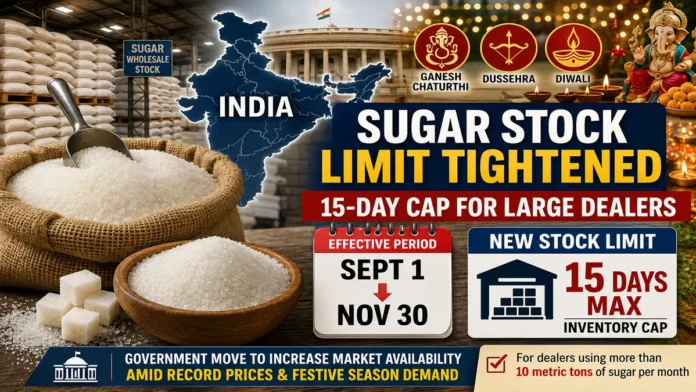
India Sugar Stock Limit 2026 rules are being tightened as the government moves to contain record domestic sugar prices ahead of the peak festive-demand season. Under the latest order, dealers using more than 10 metric tons of sugar per month will not be allowed to hold inventories for more than 15 days, with the tighter restriction scheduled to take effect on September 1 and remain in force through November 30, 2026.
The move comes at a critical time for India’s sugar market. Demand typically rises between August and November as households, sweet makers, bakeries, biscuit producers and confectionery companies prepare for major festivals including Ganesh Chaturthi, Dussehra and Diwali.
The Department of Food and Public Distribution has already been actively regulating sugar inventories and monthly releases in 2026, including stock-holding orders for sugar mills.
Why Has India Tightened the Sugar Stock Limit?
The government’s latest intervention is aimed at increasing the amount of sugar available in the market and discouraging excessive inventory accumulation when prices are already elevated.
Dealers consuming more than 10 metric tons per month will now be permitted to retain only around 15 days of inventory during the September-November enforcement period.
The tighter rule effectively reduces the inventory window for affected dealers compared with the earlier restriction that limited holdings to about 30 days.
By shortening the permitted holding period, policymakers are seeking to accelerate the movement of sugar through the supply chain and reduce the possibility of stocks being accumulated when festival demand is rising.
Sugar Prices Have Risen Sharply
The intervention comes amid a significant rise in domestic sugar prices.
According to the market information underlying the government’s move, Indian sugar prices have increased by around 10% over the past month, reaching historically high levels.
The price increase has raised concern because the coming months traditionally bring stronger consumption.
Large industrial users, including biscuit, bakery and confectionery manufacturers, often build inventories before festivals to ensure uninterrupted production.
When businesses increase purchases at the same time as household consumption rises, additional pressure can develop across wholesale markets.
Why Sugar Demand Rises From August to November
India’s festival calendar plays an important role in seasonal sugar demand.
Ganesh Chaturthi, Dussehra and Diwali lead to higher consumption of traditional sweets, packaged foods, bakery products, beverages and confectionery.
Food manufacturers therefore tend to secure raw materials in advance.
For sugar, this can mean larger purchases by bulk consumers weeks before actual retail demand peaks.
The government’s new stock limit is designed to ensure that such advance stocking does not result in an excessive concentration of supplies.
Weather Adds Pressure to Sugarcane Supply
Supply concerns have also intensified because sugarcane production is highly dependent on favorable weather and adequate water availability.
Patchy rainfall and periods of dry weather can affect cane development and ultimately influence sugar output.
Sugarcane requires substantial water throughout much of its growing cycle, which makes uneven monsoon conditions particularly important for crop prospects.
If crop expectations weaken at the same time that festival demand accelerates, traders may expect tighter supplies and higher prices.
That dynamic is one reason the government is closely monitoring inventory levels.
What Was the Earlier Sugar Stock Rule?
The latest restriction follows an earlier government intervention aimed at preventing hoarding and speculative accumulation.
The Department of Food and Public Distribution has been issuing sugar stock-holding and release-related orders through 2026 as part of its market-management framework. Official records show that a sugar mill-wise stock-holding limit order was issued for August 2026.
Under the wider market restrictions introduced earlier, dealers faced limits on how long sugar could remain in inventory.
The new rule tightens that period further for large users by bringing it down to 15 days.
Could India Increase Sugar Supply Through Imports?
The government has also been examining additional ways to improve domestic sugar availability if required.
One potential policy option is limited duty relief on imports, which could make overseas sugar more competitive in the Indian market.
However, any import decision would require the government to balance several interests.
Lower-cost imports could help consumers and food manufacturers by easing domestic prices, but large-scale imports could also affect sugar mills and cane growers.
For that reason, stock limits provide the government with a more immediate mechanism to improve market availability without necessarily making a major change to import policy.
What Is the Current Position on Sugar Exports?
There is an important distinction regarding sugar exports.
Current official records do not support describing India as being under a complete blanket ban on all sugar exports.
The Department of Food and Public Distribution states that the government allowed the export of 15 lakh metric tons of sugar for the 2025-26 sugar season, with mill-wise allocation and reallocation mechanisms.
In addition, official APEDA records show that India continues to facilitate specific sugar exports under Tariff Rate Quota arrangements, including raw cane sugar exports to the United States through September 30, 2026 and sugar exports to the European Union under applicable quota arrangements.
Therefore, the current policy is better described as a controlled or quota-based export regime, rather than an absolute prohibition on every category of sugar export.
Why Sugar Prices Matter Politically and Economically
Sugar is one of India’s most widely consumed food commodities.
Its price affects household budgets directly, but its influence extends well beyond table sugar.
Sugar is a major input for sweets, beverages, biscuits, bakery products, confectionery and numerous processed foods.
A sustained rise in sugar prices can therefore raise production costs for food companies and potentially feed into retail prices.
At the same time, sugar policy has to protect the interests of sugarcane farmers and mills.
This makes government intervention a balancing exercise involving consumers, farmers, processors, traders and food manufacturers.
Who Will Be Most Affected by the 15-Day Rule?
The immediate impact will fall primarily on larger dealers and industrial users consuming more than 10 metric tons of sugar a month.
These businesses may need to:
reduce warehouse inventories,
purchase sugar more frequently,
adjust procurement schedules,
monitor stock declarations more closely, and
avoid holding excessive supplies ahead of the festival season.
For large food companies, a shorter inventory cycle could also mean greater dependence on smooth supply from mills and distributors.
Could the Rule Help Bring Sugar Prices Down?
The stock limit is intended to improve market availability, but it does not guarantee an immediate fall in retail sugar prices.
Prices will also depend on several other factors, including:
sugarcane production,
mill-level supplies,
festival demand,
weather conditions,
government release quotas,
import policy, and
market expectations for the next sugar season.
If the restriction succeeds in preventing excessive stock accumulation, however, it could reduce some short-term pressure in wholesale markets.
Government Keeps Close Watch Ahead of Festival Season
The India Sugar Stock Limit 2026 represents another step in the government’s effort to stabilize one of the country’s most important food commodities before the year’s biggest festive consumption period.
The 15-day stock rule will run from September 1 through November 30, covering the period in which demand typically strengthens substantially.
With prices already elevated and crop conditions attracting close attention, sugar supplies are likely to remain a key policy focus through the festive season.
The government may take additional steps if market availability remains tight or prices continue to rise.