NEW DELHI, India | September 2, 2026 —
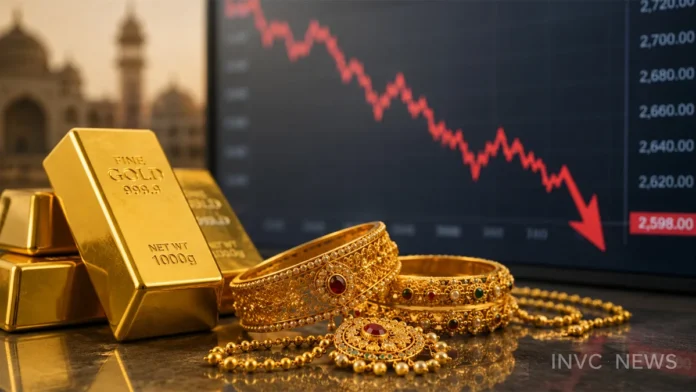
Gold Price Today September 2 2026 delivered fresh relief to jewellery buyers but rattled bullion investors as gold prices extended their sharp decline in India and global markets on Wednesday.
MCX gold futures traded near ₹1,50,022 per 10 grams during the morning session, down about ₹1,707 or 1.13% from the previous close.
Internationally, spot gold slipped to around $4,303 per ounce, its lowest level in more than three weeks.
The fall came despite renewed military tension between the United States and Iran — a situation that would normally support safe-haven buying.
This time, however, surging crude oil, higher US Treasury yields, a stronger dollar and growing expectations of another Federal Reserve interest-rate hike overwhelmed gold’s traditional geopolitical support.
Gold Price Falls Sharply in India Today
Gold sellers remained firmly in control during Wednesday’s morning trade.
The October MCX gold contract traded around:
₹1,50,022 per 10 grams
Down: approximately ₹1,707
Percentage fall: about 1.13%
The contract opened near ₹1,50,033 after closing around ₹1,51,729 in the previous session.
Gold also moved below ₹1.50 lakh during intraday trade at one stage, showing how aggressively traders have reduced bullish positions.
The decline extends a correction that has already wiped out a significant portion of gold’s recent gains.
24-Carat Gold Price Today in Major Cities
Retail jewellery rates vary between cities, sellers and market feeds because of local premiums and other charges.
Indicative morning rates showed:
| City | 24K Gold / 10g | 22K Gold / 10g |
|---|---|---|
| Delhi | Around ₹1,50,124 | Around ₹1,37,514 |
| Mumbai | Around ₹1,50,670 | Around ₹1,38,010 |
| India broad retail indication | Around ₹1.50–₹1.52 lakh | Around ₹1.38–₹1.39 lakh |
Final jewellery bills can be higher after GST, making charges and individual jeweller premiums.
Buyers should therefore confirm the live rate at the store before making a purchase.
Gold Drops to More Than Three-Week Global Low
The selloff is not limited to India.
Spot gold fell around 0.6% to approximately $4,302.99 an ounce during Asian trading.
That pushed bullion to its lowest level since early August.
US December gold futures also declined more sharply, falling about 1.1% to around $4,349.90 an ounce.
The international fall matters directly to Indian buyers because domestic gold prices depend heavily on global bullion rates, the rupee-dollar exchange rate and import costs.
Why Is Gold Price Falling Today?
Gold faces an unusual combination of pressures.
Normally, war and geopolitical uncertainty send investors toward safe-haven assets such as gold.
But several other forces are currently working in the opposite direction.
1. US Treasury Yields Surge
US government bond yields have jumped sharply.
The 10-year Treasury yield moved toward 4.8%, reaching levels not seen for nearly three years.
Gold does not pay interest.
Therefore, when government bonds offer higher yields, holding non-yielding bullion can become less attractive for some investors.
Money can shift from gold toward interest-paying assets.
2. Dollar Strength Hits Bullion
The US dollar also strengthened.
Because international gold trades primarily in dollars, a stronger greenback makes bullion more expensive for buyers using other currencies.
That can weaken international demand.
The combination of a stronger dollar and higher Treasury yields has created a difficult environment for gold.
3. Fed Rate-Hike Fear Returns
Financial markets are again pricing in the possibility that the US Federal Reserve could raise interest rates.
Traders now assign roughly a two-thirds probability to another rate increase at the upcoming Fed meeting.
That is a dramatic shift.
Only recently, many investors were focused on when interest rates might begin falling.
Higher oil prices have changed that calculation.
US-Iran War Creates Strange Gold Reaction
The renewed US-Iran confrontation would ordinarily push gold sharply higher.
Instead, it has created a more complicated chain reaction.
Fresh military attacks have raised concerns over energy supplies.
That has pushed crude oil toward $95-$96 per barrel.
Higher oil can fuel inflation.
Higher inflation can force the Federal Reserve to raise interest rates.
Higher interest rates strengthen bond yields.
And higher bond yields can hurt gold.
So, paradoxically, the same geopolitical conflict that creates safe-haven demand is currently also creating monetary-policy fears that weigh on bullion.
Brent Crude Near $95 Changes Everything
Brent crude remains one of the most important variables for gold traders.
Oil prices moved above $95 per barrel on Wednesday as traders monitored renewed US-Iran fighting and risks around the Strait of Hormuz.
If oil continues rising, investors could become even more concerned about inflation.
That could strengthen the case for tighter monetary policy in the United States.
For gold, the direction of oil therefore matters almost as much as conventional safe-haven demand.
Gold Has Fallen Sharply From Recent Highs
Gold’s latest correction follows an extraordinary rally.
Indian retail gold had moved above ₹1.60 lakh per 10 grams in parts of August.
Some broad-market price trackers showed 24K gold near ₹16,400 per gram during late August.
By September 2, comparable indicative rates had moved closer to ₹15,200 per gram.
That represents a substantial correction within a relatively short period.
Buyers who were waiting for lower jewellery prices may welcome the fall.
Investors, however, now need to determine whether the decline represents a temporary correction or the beginning of a deeper downtrend.
Silver Also Comes Under Pressure
Gold is not falling alone.
Silver prices have also weakened.
International silver dropped around 0.9% during Wednesday trade.
Indian commodity markets also showed significant selling pressure in silver contracts.
Silver often experiences larger percentage swings than gold because it combines investment demand with heavy industrial use.
Its price therefore reacts simultaneously to monetary policy, economic growth expectations and precious-metal sentiment.
Platinum and Palladium Also Fall
The broader precious-metals complex remained under pressure.
Platinum fell about 0.9%, while palladium dropped roughly 1.3% internationally.
That widespread decline suggests investors are not simply rotating from gold into other precious metals.
Instead, tighter financial conditions are pressuring the entire sector.
Is This a Good Time to Buy Gold?
For jewellery buyers, lower prices clearly reduce the base metal cost.
Someone already planning a wedding or major jewellery purchase may find current prices more attractive than the recent highs.
However, predicting the short-term bottom remains difficult.
Gold could fall further if:
US Treasury yields rise
The dollar strengthens
The Federal Reserve signals more rate hikes
Oil keeps inflation fears elevated
Technical selling accelerates
On the other hand, gold could rebound sharply if geopolitical risks escalate or bond yields retreat.
Investors Should Not Chase Intraday Moves
Gold can move several thousand rupees per 10 grams within a short period when global markets become volatile.
Retail buyers and investors should therefore distinguish between jewellery purchases and investment decisions.
Jewellery buyers usually focus on long-term need.
Investors must consider entry price, time horizon and portfolio allocation.
Leveraged commodity trading carries substantially greater risk.
A sudden reversal in global interest-rate expectations can move gold sharply in either direction.
US Jobs Data Becomes Next Big Trigger
Investors are now watching American employment numbers.
The ADP private-employment report will provide another indication of labour-market strength.
More importantly, the US nonfarm payrolls report due later this week could significantly influence Federal Reserve expectations.
Strong employment data could strengthen arguments for tighter monetary policy.
Weak jobs numbers could reduce rate-hike expectations and potentially help gold recover.
Rupee Movement Matters for Indian Gold Buyers
Indian gold does not always move exactly in line with international bullion.
The rupee-dollar exchange rate can soften or amplify global price changes.
A weaker rupee makes imported gold more expensive.
The Indian currency has recently faced pressure from rising crude oil and global bond yields.
Therefore, even if international gold continues falling, significant rupee weakness could limit the decline in Indian prices.
Wedding Buyers Get Some Relief
The correction arrives at an important time for Indian households.
Gold demand traditionally strengthens around weddings and major festivals.
A fall of ₹1,500-₹2,000 per 10 grams can create a meaningful difference for buyers purchasing larger quantities.
However, consumers should remember that retail jewellery prices include additional costs.
GST and making charges can substantially increase the final bill.
What Should Gold Buyers Watch Now?
Five factors could determine the next major move:
Federal Reserve rate expectations
US Treasury yields
US dollar index
Brent crude oil prices
US-Iran military developments
The interaction between these factors could keep gold volatile for several sessions.
Gold Price Today Sends Important Signal
The biggest lesson from Gold Price Today September 2 2026 is that geopolitical tension does not guarantee higher gold prices.
Investors are currently more worried about what war-driven oil inflation could force central banks to do.
That has pushed bond yields higher.
The dollar has strengthened.
And gold has fallen to a more than three-week global low.
In India, MCX gold has dropped by more than ₹1,700 per 10 grams during Wednesday’s morning trade, while retail 24K prices hover around the ₹1.50 lakh region in major cities.
For jewellery buyers, the correction offers relief.
For traders and investors, however, volatility remains the dominant theme — and the next move could depend heavily on US jobs data and Federal Reserve expectations.
Commodity Disclaimer
Gold and silver prices change continuously during trading hours. Retail rates vary by city and jeweller and may exclude GST, making charges and other costs. This report provides market information only and does not constitute investment advice.