New Delhi | August 7, 2026
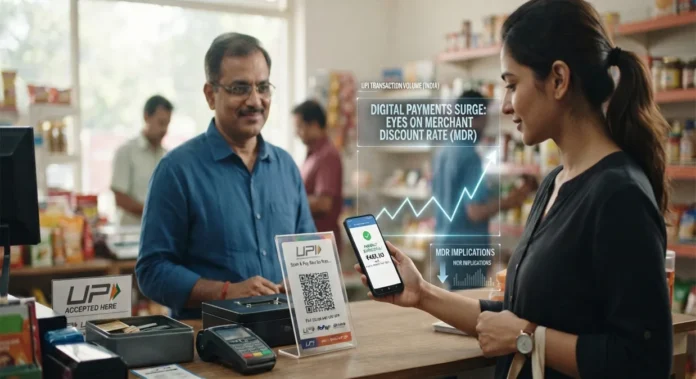
UPI payments above ₹2,000 charges have become one of India’s most discussed financial topics after Parliament approved amendments that could allow the government to authorize Merchant Discount Rate (MDR) on certain digital payment methods in the future. However, despite widespread speculation, no new fee has been imposed on UPI transactions at this time.
The legislative amendment changes the legal framework governing digital payments by giving the central government greater flexibility to decide—through future notifications—which electronic payment instruments should continue receiving zero MDR and which may become eligible for merchant fees. The amendment itself does not introduce any immediate charges.
What Has Changed?
The amendment modifies provisions under the Payment and Settlement Systems Act that previously guaranteed zero Merchant Discount Rate for government-notified payment methods such as UPI and RuPay debit cards.
Instead of a permanent statutory exemption, the government can now determine through future notifications whether specific digital payment methods remain exempt from MDR or become subject to merchant charges.
Are UPI Users Required to Pay Any Fee Today?
No.
Consumers making payments through UPI continue to use the service without paying transaction fees. Neither person-to-person transfers nor routine merchant payments currently carry an MDR charge for customers.
Finance Minister Nirmala Sitharaman has clarified that even if an MDR framework is introduced in the future, the charge would apply to merchants rather than consumers.
What Is Merchant Discount Rate (MDR)?
Merchant Discount Rate is a processing fee paid by businesses to banks and payment service providers for facilitating digital transactions.
Similar charges already exist for many credit and debit card transactions. UPI transactions, however, have remained MDR-free since January 2020 as part of India’s digital payments promotion strategy.
Why Is the Government Considering This Change?
India’s UPI ecosystem has expanded into one of the world’s largest real-time payment networks, processing billions of transactions every month.
Industry participants—including banks and payment technology companies—have argued that maintaining infrastructure, cybersecurity, fraud prevention, and network capacity requires sustainable revenue sources. They contend that a limited merchant-side MDR could help finance continued investment in the payments ecosystem.
Could Transactions Above ₹2,000 Be Affected?
Government sources have previously indicated that policymakers have examined proposals under which MDR could apply only to large merchants and certain commercial UPI transactions above ₹2,000, potentially at a rate below 0.5%.
However, no final policy has been announced, and the government has not issued any notification implementing such a framework.
What This Means for Consumers
For everyday users, there is currently no change in how UPI works.
People can continue using QR-code payments, peer-to-peer transfers, and merchant transactions without paying additional fees. Any future change would require a separate government notification before taking effect.
Key Takeaways
- Parliament has amended the legal framework governing digital payment charges.
- No UPI fee has been introduced for consumers.
- The amendment gives the government authority to decide future MDR policy through notifications.
- Finance Minister Nirmala Sitharaman says any future MDR would be borne by merchants, not customers.
- Reports about charges on transactions above ₹2,000 remain proposals rather than government policy.
Frequently Asked Questions
Are UPI payments currently chargeable?
No. UPI transactions remain free for users.
Does the new law immediately impose MDR?
No. The law creates legal authority for future decisions but does not impose fees by itself.
Who would pay MDR if introduced?
According to the Finance Minister, merchants—not consumers—would bear any applicable MDR.
Will all UPI transactions above ₹2,000 be charged?
No. There is currently no government notification imposing such charges. Proposals under discussion have reportedly focused on certain merchant transactions, but no final decision has been announced.