Mumbai, India | August 3, 2026
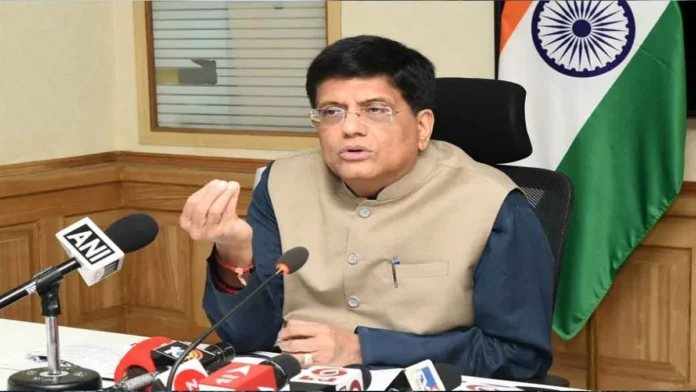
Piyush Goyal on Rahul Gandhi dominated the political discourse on Sunday after the Union Minister claimed that Congress leader and Leader of the Opposition in the Lok Sabha, Rahul Gandhi, is unsettled by Prime Minister Narendra Modi’s growing popularity among India’s youth. Goyal also defended the government’s recently strengthened anti-paper leak legislation, arguing that it reflects the Centre’s commitment to protecting students and ensuring transparent public examinations.
Speaking to reporters in Mumbai, the senior Bharatiya Janata Party (BJP) leader said Prime Minister Modi continues to enjoy strong support among young voters and described him as the “world’s most popular leader.”
Goyal Claims BJP Continues to Enjoy Strong Youth Support
Piyush Goyal, the Member of Parliament from Mumbai North, said the younger generation remains aligned with Prime Minister Modi’s vision of transforming India into a developed nation.
According to Goyal, Generation Z (Gen Z) has consistently supported the BJP and will continue to play an important role in India’s development journey.
He also highlighted the Prime Minister’s engagement with young people through social media, saying that this connection strengthens the government’s outreach and development agenda.
“Rahul Gandhi is troubled by Prime Minister Modi’s growing popularity and his strong connection with young people,” Goyal said while speaking to journalists.
The Union Minister further claimed that Rahul Gandhi once projected himself as a youth leader but no longer enjoys the same level of support among younger voters.
Government Defends Anti-Paper Leak Measures
Responding to questions regarding recent student protests at Jantar Mantar in New Delhi and demands for the resignation of Union Education Minister Dharmendra Pradhan, Goyal defended the government’s actions to curb examination fraud.
He said the Modi government has enacted stringent legal measures to combat paper leaks and restore confidence in India’s examination system.
According to Goyal, the newly strengthened law includes:
- Tougher penalties for those involved in paper leaks
- Faster investigations
- Speedy trials through fast-track courts
- Measures aimed at improving the integrity of public examinations
Criticism of Previous UPA Government
The Union Minister also criticized the previous Congress-led United Progressive Alliance (UPA) government.
He claimed that although the UPA had considered introducing legislation against examination paper leaks during 2010–11, it failed to implement such a law.
According to Goyal, the National Democratic Alliance (NDA) government introduced comprehensive anti-paper leak legislation in 2024, which was later strengthened through amendments approved by Parliament.
Goyal Criticizes Opposition Parties
Goyal accused opposition parties—including the Congress, Samajwadi Party, and Aam Aadmi Party (AAP)—of opposing the legislation during parliamentary debates.
He argued that political parties should have supported measures designed to safeguard students and improve transparency in competitive examinations.
“I understand their frustration because voters have repeatedly rejected them. They continue to lose elections. Instead of opposing the Bill, they should have supported it,” Goyal said.
Anti-Paper Leak Bill Approved by Parliament
The Public Examinations (Prevention of Unfair Means) Amendment Bill, 2026, received approval from both the Lok Sabha and the Rajya Sabha last week.
The legislation seeks to strengthen India’s legal framework against examination fraud through stricter punishments and enhanced enforcement mechanisms.
Key Highlights
- Piyush Goyal claimed Rahul Gandhi is concerned by PM Modi’s growing popularity among young voters.
- The Union Minister said Generation Z continues to support the BJP.
- Goyal defended the government’s strengthened Anti-Paper Leak Law.
- He criticized the previous UPA government for not implementing similar legislation.
- Parliament recently approved the Public Examinations (Prevention of Unfair Means) Amendment Bill, 2026.