PUNE, India | August 24, 2026 —
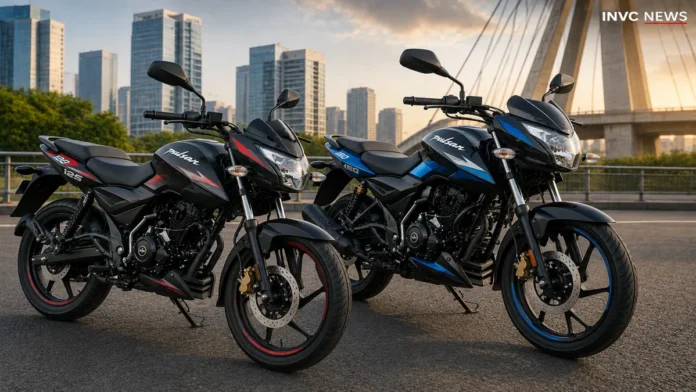
The New Bajaj Pulsar 125 and Pulsar 150 are set to make their India debut today, August 24, in what could become one of the most important updates to Bajaj Auto’s long-running Pulsar family in years.
Rather than limiting the refresh to new colors or graphics, the next-generation motorcycles are expected to introduce a new platform, revised frame, monoshock rear suspension, updated styling and significantly more modern instrumentation.
Higher-spec versions have also been spotted with a TFT instrument display, while Bluetooth connectivity and navigation-related functionality could become major selling points.
For buyers, however, one question may matter more than anything else:
How much more will the new Pulsar 125 and Pulsar 150 cost?
As of publication, Bajaj has not yet publicly posted the final next-generation price list on its main product pages, so reported launch prices should still be treated as expected rather than confirmed.
New Pulsar 125 and Pulsar 150 Launch Today
The August 24 rollout is significant because the Pulsar 125 and Pulsar 150 sit in the heart of India’s high-volume commuter-performance motorcycle market.
These motorcycles have traditionally attracted riders looking for something sportier than a basic commuter without moving into significantly more expensive performance-bike territory.
The new generation appears designed to modernize that formula.
Expected major changes include:
- New-generation platform
- New frame architecture
- Monoshock rear suspension
- Revised bodywork
- Updated headlamp design
- Digital instrumentation
- TFT display on higher variants
- Bluetooth connectivity
- Updated switchgear
- Revised seat and tail section
- Modernized braking and safety package
This means buyers looking at an outgoing Pulsar today may want to compare both generations before signing a final invoice.
Also Read: Tata Motors Price Hike: Cars and SUVs to Cost Up to ₹25,000 More From September 1
Monoshock Is One of the Biggest Mechanical Changes
The move to a rear monoshock may be more important than the new graphics or digital screen.
The outgoing Classic Pulsar architecture has relied on twin rear shock absorbers for years.
The next-generation motorcycles are expected to move to a modern monoshock arrangement.
Why does this matter?
A properly tuned monoshock can potentially improve:
- Rear-end control
- Cornering stability
- Suspension consistency
- Ride quality
- High-speed composure
- Overall chassis feel
Actual ride comfort will only become clear after road testing, but this is the kind of mechanical update that riders can potentially feel every day.
New Platform Could Transform the Classic Pulsar Formula
The new motorcycles are also expected to move away from the long-running older chassis architecture.
That is a major development.
The Pulsar 125 and 150 have historically evolved through engine, styling and feature updates while retaining much of their familiar underlying character.
A new platform gives Bajaj more freedom to change:
- Weight distribution
- Steering geometry
- Suspension setup
- Packaging
- Seat height
- Fuel-tank layout
- Braking hardware
- Future powertrain possibilities
It could therefore make the 2026 update feel more like a new generation than a conventional facelift.
Pulsar 150 Could Get the Bigger Engine Update
The Pulsar 150 is expected to receive more significant mechanical changes than its smaller sibling.
Pre-launch reports indicate a new or substantially revised 149.5cc air-and-oil-cooled engine.
Final output figures are still awaited.
For comparison, Bajaj’s current Pulsar 150 uses a 149.5cc Twin Spark fuel-injected engine producing:
14 PS at 8,500 rpm
and
13.25 Nm at 6,500 rpm.
The big benefit of oil cooling may not simply be a higher peak-power number.
Better thermal management can potentially improve consistency during:
- Long highway rides
- Hot-weather commuting
- Stop-and-go traffic
- Sustained high-rpm use
Buyers should therefore wait for Bajaj’s official output and homologation details before assuming that the new engine is significantly more powerful.
Pulsar 125 Engine May Remain More Familiar
The Pulsar 125 is expected to receive the larger transformation in chassis, features and styling rather than outright engine performance.
The outgoing motorcycle uses a 124.4cc engine producing approximately:
11.8 PS at 8,500 rpm
and
10.8 Nm at 6,500 rpm.
Those figures remain competitive for a sporty 125cc commuter.
If Bajaj carries over a closely related engine, the bigger difference for riders could come from the new chassis, suspension and electronics rather than acceleration.
TFT Display Could Become a Major Buyer Hook
One of the most visible upgrades is expected to be a TFT instrument display on higher variants.
That would be a major departure from the traditional Pulsar experience.
Depending on final variant specification, connected features could include:
- Bluetooth pairing
- Call notifications
- SMS alerts
- Turn-by-turn navigation
- Smartphone connectivity
- Ride information
- Digital speedometer
- Gear-position indication
- Fuel-consumption information
The final feature list could differ between the Pulsar 125 and Pulsar 150 and between base and higher trims.
Buyers should therefore avoid assuming that every new Pulsar will receive the same TFT hardware.
Will Base Variants Get TFT?
Probably not necessarily.
Manufacturers increasingly use a multi-variant strategy where the most eye-catching technology is reserved for higher trims.
A more affordable Pulsar could receive a simpler digital console, while a top variant gets the larger TFT display and richer connectivity suite.
That would allow Bajaj to maintain a lower entry price while still marketing the range around premium technology.
The exact variant breakdown remains one of the biggest things to watch when prices are formally announced.
Also Read: Ather Konarc Launch: Metal Body Confirmed, 200 Km Range and Price Expectations Explained
New Pulsar 125 Expected Price
Industry estimates currently place the new-generation Pulsar 125 broadly around:
₹85,000 to ₹1 lakh ex-showroom, depending on variant and equipment.
That range is not an official Bajaj price announcement.
Bajaj’s outgoing Pulsar 125 range currently spans multiple variants, and the company’s own pages show different prices depending on variant and product listing.
The official product page lists variants such as:
- Neon Single Seat
- Carbon Fibre Single Seat
- Carbon Fibre Split Seat
with prices varying accordingly.
This makes an exact old-versus-new comparison difficult until Bajaj releases the full 2026 variant matrix.
New Pulsar 150 Expected Price
The new-generation Pulsar 150 is currently expected to sit approximately in the:
₹1.10 lakh to ₹1.20 lakh ex-showroom range.
Again, this remains an industry estimate until Bajaj publishes the final launch price.
The outgoing Pulsar 150 currently has variants priced around the ₹1.1 lakh mark and above.
Bajaj’s official product page lists the current Pulsar 150 SD UG at around ₹1,11,669 ex-showroom, while the TD UG is listed around ₹1,15,481, subject to current pricing and location.
That means Bajaj has limited room to increase the new-generation price dramatically without moving the Pulsar closer to newer and more powerful rivals.
Will New Pulsar Prices Rise?
A price increase would not be surprising.
The new motorcycles are expected to add costly hardware including:
- New chassis
- Monoshock
- LED lighting
- Digital electronics
- TFT hardware on selected versions
- Connectivity features
- Updated body panels
All of these can add manufacturing cost.
However, Bajaj also needs to protect the Pulsar’s core value proposition.
The 125cc and 150cc segments remain extremely price-sensitive.
A ₹5,000 or ₹10,000 difference can change whether a buyer chooses:
- Bajaj
- TVS
- Hero
- Honda
- Yamaha
That should limit Bajaj’s ability to push pricing too aggressively.
Pulsar 125 Rivals
The new Pulsar 125 will enter an intensely competitive segment.
Key alternatives include:
- TVS Raider 125
- Hero Xtreme 125R
- Honda SP125
- Honda Shine 125
- Bajaj Pulsar NS125
The TVS Raider and Hero Xtreme 125R in particular have raised expectations around styling, technology and sporty character in the 125cc class.
The Pulsar’s new platform and monoshock appear designed partly to answer that competition.
Pulsar 150 Rivals
The new Pulsar 150 will face competition from motorcycles including:
- TVS Apache RTR 160
- Yamaha FZ series
- Hero Xtreme 160R
- Honda Unicorn
- Other Bajaj Pulsar models
Interestingly, Bajaj’s biggest challenge may come from its own showroom.
The company now sells multiple Pulsar variants spanning 125cc, 150cc and 160cc categories.
If a higher-spec new Pulsar 150 becomes too expensive, buyers may simply move toward a more powerful Pulsar N160 or another performance-oriented model.
That makes variant pricing particularly important.
What About Mileage?
Official certified mileage figures for the new motorcycles should be checked after Bajaj completes the launch specification announcement.
A new chassis or engine does not automatically mean dramatically better fuel economy.
Real-world mileage will depend on:
- Traffic
- Rider weight
- Speed
- Tire pressure
- Riding style
- Gear selection
- Engine tuning
For buyers commuting 30–50 km every day, even a difference of a few km/l can materially affect monthly running cost.
So mileage could ultimately matter more to many customers than TFT graphics.
New Pulsar vs Old Pulsar: What Changes?
| Feature | Outgoing Pulsar | New-Generation Pulsar |
|---|---|---|
| Platform | Older Classic Pulsar architecture | New platform expected |
| Rear Suspension | Twin shocks | Monoshock |
| Design | Familiar Classic Pulsar look | Major redesign |
| Lighting | Updated LED available on current models | Revised LED setup expected |
| Console | Digital/connected on selected current models | New digital/TFT setup expected |
| Bluetooth | Available on selected outgoing variants | Expected to expand |
| Pulsar 150 Cooling | Air-cooled architecture | Air-and-oil cooling expected |
| Frame | Traditional Pulsar layout | New frame |
| Pricing | Known current range | Final price awaited |
Should You Buy the Outgoing Pulsar at a Discount?
This could become an interesting opportunity.
Whenever a major new generation arrives, dealers may want to clear remaining inventory of the outgoing model.
That can create discounts.
A discounted outgoing Pulsar may still make sense for someone who prioritizes:
- Lower purchase price
- Proven mechanical package
- Easy parts availability
- Familiar service requirements
- Lower insurance value
But buyers should compare the actual discount with the value of the new hardware.
Saving ₹5,000 may not be attractive if the new model provides a substantially better chassis and suspension package.
Saving ₹15,000–₹20,000 could make the calculation very different.
Always ask the dealer for the manufacturing month and year of discounted stock.
Also Read: BMW X1 Long Wheelbase Arrives in India: Bigger Cabin, Petrol Engine and Premium Features Explained
Buyers Should Compare On-Road Price, Not Just Ex-Showroom Price
A ₹90,000 ex-showroom motorcycle does not cost ₹90,000 on the road.
The final amount can include:
- Registration
- Road tax
- Insurance
- Accessories
- Extended warranty
- Handling-related items where legally applicable
- Financing cost
The difference becomes even larger if the purchase is financed.
Before booking, ask for a written quotation showing every component separately.
What to Check Before Booking Today
If Bajaj dealerships begin accepting bookings immediately after the launch, buyers should check:
Exact variant: Do not book merely on the basis of “Pulsar 150.”
Display: Confirm whether your variant has TFT or a standard digital console.
Brakes: Check whether it gets rear drum or rear disc.
ABS: Confirm single-channel or dual-channel ABS configuration.
Connectivity: Ask which Bluetooth/navigation functions are actually supported.
Delivery date: Launch-day booking does not always mean immediate delivery.
Manufacturing date: Particularly important if the dealer offers an outgoing motorcycle at a discount.
Final on-road price: Obtain it in writing.
Could the New Pulsars Be Better Festival Purchases?
The timing is important.
The launch arrives just as India’s festive purchasing season begins to gather momentum.
Two-wheeler makers typically compete aggressively during this period using:
- Finance offers
- Low down payments
- Exchange bonuses
- Special editions
- Dealer discounts
- Cashback offers
That means launch price should not be considered in isolation.
A rival motorcycle with a slightly higher sticker price could ultimately become cheaper if its dealer offers are stronger.
Why This Launch Matters for Bajaj
Pulsar is not just another motorcycle badge for Bajaj.
The nameplate helped redefine India’s affordable performance-bike segment after its introduction in the early 2000s.
But today’s buyer expects much more technology.
Bluetooth, navigation, digital screens, LED lighting and contemporary suspension architecture are increasingly normal even in relatively affordable motorcycles.
The new Pulsar 125 and 150 therefore need to preserve the familiar Pulsar value proposition while becoming visibly more modern.
That balancing act may determine whether the next generation can attract both loyal Pulsar buyers and younger customers who might otherwise choose TVS, Hero, Honda or Yamaha.
Also Read: Skoda Sedan India 2026: Octavia RS Returns With 265 PS, Superb TDI Gets 10 Airbags and ADAS
New Bajaj Pulsar 125, Pulsar 150: What We Know So Far
Launch/Reveal: August 24, 2026
Platform: New-generation architecture
Rear suspension: Monoshock expected
Display: New digital console; TFT expected on higher variants
Connectivity: Bluetooth features expected
Pulsar 125 engine: Around 124.4cc architecture expected
Pulsar 150 engine: Revised 149.5cc air-and-oil-cooled unit expected
Pulsar 125 expected price: Around ₹85,000–₹1 lakh
Pulsar 150 expected price: Around ₹1.10–₹1.20 lakh
Official final new-generation prices: Awaited at publication
The Bottom Line
The New Bajaj Pulsar 125 and Pulsar 150 launch today with something the Classic Pulsar range has needed for years: a substantial mechanical and technology overhaul.
The biggest expected changes are not cosmetic.
A new platform, monoshock suspension, redesigned bodywork and modern digital instrumentation could fundamentally change how the motorcycles ride and feel.
The Pulsar 150 may also benefit from a revised air-and-oil-cooled engine, while the Pulsar 125 is expected to focus more heavily on chassis, styling and feature improvements.
But pricing will decide everything.
If Bajaj keeps the Pulsar 125 close to the existing 125cc performance-commuter market and the Pulsar 150 near its current price band, the bikes could become very strong festive-season propositions.
If the top versions become substantially more expensive, buyers will start comparing them with more powerful alternatives.
For anyone planning to buy a Pulsar this week, the smartest move is simple:
Wait for the full August 24 price and variant announcement, compare it with remaining outgoing-model discounts, and then calculate the complete on-road price before booking.