By Team INVC | INVC NEWS
Originally Published: October 2, 2026
Updated: October 4, 2026 | 11 : 35 AM IST
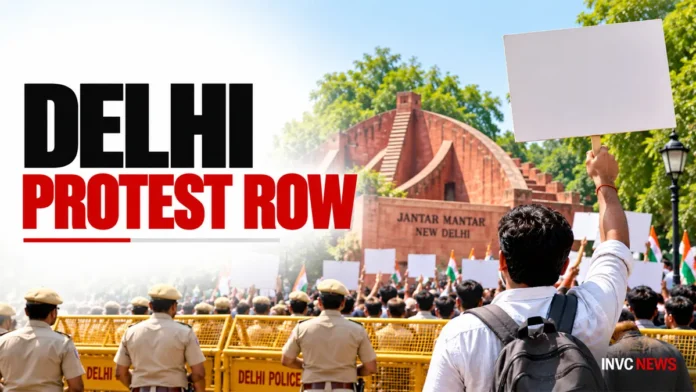
NEW DELHI, India | October 4, 2026 — The Jantar Mantar protest has moved into a fresh confrontation over electoral accountability and access to Delhi’s designated protest site. Police detained demonstrators again on Saturday, October 3, as groups returned to demand Chief Election Commissioner Gyanesh Kumar’s resignation. Reports published Sunday put Saturday’s detentions at around 150. For readers following the dispute, two developments matter: protesters continue to challenge voter-roll revisions, while police cite restrictions on unauthorized gatherings. Earlier Metro closure notices, however, do not establish which stations face restrictions today.
THE 60-SECOND BRIEF
- Protesters returned to central Delhi on October 3, following demonstrations on October 2.
- Indian Express and Times of India reported around 150 detentions on Saturday.
- Demonstrators demanded Kumar’s resignation over alleged electoral-roll irregularities.
- Police cited the absence of permission and restrictions on unauthorized gatherings.
- The Election Commission has rejected allegations of wrongdoing.
- Travelers should check current service notices before relying on earlier Metro restrictions.
What Happened
Saturday’s mobilization brought students, activists and political figures back toward Jantar Mantar.
Security personnel blocked approaches to the protest site with barricades. Police then detained demonstrators as groups attempted to gather or move through the area.
Reuters witnessed protesters pushing past security barricades before officers intervened. Its report confirmed detentions but said police did not provide a count or identify everyone they detained.
Consequently, the figure of around 150 comes from subsequent newspaper reporting. It should carry attribution rather than appear as an independently verified INVC total.
The fresh action followed Friday’s confrontation, when police also prevented demonstrators from assembling at the site.
Why It Matters
The confrontation now involves two related questions.
First, protesters want answers about electoral-roll revisions and the handling of voter entries. They argue that eligible people have lost their place on the lists and demand accountability from the Election Commission.
Second, the demonstrations raise questions about how authorities manage access to a designated protest venue.
Those issues require separate scrutiny. A disagreement over permission does not settle the voter-roll allegations. Likewise, a demand for electoral accountability does not establish what happened in every encounter between protesters and officers.
For readers, the strongest evidence will come from specific records: disputed voter entries, official explanations, police statements and documented complaints.
What Each Side Says
Protesters allege that voter-list changes favor Prime Minister Narendra Modi’s governing BJP. They have called for Kumar to step down.
The Election Commission rejects allegations of wrongdoing. It says the verification exercise aims to remove duplicate, deceased and ineligible entries. Reuters also reported that the Commission directed officials on Friday to register newly eligible voters and people omitted from the rolls.
Delhi Police said it had not granted permission for the proposed protest and warned against unauthorized gatherings around Jantar Mantar.
Meanwhile, AISA members alleged that officers mistreated their national president, Neha Bora. Indian Express reported that police rejected those allegations.
These competing accounts need attribution. Neither political criticism nor a police denial substitutes for an examination of a specific complaint.
Numbers That Matter
October 2: The first day of demonstrations covered in INVC’s existing report.
October 3: The second day, when police again detained protesters.
Around 150: Saturday’s reported detention count, according to Indian Express and Times of India.
Three FIRs: Indian Express reported that Delhi Police registered three cases against unidentified people concerning Friday’s demonstration attempts.
The dates are essential. Reporting the second day’s events on October 4 does not mean the detentions occurred on Sunday.
The Bigger Picture
INVC NEWS’s assessment is that the dispute needs a clearer distinction between political demands and verifiable administrative decisions.
A resignation demand expresses the protesters’ position. Establishing an improper voter deletion requires evidence about the entry, the reason for its removal and the available correction process.
Similarly, assessing police conduct requires details about individual encounters and complaints.
Keeping those questions specific helps readers follow the controversy without treating every allegation as a finding.
What Happens Next
AFP reported that opposition groups planned a march toward the Election Commission on Tuesday, October 6. It also reported a CJP mobilization call for October 10.
Those are announced plans. Permission decisions and later organizer statements will determine how the events proceed.
For commuters, current information remains equally important. The earlier restrictions on Metro station entry and exit should not serve as a live Sunday travel advisory without a fresh service notice.
INVC NEWS Bottom Line
Saturday’s detentions extended the confrontation at Jantar Mantar. The next meaningful developments will involve official responses to voter-roll complaints, examination of police-conduct allegations and decisions about further demonstrations. Readers should track those outcomes alongside the political statements.