
By Team INVC | INVC NEWS
Updated: August 29, 2026 | 20 : 15 PM IST
TEHRAN, Iran | August 29, 2026 —
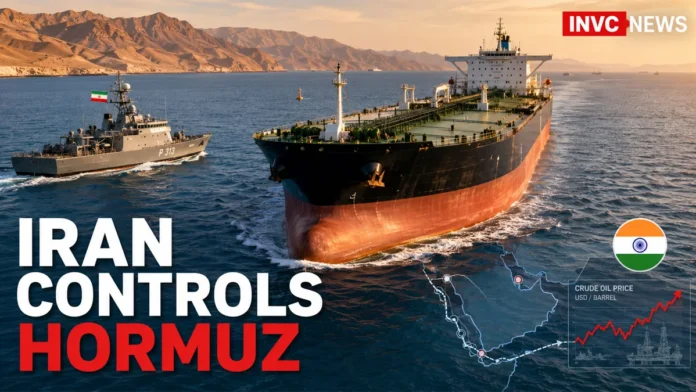
Iran has declared that it retains “full control” of the Strait of Hormuz and rejected Washington’s claim that the strategic waterway is open, sharply raising the risk surrounding oil, LNG and LPG supplies headed toward India and other Asian markets.
The fresh assertion came as Iran’s leadership acknowledged the severe economic damage inflicted by six months of war, American sanctions and a naval blockade. President Masoud Pezeshkian said the country’s imports and exports had fallen by nearly 35%, while annual inflation reached 66% last month.
Despite that pressure, Tehran signalled no immediate retreat. It said diplomacy and defence would remain parallel instruments of national policy while restrictions over the Strait of Hormuz continued.
Iran Rejects US Claim That Hormuz Is Open
The United States maintains that its forces have cleared sea mines and restored access through the waterway. Iran’s Revolutionary Guards, however, dismissed that position and insisted that ships still require Iranian permission to transit safely.
Shipping data underscores the continuing disruption. Only seven commodity vessels reportedly crossed the strait on Thursday, down from 17 a day earlier and below the recent daily average of 15.
Iran has also warned vessels accused of violating its transit requirements that they could face fines, detention or confiscation of cargo. The warning covers ships carrying crude oil, LNG, LPG and refined petroleum products.
That makes the crisis bigger than a political dispute over who controls the waterway. It directly affects tanker availability, freight rates, insurance premiums and the reliability of energy shipments.
Why India Faces a Direct Energy Risk
The Strait of Hormuz connects the Persian Gulf with the Gulf of Oman and the Arabian Sea. Before the conflict, approximately one-fifth of the world’s oil and LNG trade passed through this narrow maritime route.
India is particularly exposed because a substantial share of its crude oil and natural gas supplies comes from the Gulf.
Major energy exporters including Saudi Arabia, Iraq, the United Arab Emirates, Kuwait and Qatar depend heavily on the waterway. Qatar’s LNG shipments and significant LPG cargoes bound for India also pass through Hormuz.
The US Energy Information Administration estimates that 89% of the crude oil and condensate transported through Hormuz during the first half of 2025 went to Asian markets, including India.
Consequently, even without a complete shutdown, slower vessel movement can raise costs for Indian refiners and fuel importers.
Will Petrol and Diesel Prices Rise Immediately?
The latest Iranian declaration does not automatically mean an immediate increase in retail petrol and diesel prices in India.
Domestic prices depend on several factors, including global crude benchmarks, the rupee-dollar exchange rate, refinery margins, taxes, existing inventories and the pricing decisions of oil-marketing companies.
However, a prolonged Hormuz disruption would increase pressure. Tankers may demand higher freight charges, insurers may raise war-risk premiums and importers may need to seek costlier alternative supplies.
India’s strategic petroleum reserves and diversified crude sourcing provide a temporary cushion, but they cannot completely eliminate the impact of a sustained Gulf supply shock.
LPG and LNG may face an even more direct challenge because replacing Gulf cargoes quickly is difficult and alternative supplies can carry substantially higher transportation costs.
Also Read – : Latest Business and Energy News on INVC NEWS
Iran’s Economy Cracks, but Tehran Refuses to Yield
Iran’s refusal to surrender control of Hormuz comes despite mounting economic pain at home.
Pezeshkian said sanctions and the blockade had reduced foreign trade by almost 35%. Inflation has climbed to 66%, intensifying pressure on household budgets, employment and domestic markets.
Iran reportedly exported about 90 million barrels of oil during a short-lived June memorandum that temporarily permitted Iranian sales. That opening ended after disagreements over the strait derailed the arrangement.
Qatar and other regional governments have attempted to revive diplomacy, but negotiations remain stalled. Tehran says any lasting settlement must address sanctions, military action and control over shipping.
What Happens Next?
Three developments will determine the immediate risk for India:
- Whether daily tanker traffic through Hormuz recovers or falls further.
- Whether Iran begins detaining or confiscating vessels.
- Whether diplomatic talks produce a durable shipping agreement.
For India, the danger is no longer limited to a theoretical closure of the strait. Restricted traffic, higher insurance costs and uncertain vessel clearances can push up import expenses even while some ships continue to move.
Iran’s latest declaration has therefore returned the Strait of Hormuz—and India’s energy security—to the centre of the global oil crisis.







Comments are closed.