By Team INVC | INVC NEWS
New Delhi, India
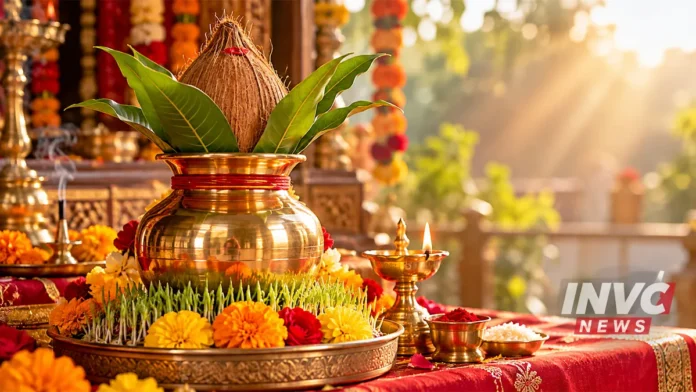
Publication Date: October 11, 2026 – Nine days of prayer, devotion and celebration begin with a ritual that holds special significance for millions of Hindu devotees: the establishment of the sacred Kalash. Shardiya Navratri begins on Sunday, October 11, 2026, with Ghatasthapana and the worship of Maa Shailputri, the first of the nine forms of Goddess Durga.
Observed across India, the festival brings families together for daily prayers, traditional offerings, fasting and temple visits. For those preparing to observe the first day, the key details include the significance of Ghatasthapana, the customary worship of Maa Shailputri, the offerings made during the puja and the meaning of the nine forms of the goddess.
The precise Ghatasthapana muhurat depends on the location and the Panchang followed. Devotees should confirm the appropriate timing for their city before beginning the ceremony.
Shardiya Navratri 2026: Date, First-Day Deity and Rituals
Shardiya Navratri begins on the Pratipada, or first lunar day, of the waxing phase of the moon during the Hindu month of Ashwin.
The opening day is dedicated to Maa Shailputri. Ghatasthapana, also known as Kalash Sthapana, traditionally marks the beginning of the nine-day worship.
Here are the essential details for devotees:
- Festival date: Sunday, October 11, 2026
- Country: India
- Dateline: New Delhi, India
- First-day deity: Maa Shailputri
- Main ritual: Ghatasthapana or Kalash Sthapana
- Common observances: Puja, mantra recitation, aarti, offerings and fasting according to family traditions
- Timing guidance: Check a location-specific Hindu Panchang for the applicable muhurat.
Ghatasthapana Muhurat 2026: Why Local Timings Matter
Ghatasthapana is among the most important rituals performed on the first day of Navratri. A sacred Kalash is established in the designated worship area as devotees invoke the blessings of Goddess Durga.
The ceremony is traditionally performed during an auspicious period determined by the Hindu lunar calendar and local Panchang calculations. Sunrise times, geographical location and the calendar tradition being followed can affect the recommended window.
Because a verified, location-specific timing has not been established for this report, an exact start and end time should not be treated as confirmed. Devotees in New Delhi and other Indian cities should check their local Panchang or consult a trusted priest before performing the ceremony.
How to Perform Ghatasthapana
The ritual generally includes these steps, although the precise procedure varies by tradition:
- Clean the prayer area and prepare a dedicated place for worship.
- Arrange the Kalash and the materials prescribed by the household’s customs.
- Prepare the base with soil and grains if required by the ritual tradition.
- Fill and decorate the sacred pot according to customary practice.
- Establish the Kalash during the selected auspicious period.
- Offer flowers, incense, a lamp and prayers to Goddess Durga.
- Begin the first day’s worship with Maa Shailputri Puja.
Families may follow different procedures depending on regional customs and the guidance of their priest.
Maa Shailputri Puja Vidhi: How to Worship on Day 1
Maa Shailputri is the first manifestation of Goddess Durga worshipped during Navratri. Her name means “daughter of the mountain,” reflecting her association with the Himalayas.
Traditional images depict her riding a bull and holding a trident and a lotus. Her form is associated with stability, determination, strength and spiritual grounding.
The first day’s worship is an opportunity for devotees to begin Navratri with prayer and a renewed commitment to their spiritual practices.
Traditional Puja Steps
Devotees commonly follow these practices:
- Bathe and wear clean clothes before beginning the ceremony.
- Place an image or idol of Maa Shailputri in the worship area.
- Offer flowers, incense, a lit lamp and customary prasad.
- Recite the goddess’s mantra and prayers followed by the family.
- Perform aarti and offer prayers for peace, strength and well-being.
Fasting is also observed by many devotees. The form of fasting varies according to personal circumstances, family customs and regional traditions.
Maa Shailputri Bhog: What Should Devotees Offer?
Traditional offerings may include fresh fruits, flowers, milk-based preparations and other vegetarian foods permitted by the family’s religious practices.
White-colored offerings are associated with Maa Shailputri in some devotional traditions. However, there is no single offering practice that applies uniformly to every region or household.
After the puja, prasad is traditionally distributed among family members and other devotees.
Maa Shailputri Mantra and Aarti
A commonly recited mantra dedicated to the goddess is:
Om Devi Shailputryai Namah.
Devotees may repeat this mantra during worship as an expression of reverence and devotion.
Aarti is another important part of the ceremony. Worshippers traditionally sing devotional hymns while moving a lit lamp before the goddess. Families may follow the aarti and prayers customary in their own region.
Navdurga: The Nine Forms of Goddess Durga
Shardiya Navratri is dedicated to nine manifestations of Goddess Durga, collectively known as Navdurga. Each day has its own devotional significance.
Day 1: Maa Shailputri
The daughter of the Himalayas, Maa Shailputri is traditionally depicted riding a bull. She represents strength, stability and determination.
Day 2: Maa Brahmacharini
Associated with penance, devotion, knowledge and self-discipline, she symbolizes dedication to spiritual practice.
Day 3: Maa Chandraghanta
Recognized by the crescent moon on her forehead, she represents courage and protection from fear.
Day 4: Maa Kushmanda
Associated with the creation of the universe, she symbolizes creative energy, vitality and well-being.
Day 5: Maa Skandamata
The mother of Lord Skanda, also known as Kartikeya, she represents maternal love, compassion and care.
Day 6: Maa Katyayani
Associated with courage and divine power, she is worshipped for strength and the ability to overcome obstacles.
Day 7: Maa Kalaratri
A fierce manifestation of the goddess, she symbolizes the destruction of darkness and the removal of fear.
Day 8: Maa Mahagauri
Associated with purity, peace and spiritual renewal, she is traditionally depicted in white garments.
Day 9: Maa Siddhidatri
Associated with spiritual accomplishments and divine blessings, she represents wisdom and the attainment of siddhis.
The nine-day sequence allows devotees to focus on a different manifestation of the goddess each day.
Why Is Shardiya Navratri Celebrated?
Shardiya Navratri is one of the major Hindu festivals dedicated to Goddess Durga. In Hindu tradition, it celebrates the triumph of divine power over evil and the restoration of righteousness.
The festival is observed through prayer, fasting, devotional music, temple visits and community celebrations. Regional traditions add their own character to the occasion.
Durga Puja is a major part of the festivities in eastern India, while Garba and Dandiya Raas are prominent in Gujarat and other regions. Families across the country also observe household pujas and gather for religious and cultural events.
The festival culminates in Vijayadashami, also known as Dussehra in many parts of India.
What Should Devotees Prepare Before the First-Day Puja?
Those planning to observe Navratri can prepare by arranging the required puja materials, selecting the prayers they intend to recite and confirming the local Ghatasthapana muhurat.
Devotees observing a fast should follow practices appropriate to their circumstances and customary religious observance. Anyone uncertain about ritual timing or procedure can consult a trusted local Panchang or priest.
INVC NEWS: What Readers Need to Know
Shardiya Navratri begins on October 11, 2026, with Ghatasthapana and the worship of Maa Shailputri. The first day establishes the devotional foundation for the remaining eight days, during which devotees honor the other forms of Goddess Durga.
For readers preparing to celebrate, the essential steps are straightforward: confirm the local auspicious timing, prepare the worship area, understand the traditional rituals and follow the customs of the household.