MOSCOW, August 13, 2026
India Northern Sea Route cooperation is attracting growing attention, Russian President Vladimir Putin said as Moscow seeks to expand the Arctic passage into a major commercial link with Asian partners.
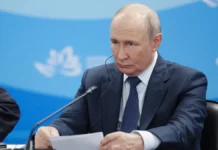
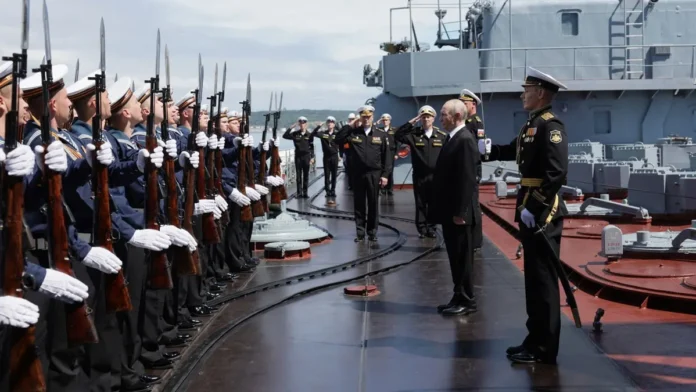
Speaking Wednesday during a meeting with Pacific Fleet personnel aboard the missile cruiser Varyag, Putin named India and China among the countries actively discussing cooperation with Russia on the Northern Sea Route.
His remarks did not announce a new Indian shipping agreement or project. However, they reinforced an established area of India-Russia dialogue covering maritime connectivity, Arctic navigation and the training of Indian seafarers for polar operations.
Putin separately warned of what he called “artificial tensions” in the Arctic. During the same Pacific Fleet engagement, he also threatened reciprocal action if European governments begin seizing Russian merchant vessels. Those maritime warnings relate to Western sanctions enforcement and should not be treated as part of India’s Northern Sea Route discussions.
What Did Putin Say About India?
Putin said Russia remains willing to develop the Northern Sea Route with international partners while operating within existing maritime law.
“We see growing interest from countries wishing to engage with us on this front,” Putin said. “These partners include, above all, our friends China, India and other nations who are actively discussing these matters with us.”
He identified India as one of the key countries showing increasing interest in cooperation on the Arctic route.
The statement establishes that talks are active, but it does not identify a new investment commitment, cargo target, shipping schedule or bilateral route agreement.
India has not announced that the Northern Sea Route will replace its existing trade corridors. Any commercial use would depend on costs, cargo availability, insurance, port facilities, ice conditions, sanctions exposure and reliable navigation support.
What Is the Northern Sea Route?
The Northern Sea Route is an approximately 5,600-kilometer shipping corridor that runs through Arctic waters along Russia’s northern coastline.
It stretches from waters near the Kara Sea in the west toward the Bering Strait in the east, crossing the Laptev, East Siberian and Chukchi seas. It forms the principal Russian section of the wider Northeast Passage.
For some voyages between northern Europe and northeastern Asia, the route can be shorter than traveling through the Mediterranean Sea and Suez Canal. The actual advantage varies substantially according to the ship’s origin, destination, cargo, season and need for icebreaker assistance.
Unlike established year-round global shipping corridors, Arctic navigation involves additional operational demands, including:
- Sea ice and extreme weather
- Limited ports and emergency infrastructure
- Specialized vessels or ice-class certification
- Icebreaker assistance
- Higher insurance and rescue costs
- Sensitive environmental conditions
- Complex international and Russian regulations
The Northern Sea Route is therefore a developing strategic corridor, not a simple all-season substitute for the Suez Canal.
Why Is the Route Important to India?
India imports significant volumes of energy and commodities from Russia. A commercially viable Arctic corridor could eventually support selected shipments between Russian ports and Asian markets.
Potential areas of interest include:
- Crude oil and liquefied natural gas transportation
- Coal, fertilizers, metals and other bulk commodities
- Port and logistics investment
- Polar-navigation training for Indian seafarers
- Shipbuilding and ice-class vessel expertise
- Scientific and environmental research
- Links with the Chennai–Vladivostok maritime corridor
India and Russia have discussed Northern Sea Route cooperation for several years. Their July 2024 joint statement supported developing shipping between the two countries through the route. India-Russia joint statement
During Putin’s December 2025 visit to India, the two countries also agreed to strengthen maritime cooperation and train Indian specialists for vessels operating in polar waters.
That record shows that India’s interest predates Putin’s latest comments. His statement reflects continuing negotiations rather than a sudden policy shift.
Could It Shorten India-Russia Shipping Times?
The Northern Sea Route could shorten some journeys involving Russia’s Arctic or Far Eastern ports, but the benefit for India is not automatic.
Indian ports lie south of the principal Asia-Europe maritime axis. Ships may still need to travel through Southeast Asian waters before reaching the Bering Strait, which can reduce the distance advantage available to destinations such as China, Japan or South Korea.
The route may be more relevant for specific cargoes originating in Russia’s Arctic regions than for every category of India-Russia trade.
Its commercial viability would depend on:
- Freight and fuel costs
- Seasonal accessibility
- Icebreaker fees
- Availability of suitable ships
- Cargo volumes in both directions
- Sanctions and banking restrictions
- Insurance and liability coverage
- Reliability of Russian Arctic infrastructure
India is therefore likely to assess the corridor as an additional strategic option rather than an immediate replacement for established shipping routes.
What Did Putin Say About Arctic Tensions?
Putin warned that geopolitical competition was creating “artificial tensions” in the Arctic.
Russia has repeatedly criticized the expansion of NATO activity in the High North. Finland joined the alliance in 2023 and Sweden followed in 2024, leaving Russia as the only Arctic state outside NATO.
Moscow has expanded military infrastructure across its northern territory while arguing that it must protect its coastline, economic assets and shipping routes. NATO governments, in turn, view Russia’s Arctic military buildup and closer coordination with China as security concerns.
The region’s strategic importance is growing because it contains natural resources, supports missile-warning and naval operations, and could see greater maritime activity as sea-ice patterns change.
Putin nevertheless said commercial cooperation on the Northern Sea Route remained possible within international maritime law.
Why Is the Arctic Becoming More Competitive?
Three factors are driving greater competition in the region.
First, changing climate conditions are altering sea-ice coverage and creating longer periods during which some Arctic waters may be navigable. That does not make the route safe or predictable, but it can expand its potential operating window.
Second, the Arctic contains major reserves of oil, natural gas and minerals. Russia views these resources as strategically important to its economy.
Third, the region has substantial military value. Northern waters provide access between the Atlantic and Pacific, while the Russian Arctic hosts naval bases and strategic assets.
These overlapping commercial, environmental and security interests have made the Arctic increasingly important to Russia, NATO states and Asian economies.
How Do Western Sanctions Affect Russia’s Arctic Strategy?
The United States, European Union and other governments imposed extensive sanctions on Russia following its invasion of Ukraine.
Those measures have restricted access to financing, technology, insurance and shipping services. Russia has responded by redirecting more energy trade toward Asian buyers and promoting alternative commercial corridors.
The Northern Sea Route fits that broader strategy because it could strengthen Russia’s maritime links with Asian markets. However, the corridor itself cannot eliminate sanctions-related obstacles.
Ships may still encounter restrictions involving:
- Financing and international payments
- Marine insurance
- Port access
- Sanctioned cargoes or companies
- Vessel ownership and registration
- Western maritime technology
- Environmental and safety certification
India has maintained economic and strategic relations with Russia while also protecting ties with the United States and Europe. Any large-scale Arctic project would therefore require careful legal and commercial evaluation.
What Is Russia’s “Shadow Fleet”?
Western governments use the term “shadow fleet” to describe aging or opaquely owned tankers accused of helping Russia transport oil outside sanctions and price-cap restrictions.
Such ships may operate under flags of convenience, use complicated ownership arrangements or rely on insurance outside traditional Western markets. Russia rejects many Western allegations and argues that lawful commercial shipping is being targeted for political reasons.
European governments have increased sanctions, inspections and detentions involving Russian-linked vessels. They cite sanctions evasion, questionable registration, safety risks and environmental concerns.
Not every ship described as part of a shadow fleet is Russian-owned, and the legal basis for detaining individual vessels depends on its flag, cargo, sanctions status and conduct at sea.
What Did Putin Threaten Over Russian Ships?
Putin said Russia would retaliate if European countries began seizing Russian merchant vessels.
“If this begins to be implemented in practice, we will be forced to respond in kind,” he said, characterizing such seizures as “piracy and robbery.”
He added that a Russian response would not necessarily occur in the same waters where its vessels were detained. Moscow could act wherever it considered necessary and appropriate, including the Pacific, he said.
Pacific Fleet commander Admiral Viktor Liina told Putin that Russian forces were prepared to inspect and detain vessels associated with what Moscow calls hostile states.
The statements represented an escalation in rhetoric, but they did not establish that Russia had already begun a systematic campaign of reciprocal seizures. Putin’s warning over merchant ships
Is the Shipping Warning Connected to India?
Not directly.
Putin discussed Northern Sea Route cooperation and Western pressure on Russian shipping during the same broader engagement with Pacific Fleet personnel. However, they are distinct issues.
India was named as a prospective commercial and maritime partner. It was not included in Putin’s threat against European seizures, nor has New Delhi endorsed reciprocal vessel detentions.
Combining the two issues without that distinction could incorrectly suggest that India is participating in Russia’s confrontation with European maritime authorities.
What Could India Gain From Arctic Cooperation?
If commercially and legally viable, India could gain an additional channel for accessing Russian energy and commodities.
Long-term cooperation could also help Indian companies develop expertise in polar shipping, ice-class vessels, cold-region logistics and specialized maritime training.
India has maintained an Arctic research presence and has held observer status in the Arctic Council since 2013. Its interests extend beyond trade to climate science, environmental protection and the effect of Arctic changes on the Indian monsoon and Himalayan region.
The opportunity therefore covers several areas:
- Energy security
- Trade diversification
- Shipping and port expertise
- Scientific research
- Maritime workforce development
- Strategic engagement with Russia
- Participation in emerging Arctic governance discussions
What Are the Risks for India?
The Northern Sea Route also presents significant uncertainties.
Environmental damage in Arctic waters can be difficult to contain because of remoteness, cold conditions and limited emergency infrastructure. Increased shipping creates risks involving oil spills, black-carbon emissions and disruption to fragile ecosystems.
Commercial operators also face unpredictable ice conditions, high insurance costs and limited rescue facilities.
Geopolitically, deeper involvement could expose Indian companies to Western sanctions scrutiny or political pressure. India would also need to avoid becoming entangled in the growing military rivalry between Russia and NATO.
New Delhi’s likely challenge will be to pursue practical economic and scientific cooperation without appearing to support the militarization of the Arctic or sanctions evasion.
What Happens Next?
Putin’s statement signals political support from Moscow, but the next stage depends on concrete negotiations.
India and Russia would need to determine:
- Which cargoes are commercially suitable
- Which ports and terminals would be used
- Whether regular or pilot voyages are viable
- How ice-class vessels would be sourced
- Who would provide insurance and financing
- How sanctions compliance would be managed
- What environmental safeguards would apply
- How Indian seafarers would be trained for polar operations
Until those elements are agreed upon, India Northern Sea Route cooperation remains a developing strategic initiative rather than an operational shipping commitment.