NEW DELHI | August 8, 2026
Global Food Prices Hit Three-Year High as War, Weather and Crop Risks Fuel Fresh Inflation Fears
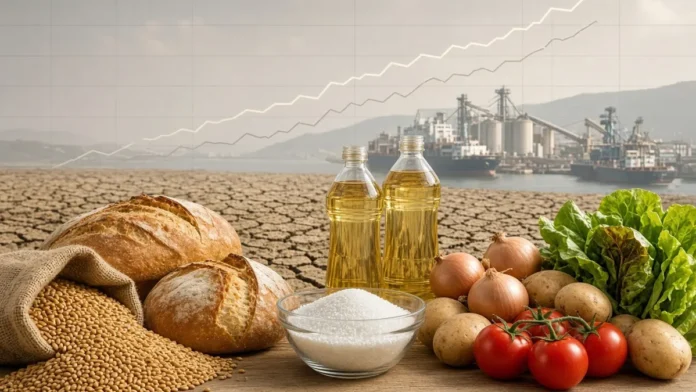
Global Food Prices climbed to their highest level in more than three years in July 2026, raising concerns that households could face another round of food inflation as wars in the Gulf and Black Sea regions combine with extreme weather, higher energy costs and crop-production risks.
The United Nations Food and Agriculture Organization’s Food Price Index rose to 131.1 points in July, up from 130.3 in June and its highest level since January 2023. The increase was led by cereals, vegetable oils and sugar, while meat and dairy prices provided some relief.
The FAO index tracks monthly changes in international prices for a basket of globally traded food commodities, including cereals, vegetable oils, dairy, meat and sugar.
Could the World Be Heading Toward Another Food Inflation Shock?
The latest rise has revived concerns about global food affordability, particularly as several inflationary forces are emerging at the same time.
FAO’s chief economist has warned that conflicts affecting Iran and Ukraine, combined with the possibility of a strong El Niño, could create a difficult mix of higher production costs and weaker crop yields. Extreme heat has already damaged crops in several major producing regions, while disruptions around the Black Sea continue to affect grain-market sentiment.
Higher crude oil prices can also feed into food costs through transportation, fertilizers and biofuel markets, meaning geopolitical shocks can eventually reach household grocery bills even far from conflict zones.
Cereal Prices Jump 3.4%, Wheat Up 5.8%
Cereals were among the biggest drivers of July’s rise.
The FAO Cereal Price Index increased 3.4% from June, reversing some of the weakness seen in the previous month. International wheat prices surged 5.8%, reflecting concerns over disrupted Black Sea exports and crop damage caused by intense heat in major producing areas.
Maize prices also moved higher as dry conditions raised concerns about supplies in key growing regions.
The sharp reversal is significant because the FAO’s cereal index had fallen 3.5% in June, when better supply expectations had temporarily eased pressure on global markets.
Vegetable Oil Prices Rise to Highest Level Since 2022
Vegetable oils also became more expensive in July.
The FAO’s vegetable oil price gauge rose by about 2% during the month, supported by higher palm and soybean oil prices. Strong biodiesel demand and elevated energy prices contributed to the increase.
Oil prices matter directly for countries such as India because imported edible oils are widely used by households, restaurants and food manufacturers.
Higher crude prices can also strengthen demand for vegetable oils as feedstocks for biofuels, tightening supplies available for food use.
Sugar Prices Surge 5.6%
Global sugar prices rose 5.6% in July, one of the sharpest increases among major food commodities.
Weather-related concerns in producing regions and expectations of stronger ethanol demand in Brazil contributed to the rally. When Brazilian mills divert more sugarcane toward ethanol production, the amount available for sugar can decline, putting upward pressure on international prices.
Meat Prices Offer Some Relief
Not every component of the global food basket moved higher.
The FAO meat price index fell by about 2.8% from June, helping offset part of the increase in cereals, vegetable oils and sugar. Dairy prices also eased during the month.
Even so, the overall index still advanced because increases in staple commodities outweighed declines elsewhere.
India’s Household Food Bill Is Also Rising
The international price surge comes as Indian households are already seeing pressure on everyday meal costs.
According to Crisil Intelligence’s Roti Rice Rate analysis, the cost of preparing a home-cooked vegetarian thali rose 4% year over year in July, while a non-vegetarian thali became 9% more expensive. Rising onion, edible oil, LPG and chicken prices were among the main contributors.
Based on the reported July figures, the average vegetarian thali cost rose to around ₹29.1, compared with ₹28.1 a year earlier. A non-vegetarian thali increased to approximately ₹58.3, from ₹53.5 in July 2025.
Crisil calculates its monthly thali indicator using ingredient prices across India’s north, south, east and west regions, covering staples such as cereals, pulses, vegetables, edible oil, broilers and cooking gas.
Onion, Cooking Oil and LPG Push Up Costs
Onion prices reportedly climbed about 20% year over year after unseasonal rainfall damaged crops in Maharashtra during March and April.
Edible oil prices were also higher, while LPG costs remained elevated.
Some relief came from potatoes and tomatoes, which were cheaper compared with a year earlier.
The situation marks a significant change from July 2025, when Crisil had reported a sharp annual decline in both vegetarian and non-vegetarian thali costs because vegetable and poultry prices were considerably softer.
Chicken Drives Non-Vegetarian Thali Inflation
The sharper rise in non-vegetarian meal costs was largely linked to chicken.
Broiler prices reportedly increased about 14% year over year, a major factor because chicken accounts for roughly half of the cost of Crisil’s representative non-vegetarian thali.
Earlier this year, extreme summer heat had already tightened poultry supplies by increasing bird mortality, slowing weight gain and discouraging fresh chick placements, Crisil said in its June analysis.
India Inflation Could Rise to 4.50% in July
The rise in food prices is also expected to show up in India’s official consumer inflation data.
A Reuters poll of 40 economists conducted August 5-7 forecast that India’s retail inflation likely increased to 4.50% in July, from 4.38% in June. The official Consumer Price Index data is scheduled for release on August 12.
If the forecast proves correct, inflation would remain above the Reserve Bank of India’s 4% medium-term target for a second consecutive month, though it would still be within the central bank’s broader 2%-6% tolerance range.
Food Inflation Remains the Biggest Concern
Kanika Pasricha, chief economic advisor at Union Bank of India, told Reuters that food inflation remained on an upward trend even though underlying price pressures were relatively subdued.
She said improved monsoon activity during July had supported crop conditions, but near-term supply concerns had not disappeared. She also noted that limited changes in domestic retail fuel prices could help contain the direct impact of volatile crude oil on headline inflation.
Uneven rainfall remains another risk. Union Bank research has previously highlighted that even when total monsoon rainfall is normal, poor regional distribution can damage crops concentrated in key producing areas and push food inflation higher.
Will Food Prices Keep Rising?
The latest data does not necessarily mean the world is heading into an uncontrollable food-price crisis, but risks have clearly increased.
Much will depend on weather conditions, Black Sea grain exports, the conflict involving Iran, energy prices, fertilizer availability, El Niño and crop yields over the next few months.
For India, a healthier monsoon and improved domestic crop supplies could soften some food-price pressures. But a prolonged rise in international wheat, sugar, edible oil or energy prices could eventually filter through to consumers.
With global food prices already at their highest level in more than three years and India’s household meal costs rising again, inflation is likely to remain one of the most closely watched economic issues in the months ahead.