NEW DELHI, India | September 24, 2026 —
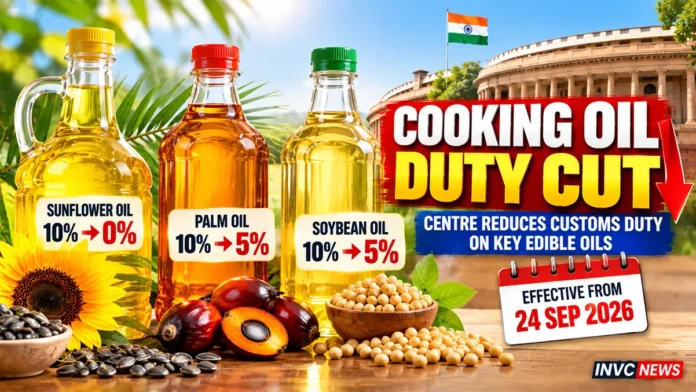
Indian households could get some relief from rising cooking-oil prices after the Central Government sharply reduced Basic Customs Duty on key edible oils, including palm oil, soybean oil and sunflower oil.
The revised rates take effect from September 24, 2026, under Finance Ministry Notification No. 31/2026-Customs issued on September 23.
The biggest cut applies to crude sunflower oil.
Its Basic Customs Duty has been reduced from 10% to Nil.
Meanwhile, the duty on crude palm oil and crude soybean oil has been halved from 10% to 5%.
The government has also reduced duty on refined varieties, creating the possibility of lower import costs across a major part of India’s cooking-oil market.
However, consumers should not expect retail prices to fall overnight.
The eventual reduction will depend on global edible-oil prices, the rupee, freight costs, existing inventories and how quickly manufacturers and distributors pass the lower import cost through the supply chain.
New Edible Oil Customs Duty Rates
The revised Basic Customs Duty structure is:
Crude Palm Oil
Earlier: 10%
Now: 5%
Crude Soybean Oil
Earlier: 10%
Now: 5%
Crude Sunflower Oil
Earlier: 10%
Now: Nil
Refined Palm Oil
Earlier: 32.5%
Now: 27.5%
Refined Soybean Oil
Earlier: 32.5%
Now: 27.5%
Refined Sunflower Oil
Earlier: 32.5%
Now: 22.5%
The Gazette notification formally brings all six changes into force from September 24.
Sunflower Oil Gets the Biggest Relief
Among the major imported edible oils, sunflower oil gets the most aggressive tariff cut.
The Basic Customs Duty on crude sunflower oil has been completely removed, falling from 10% to zero.
At the same time, refined sunflower oil duty has been cut by 10 percentage points, from 32.5% to 22.5%.
This could reduce the landed cost of imported sunflower oil more significantly than some other categories, although international prices and currency movements will still affect the final consumer price.
Palm and Soybean Oil Duty Halved on Crude Imports
Crude palm oil and crude soybean oil have both received a five-percentage-point reduction.
Their BCD has dropped from 10% to 5%.
Refined palm and soybean oils also receive relief, with duty falling from 32.5% to 27.5%.
Palm oil is particularly important because it is widely used by food manufacturers, restaurants, bakeries, snack makers and households.
Changes in palm-oil import costs can therefore spread through several parts of the food economy.
Why Did the Government Cut Duty Now?
The timing is important.
Vegetable-oil prices in India have risen by nearly 20% over the past year, increasing pressure on household food budgets just as festival-season demand rises. India imports close to two-thirds of the vegetable oil it consumes.
Demand typically strengthens between September and November as households and businesses increase production of sweets, snacks and fried foods.
Lowering import duty reduces the cost at which overseas edible oil enters India.
The policy can therefore help moderate domestic prices if international costs do not rise sharply at the same time.
Will Cooking Oil Become Cheaper Immediately?
Not necessarily.
Import duty is only one component of the retail price.
A cooking-oil packet sold in a supermarket also reflects international commodity prices, freight charges, currency movements, refining costs, packaging, transportation and distributor margins.
Companies may also hold stocks imported earlier at higher duty rates.
Therefore, the reduction in customs duty may take time to appear in Maximum Retail Prices.
The direction, however, is clear: the tax component on fresh imports has fallen.
Why India Is So Sensitive to Global Oil Prices
India is one of the world’s largest buyers of vegetable oils and relies heavily on imports to meet domestic consumption.
Major supplies come from countries including Indonesia and Malaysia for palm oil, while soybean and sunflower oils also arrive from countries such as Argentina, Russia and Ukraine.
That dependence means changes in global prices, freight rates or the rupee-dollar exchange rate can quickly influence Indian cooking-oil prices.
Import-duty policy is one of the tools the government can use to offset some of that pressure.
What About Mustard Oil?
The new notification specifically targets palm, soybean and sunflower oils.
It does not directly announce the same duty reduction for mustard oil.
However, edible oils compete with one another in the broader market.
If imported palm, soybean or sunflower oil becomes cheaper, it can indirectly influence demand and pricing across other edible-oil categories.
That does not guarantee mustard-oil prices will fall by the same amount.
Consumers Could Benefit — But Farmers Are Part of the Equation
Import-duty decisions on edible oils involve a difficult balance.
Lower duties can help consumers by making imported oil cheaper.
However, cheaper imports can also put pressure on prices received by domestic oilseed farmers.
India has previously raised edible-oil tariffs to protect growers and support domestic oilseed prices.
In September 2024, for example, the government sharply increased duties on crude and refined edible oils as part of an effort to support farmers.
The latest move shifts the balance back toward controlling consumer prices as edible-oil inflation rises.
Domestic Refiners Will Also Watch the Duty Gap
The difference between duty on crude and refined oil matters to Indian refiners.
A larger duty gap can make it more attractive to import crude oil and refine it domestically rather than import finished refined oil.
Under the new structure, refined oils continue to carry substantially higher BCD than crude oils.
That maintains some protection for domestic refining operations even while the government reduces the overall import-tax burden.
Festival Season Makes the Timing Crucial
The duty reduction comes just as India enters one of its strongest periods for edible-oil consumption.
Festivals drive higher demand for fried snacks, sweets, bakery products and prepared foods.
If lower landed costs translate quickly into wholesale and retail prices, households and food businesses could see some relief during the festive season.
However, traders will also watch international markets.
Higher Indian buying can itself support global palm and soybean-oil prices, which could offset part of the benefit from lower duties.
What Should Consumers Watch Now?
The most important number is no longer the customs-duty rate.
It is the retail price on the shelf.
Consumers should watch whether major edible-oil brands revise MRPs and distributor prices during the coming days and weeks.
Wholesale prices may respond first.
Packaged retail prices could follow later as older inventory is replaced by imports arriving under the new duty structure.
Bottom Line
The government has delivered a substantial edible-oil duty cut.
Crude sunflower oil now carries zero Basic Customs Duty.
Crude palm and soybean oils fall to 5%.
Refined sunflower oil drops to 22.5%, while refined palm and soybean oils fall to 27.5%.
For consumers, that creates a real possibility of cheaper cooking oil.
But the final benefit will depend on one crucial test:
Will companies pass the lower import cost on to households?