NEW DELHI, August 12, 2026 —
Russia Appoints Former CJI DY Chandrachud as Arbitrator in Ukrainian Bank Dispute
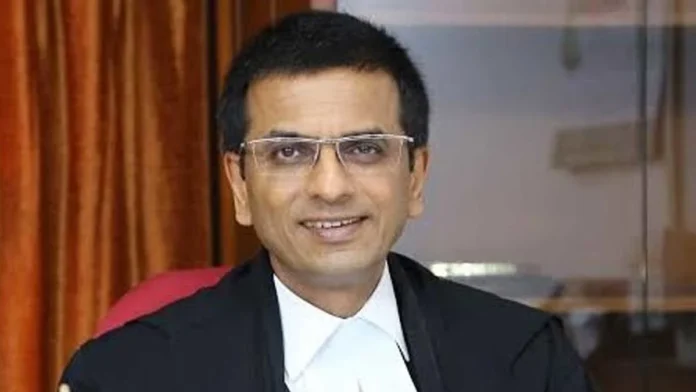
DY Chandrachud Russia arbitration appointment has placed the former chief justice of India on a three-member international tribunal that will hear a major investment dispute between the Russian Federation and Ukraine’s state-owned Oschadbank.
Russia selected Justice Dhananjaya Y. Chandrachud as one of the tribunal’s three arbitrators. Oschadbank appointed Greek arbitration specialist Stavros Brekoulakis, a professor at the National University of Singapore.
The two sides jointly chose Costa Rican arbitrator and former foreign trade minister Dyalá Jiménez to serve as president of the tribunal.
The case concerns Oschadbank’s claim that it lost assets and business operations in the Donetsk, Luhansk, Kherson and Zaporizhzhia regions because of Russia’s military actions, particularly following the full-scale invasion of Ukraine in 2022.
Is Chandrachud Representing Russia?
Although Russia selected Chandrachud, he is not serving as Russia’s lawyer or legal representative.
In international arbitration, each party commonly nominates one member of a three-person tribunal. Those arbitrators are expected to remain independent and impartial, consider the evidence and apply the governing law.
A party-appointed arbitrator does not advocate for the government or company that selected them. Russia has a separate team of lawyers handling its defense in the proceedings.
Chandrachud’s role will be to assess jurisdiction, evidence, treaty obligations and legal arguments along with the tribunal’s other two members.
The tribunal will ultimately decide whether it has authority to hear the case, whether Russia breached the relevant investment treaty and whether Oschadbank is entitled to compensation.
What Is Oschadbank Claiming?
Oschadbank says it lost significant assets and the ability to conduct business in four regions of eastern and southern Ukraine.
The bank alleges that Russia’s actions violated protections provided under a 1998 agreement between the governments of Ukraine and Russia concerning the encouragement and reciprocal protection of investments.
On July 24, 2025, Oschadbank sent Russia a formal notice of dispute. According to the bank, the notice went unanswered.
Oschadbank formally commenced the new arbitration on April 7, 2026. In its notice, the bank alleged breaches of Russia’s obligations under the bilateral investment treaty and violations of international law.
These remain claims made by Oschadbank. The tribunal has not yet issued a ruling establishing Russia’s liability or determining any compensation.
How Much Money Is Involved?
The new claim has been described as being worth hundreds of millions of dollars, but a precise publicly confirmed figure was not available at the time of publication.
The case should not be confused with Oschadbank’s earlier arbitration concerning assets in Crimea.
In the Crimea case, an arbitral tribunal awarded the bank more than $1.1 billion. Oschadbank says its total claim in that earlier dispute, including accrued interest, now exceeds $1.3 billion.
Therefore, the widely cited billion-dollar figure relates principally to the previous Crimea award and accumulated claims—not necessarily to the value of the new case involving Donetsk, Luhansk, Kherson and Zaporizhzhia.
Who Are the Three Arbitrators?
| Tribunal member | Appointed by | Role |
|---|---|---|
| D.Y. Chandrachud | Russian Federation | Party-appointed arbitrator |
| Stavros Brekoulakis | Oschadbank | Party-appointed arbitrator |
| Dyalá Jiménez | Jointly selected | Tribunal president |
Jiménez is an experienced international arbitrator and previously served as Costa Rica’s minister of foreign trade.
Brekoulakis is a Greek legal scholar and arbitration specialist who teaches at the National University of Singapore.
Chandrachud served as India’s 50th chief justice from November 2022 until November 2024. His judicial experience included major constitutional, commercial and public-law matters.
Chandrachud Previously Declined Russian Approaches
Russia had reportedly approached Chandrachud about serving as its appointed arbitrator in two earlier treaty disputes involving German energy company Wintershall Dea and Ukrainian electricity-grid operator Ukrenergo.
He did not accept those appointments.
The approaches reportedly occurred on the same day that the Permanent Court of Arbitration designated Chandrachud as an appointing authority in the Wintershall proceedings.
An appointing authority may be asked to resolve procedural issues such as selecting arbitrators when the parties cannot agree. Because Russia had separately contacted him about potentially serving as its arbitrator, Chandrachud disclosed the communications and later stepped down from the appointing-authority role.
His acceptance of the Oschadbank appointment concerns a separate proceeding and a different institutional function.
Separate Legal Teams Represent Both Parties
Oschadbank is represented by lawyers from Quinn Emanuel Urquhart & Sullivan and Ukrainian law firm Asters.
Russia is represented by lawyers from Pinna Goldberg, including Andrea Pinna, Pratyush Panjwani and Dimitrios Papageorgiou.
The legal teams will submit arguments and evidence to the tribunal. The arbitrators will decide the dispute based on the applicable treaty, procedural rules and international law.
How the Arbitration Could Proceed
Investment arbitration usually progresses through several stages.
The tribunal may first consider procedural matters and objections to jurisdiction. The parties then typically submit written pleadings, supporting evidence and expert reports before participating in hearings.
Russia may dispute the tribunal’s jurisdiction, challenge Oschadbank’s legal interpretation or contest the claimed value of the losses. Oschadbank will have to establish that its investments qualified for protection under the treaty and that the alleged conduct caused compensable damage.
Even if Oschadbank ultimately receives an award, enforcement could become a separate legal battle. Sovereign states may resist payment, forcing successful claimants to seek enforcement against eligible state-owned assets in different jurisdictions.
Oschadbank has already pursued that strategy in its earlier Crimea dispute, including attempts to attach Russian assets in France.
Chandrachud’s appointment is therefore an important procedural development, but it does not indicate how the tribunal will decide the case or whether the Ukrainian bank will receive compensation.