By Team INVC | INVC NEWS
TEHRAN, Iran | September 20, 2026 —
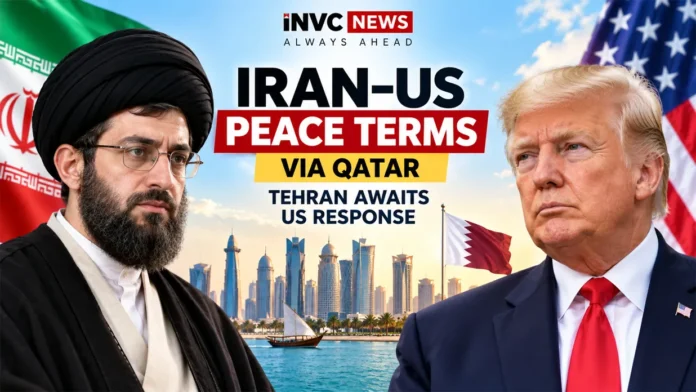
Iran has sent Washington a set of conditions for ending the ongoing conflict through Qatar and is now waiting for a response from U.S. President Donald Trump, according to Mohsen Rezaei, secretary of Iran’s Supreme National Security Council.
The development puts Qatar back at the center of diplomatic efforts to reopen a path between Tehran and Washington after earlier negotiations broke down.
Rezaei said Tehran remains in contact with Qatar, which has passed Iran’s conditions to the United States. He said Iran wants an end to fighting across all fronts, the release of Iranian assets frozen or seized abroad, and an end to the U.S. naval blockade of Iranian ports.
Iran also wants the escalating fighting between Saudi Arabia and Yemen’s Houthis to stop as part of a broader regional settlement.
Iran Says It Is Waiting for Trump’s Response
Rezaei told Al Jazeera that Qatar had already conveyed Tehran’s conditions to Washington and that Iran was now waiting for President Trump’s response.
However, neither the White House nor the U.S. State Department had publicly announced acceptance of the Iranian conditions in the reporting available by early September 20.
That distinction matters.
Iran has presented the proposal publicly, but a negotiated agreement has not yet been announced.
Diplomacy, therefore, remains at an early and uncertain stage.
What Iran Wants From the United States
Iran’s publicly stated conditions center on three major issues.
First, Tehran wants the war to end across all active fronts.
Second, it wants Iranian assets that have been frozen or seized to be released.
Third, Iran wants Washington to end its naval blockade of Iranian ports.
The blockade and restrictions on maritime trade have become central issues in the confrontation because they directly affect Iran’s ability to export energy and conduct international commerce.
Rezaei had previously linked any reopening of the Strait of Hormuz to broader political and security concessions from Washington, including an end to hostilities and changes to U.S. restrictions on Iran.
Strait of Hormuz Remains Central to the Conflict
The Strait of Hormuz has become one of the most important pressure points in the confrontation.
Before the war, roughly one-fifth of internationally traded oil and natural gas moved through the waterway, according to reporting on the conflict.
Shipping traffic has since fallen significantly below prewar levels, although the U.S. military says commercial movement has started to recover.
U.S. Central Command chief Adm. Brad Cooper said American forces had supported the movement of about 1 billion barrels of oil through the Strait of Hormuz during the previous two months.
He also said traffic involving oil, natural gas and cargo over the previous two weeks had reached its highest level in six months.
Independent monitors, however, still reported shipping activity well below levels seen before the conflict.
That makes maritime access one of the most difficult issues any U.S.-Iran agreement would have to resolve.
Qatar Returns to the Center of Iran-US Diplomacy
Qatar has repeatedly served as an intermediary in regional disputes because it maintains working relationships with governments that do not communicate easily with one another.
In the latest effort, Tehran says Doha transmitted its conditions directly to Washington.
Pakistan has also participated in diplomatic efforts aimed at restoring negotiations between Iran and the United States.
Qatar and Pakistan have been trying to revive the negotiating process after an earlier memorandum of understanding failed to produce a lasting settlement.
The renewed mediation comes as military pressure continues elsewhere in the region.
Saudi-Houthi Fighting Adds Another Complication
Iran’s demand for an end to the Saudi-Houthi fighting adds another layer to the negotiations.
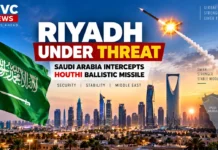
Saudi Arabia said on September 19 that its forces intercepted a ballistic missile aimed at Riyadh after Yemen’s Houthi movement claimed missile and drone attacks against targets in the kingdom.
Saudi authorities reported no casualties from the Riyadh incident. They also said other attempted attacks against infrastructure in Yanbu, Taif, Baysh and Farasan were thwarted.
The Houthis claimed they had targeted sensitive sites and Saudi Aramco facilities, but those claims were not independently verified.
The escalation means any broader regional settlement would have to address more than direct U.S.-Iran hostilities.
Trump Recently Said He Hoped the War Was Nearing an End
President Trump said on September 16 that he hoped the conflict with Iran was moving toward an end.
At the same time, diplomatic efforts were continuing ahead of meetings involving Gulf leaders around the United Nations General Assembly in New York.
The United States has also agreed to allow a core Iranian delegation, including President Masoud Pezeshkian and Foreign Minister Abbas Araqchi, to attend the UN General Assembly under travel restrictions.
That creates another possible diplomatic venue, although no formal U.S.-Iran summit has been announced.
No Deal Yet — The Next Move Is Washington’s
The latest Iranian proposal does not mean the conflict has ended.
Instead, it establishes Tehran’s publicly stated negotiating position and places attention on Washington’s response.
Several major questions remain unresolved.
The United States would have to decide whether it is prepared to modify its naval blockade, address frozen Iranian assets and accept a broader ceasefire framework covering multiple regional fronts.
Iran, meanwhile, would face questions over maritime security, the Strait of Hormuz and its relationship with regional armed groups.
For now, Qatar’s mediation has created another diplomatic opening.
Whether that opening develops into formal negotiations will depend on how Washington responds to Tehran’s terms.