BEIJING, China | September 7, 2026 —
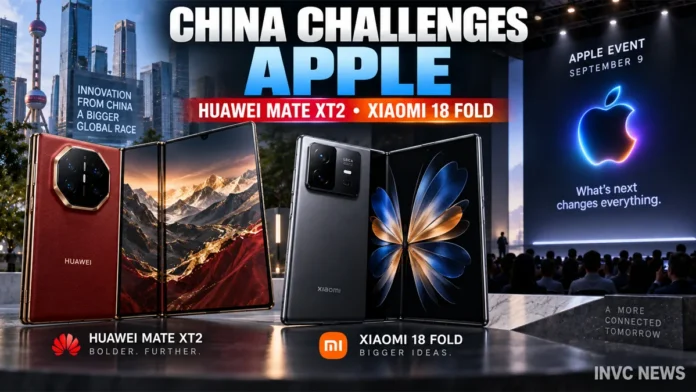
Huawei Mate XT2 and Xiaomi 18 Fold have intensified the battle for premium smartphone buyers just two days before Apple’s September 9 event, giving China’s two leading technology brands a chance to grab attention before the next generation of iPhones takes center stage.
Huawei launched its latest premium dual-fold smartphone, the Mate XT2, while Xiaomi introduced the Xiaomi 18 Fold, its most ambitious foldable phone to date.
Both devices target the upper end of China’s smartphone market, where Apple remains a powerful competitor but Huawei has rebuilt a commanding domestic position.
The timing is difficult to ignore.
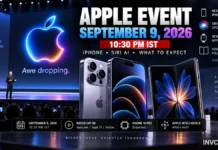
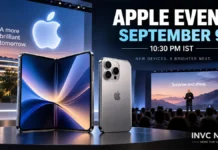
Apple will hold its special event on September 9, and expectations are high for the company’s next iPhone lineup. Apple has not officially confirmed which products it will unveil, so reports of a foldable iPhone should still be treated as expectations rather than confirmed launch details.
Huawei and Xiaomi, however, have already put their new hardware on the table.
Huawei Mate XT2 Pushes Dual-Fold Design Further
Huawei’s Mate XT2 sits at the extreme premium end of the foldable market.
The smartphone uses a dual-fold design that can transform from a conventional phone-sized device into a much larger tablet-style display.
Huawei has equipped the new model with its Kirin 9050 Pro processor and what it calls LogicFolding architecture, designed to improve performance and efficiency.
The company has also upgraded water resistance and introduced new display privacy technology.
Huawei is positioning the device as much more than a novelty.
The Mate XT2 represents the company’s effort to make multi-fold smartphones a recognizable premium product category rather than an experimental form factor.
Prices range from 19,999 yuan to 24,999 yuan, putting the device firmly in luxury smartphone territory.
That translates to roughly $3,000 or more depending on configuration and exchange rates.
Xiaomi 18 Fold Targets Apple’s Premium Customers
Xiaomi is attacking the same market from a different price point.
The Xiaomi 18 Fold starts at approximately 10,999 yuan and reaches 14,999 yuan for higher configurations.
That makes it substantially cheaper than Huawei’s Mate XT2 while still targeting buyers willing to spend heavily on a flagship smartphone.
Xiaomi has equipped the phone with its XRing O3 processor, an AI-focused chip developed as part of the company’s broader attempt to control more of the technology inside its devices.
The company has promoted performance comparisons with Apple’s A19 Pro, although such manufacturer benchmarks should be treated cautiously until independent testing becomes widely available.
The Xiaomi 18 Fold also uses memory supplied by Chinese manufacturer CXMT, highlighting another trend that extends beyond smartphones.
Chinese technology companies are increasingly trying to reduce reliance on overseas components.
China’s Smartphone Makers Are Competing on More Than Design
The new phones demonstrate how the smartphone battle has changed.
For years, premium competition centered on camera quality, processor speed, screen resolution and design.
Those factors still matter.
But companies are now competing over artificial intelligence, chip design, foldable displays, privacy features and supply-chain independence.
Huawei has spent years rebuilding its smartphone business following US technology restrictions.
Xiaomi, meanwhile, has increased investment in proprietary processors and premium devices as it tries to move beyond its reputation as a value-focused brand.
Both companies now want to compete directly with Apple for customers who are willing to pay flagship prices.
Huawei Holds a Powerful Position in China
Huawei enters this competition with significant momentum.
The company led China’s overall smartphone market in the second quarter of 2026, with Counterpoint Research estimating its share at approximately 23%.
Apple followed at about 18%, while Xiaomi held roughly 12%.
Huawei’s position in foldables is even stronger.
Current industry estimates cited around the latest launches place Huawei at approximately 68% of China’s foldable smartphone market in the second quarter.
That gives the company an enormous domestic advantage as foldables become more strategically important.
Apple, by contrast, has yet to launch a foldable iPhone.
Why Apple’s September 9 Event Matters
Apple’s event arrives at an unusually competitive moment.
The company has officially scheduled its September event for September 9 at 10 a.m. Pacific Time, or 10:30 PM IST in India.
Apple has not announced the event’s product lineup in advance.
However, expectations surrounding the next iPhone generation are already driving intense consumer attention.
That creates an obvious incentive for Huawei and Xiaomi to launch major devices immediately beforehand.
Even if Apple does not introduce a foldable phone this week, the growing sophistication of Chinese foldables puts pressure on the company to show why conventional premium smartphones can still command extremely high prices.
If Apple does reveal a foldable model, the competitive landscape becomes even more interesting.
Huawei and Xiaomi would already have next-generation foldables on sale while Apple enters a category its Chinese rivals have spent years developing.
Foldables Remain Small but Strategically Important
Foldable smartphones still represent a relatively small portion of global smartphone shipments.
Their strategic importance, however, is much larger than their volume.
Foldables allow companies to demonstrate advanced display technology, hinge engineering, materials science and premium industrial design.
They also command some of the highest prices in the smartphone industry.
That makes them useful halo products.
A consumer may never buy a $3,000 dual-fold smartphone, but the technological image created by such a device can strengthen the brand’s entire product lineup.
Huawei has used that strategy effectively in China.
Xiaomi now appears determined to do the same.
Huawei’s Comeback Complicates Apple’s China Strategy
China remains one of Apple’s most important markets, but competition has become much tougher.
Huawei’s return to the premium smartphone segment has given Chinese consumers a strong domestic alternative.
The company’s Kirin-powered devices have also become symbols of China’s effort to build advanced technology despite US restrictions.
Apple continues to perform strongly in China, particularly among premium buyers, but it no longer enjoys the same competitive environment it faced several years ago.
The next phase of the battle will increasingly depend on ecosystem strength, AI capabilities, camera performance, chips and new hardware formats.
Foldables are becoming part of that equation.
Xiaomi Wants to Prove It Belongs in the Ultra-Premium Market
For Xiaomi, the 18 Fold serves a slightly different purpose.
The company already sells enormous volumes of smartphones, but much of its historic success came from aggressively priced devices.
Ultra-premium smartphones demand a different kind of brand loyalty.
Consumers paying more than $1,500 expect not only strong specifications but also premium materials, software support, camera quality and a highly polished ecosystem.
The Xiaomi 18 Fold is therefore a test of whether Xiaomi can compete not only with other Android manufacturers but with Apple’s strongest customer base.
Its in-house chip strategy could become particularly important if the company can demonstrate consistent performance over several generations.
The Bigger Battle Is About the Future of the Smartphone
The Huawei Mate XT2 and Xiaomi 18 Fold launches are not simply about which company sells the most foldable phones this year.
They represent a broader competition over what the next smartphone should become.
Huawei is betting on increasingly sophisticated folding displays.
Xiaomi is combining foldable hardware with its own AI-focused silicon.
Apple is pushing deeper into Apple Intelligence, Siri AI and tightly integrated hardware and software.
All three approaches point toward the same conclusion.
The premium smartphone market is entering another period of rapid change.
Apple will take the stage on September 9.
But before Cupertino gets its turn, Huawei and Xiaomi have already made their move.
KEY SPECS AT A GLANCE
Huawei Mate XT2
- Dual-fold premium design
- Kirin 9050 Pro processor
- Enhanced water resistance
- Privacy display technology
- Price: 19,999–24,999 yuan
Xiaomi 18 Fold
- Premium foldable design
- XRing O3 processor
- AI-focused performance
- Chinese-made CXMT memory components
- Price: 10,999–14,999 yuan
Apple
- Special event: September 9, 2026
- India time: 10:30 PM IST
- Next-generation iPhone announcements expected
- Apple has not officially confirmed a foldable iPhone launch