Washington, D.C., United States | July 25, 2026
Trump Saudi Israel Normalization
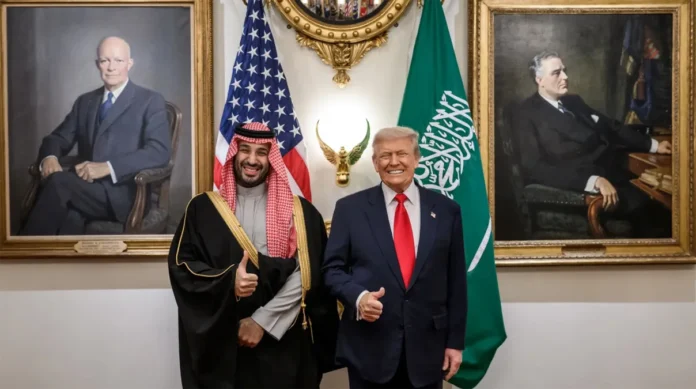
The White House has reiterated that President Donald Trump expects Saudi Arabia to normalize diplomatic relations with Israel, describing the move as a central objective of the administration’s Middle East strategy.
Officials also expressed hope that Saudi Arabia would eventually join the Abraham Accords as part of a broader regional understanding that could include a proposed civilian nuclear cooperation agreement.
White House: Normalization Remains a Key Priority
Speaking to reporters, White House Deputy Chief of Staff Stephen Miller said President Trump has consistently conveyed his expectations to Saudi leaders regarding diplomatic normalization with Israel.
“The President has made clear—not only during this term but for years—that normalizing relations with Israel and joining the Abraham Accords remain among his key expectations,” Miller said.
His remarks came in response to questions about whether a proposed U.S.-Saudi civilian nuclear agreement remains linked to Saudi recognition of Israel.
No Timeline Given for Diplomatic Process
While Miller did not directly address the sequencing of a potential nuclear agreement and diplomatic normalization, he emphasized Trump’s longstanding relationship with Saudi leadership.
According to Miller, the President has a deep understanding of Saudi Arabia’s strategic priorities and believes diplomacy should be guided by long-term regional objectives.
“No American understands Saudi Arabia, its leadership, and the nature of the bilateral relationship better than President Trump,” Miller said.
Reference to Trump’s 2017 Riyadh Speech
Miller pointed to Trump’s 2017 speech in Riyadh as the foundation of the administration’s relationship with Saudi Arabia.
He argued that the Trump administration helped strengthen Saudi Arabia’s role as a regional partner in combating violent extremism and promoting stability across the Middle East.
According to Miller, those efforts have positioned Saudi Arabia as one of the region’s most significant strategic partners.
White House Sees Historic Opportunity
Miller said President Trump understands Saudi Arabia’s long-term strategic vision and believes diplomacy could eventually produce a historic breakthrough.
He suggested that successful normalization between Saudi Arabia and Israel would mark another milestone in a region that has undergone significant diplomatic changes in recent years.
Comments on Nicaragua and Latin America
During the same briefing, Miller also criticized the government of Nicaraguan President Daniel Ortega, alleging that the country’s political system has become increasingly restrictive.
He argued that socialist and communist governments often gain power through elections but subsequently weaken democratic institutions and political freedoms.
Miller added that Secretary of State Marco Rubio has already outlined the administration’s position on Nicaragua.
He also said the administration’s broader “Shield of the Americas” strategy reflects shifting geopolitical dynamics across Latin America and growing alignment with the United States.
These remarks represent the administration’s policy views and political assessments.
Remarks on the SAVE America Act
Asked about ongoing legal discussions surrounding the SAVE America Act, Miller declined to comment on legislative negotiations and referred questions to the White House Office of Legislative Affairs.
However, he reiterated that President Trump remains optimistic about the legislation’s eventual passage.
Attendance at White House Correspondents’ Dinner
Miller also confirmed that President Trump would attend the White House Correspondents’ Dinner on Friday evening.
He thanked the U.S. Secret Service and other law enforcement agencies for ensuring security during the event, saying they make it possible for attendees to enjoy the evening safely.
Background: Abraham Accords
The Abraham Accords, brokered during President Trump’s first term, established diplomatic relations between Israel and several Arab nations, including:
- United Arab Emirates
- Bahrain
- Morocco
- Sudan
Successive U.S. administrations have viewed potential Saudi recognition of Israel as one of the most significant remaining opportunities to expand the accords and reshape regional diplomacy.
Key Highlights
- The White House said President Trump continues to expect Saudi Arabia to normalize relations with Israel.
- Officials expressed hope that Saudi Arabia will eventually join the Abraham Accords.
- Deputy Chief of Staff Stephen Miller described normalization as a central objective of Trump’s Middle East strategy.
- Miller highlighted Trump’s longstanding relationship with Saudi leadership and referenced the President’s 2017 Riyadh speech.
- The briefing also included comments on Nicaragua, Latin American geopolitics, the SAVE America Act, and the White House Correspondents’ Dinner.
- Saudi Arabia has not publicly announced any new decision regarding normalization with Israel in connection with these remarks.