NEW DELHI, India | September 9, 2026 —
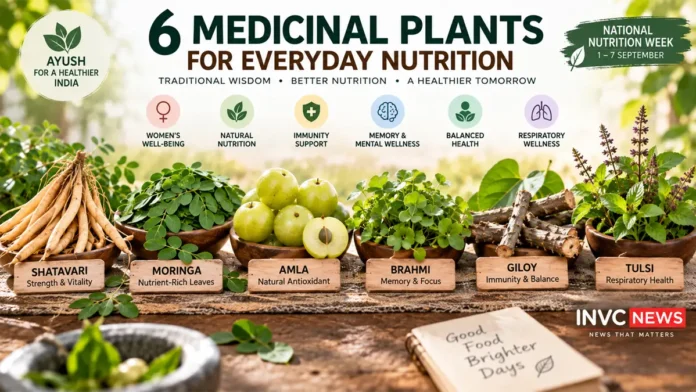
6 Medicinal Plants for Daily Nutrition have come into focus after the National Medicinal Plants Board under the Ministry of AYUSH highlighted Shatavari, Moringa, Amla, Brahmi, Giloy and Tulsi during National Nutrition Week.
The Board encouraged people to pay greater attention to nutrient-rich plants as part of everyday dietary habits, particularly in the context of micronutrient deficiencies.
However, medicinal plants should not be treated as replacements for a balanced diet, prescribed medicines or treatment for diagnosed nutritional deficiencies.
Each plant has a different nutritional profile, traditional use and safety consideration.
Here is what is known about the six plants highlighted by the Board.
1. Shatavari: Traditionally Valued for Strength and Well-Being
Shatavari, botanically known as Asparagus racemosus, has a long history of use in Ayurveda.
It has traditionally been associated with women’s health, vitality, digestion and general well-being.
The roots are the most commonly used part of the plant in Ayurvedic preparations.
National Medicinal Plants Board records also identify Shatavari among important medicinal plants promoted for cultivation in India.
Traditional use, however, should not be confused with proof that Shatavari can prevent or treat a specific medical condition.
Concentrated supplements may also act differently from food-based preparations.
People who are pregnant, breastfeeding, taking regular medicines or managing hormone-sensitive conditions should seek professional medical advice before using concentrated Shatavari products.
2. Moringa: Nutrient-Dense Leaves With Protein, Vitamins and Minerals
Moringa, commonly known as drumstick tree, is widely used as both a food and traditional plant.
Its leaves contain protein, vitamins, minerals and plant compounds.
For that reason, Moringa leaves can contribute to dietary variety when consumed as part of normal meals.
Fresh leaves are commonly added to curries, dals, soups and other preparations in different parts of India.
The most important distinction is between eating Moringa as food and taking highly concentrated powders or extracts.
A normal food portion does not necessarily deliver the same amount of plant compounds as a supplement.
Moringa should therefore complement — not replace — other sources of protein, vegetables, fruits, whole grains and essential nutrients.
3. Amla: Well Known for Vitamin C
Amla, or Indian gooseberry, is one of India’s most familiar traditional fruits.
It is naturally rich in vitamin C and contains several antioxidant plant compounds.
Amla can be eaten fresh or used in chutneys, preserves, juices and traditional preparations.
The National Medicinal Plants Board has long recognized Amla as an important medicinal plant.
Traditional medicine associates Amla with digestion and general wellness.
From a nutritional perspective, its vitamin C content is particularly relevant because vitamin C supports several normal biological functions and also helps improve absorption of non-heme iron from plant foods.
That makes vitamin C-rich foods useful within a balanced diet.
Still, Amla should not be described as a guaranteed “immunity booster” or cure for infections.
4. Brahmi: Traditional Herb Associated With Memory and Cognition
Brahmi, botanically known as Bacopa monnieri, is widely used in Ayurveda in formulations traditionally associated with memory and cognitive function.
The plant has also attracted modern scientific interest because of compounds known as bacosides.
Some human studies have investigated Brahmi extracts for cognition and memory, although results depend on the preparation, dose and study population.
That means claims such as “Brahmi makes the brain stronger” should be used cautiously.
NMPB recognizes Brahmi as an important medicinal plant and includes it in its medicinal-plant resources.
People should also remember that herbal products can interact with medicines and may cause side effects.
5. Giloy: Important in Ayurveda, but Use Requires Caution
Giloy, scientifically known as Tinospora cordifolia, is another widely recognized Ayurvedic plant.
Traditionally, it has been used in formulations related to general health, fever and metabolic balance.
Ayurveda also describes Giloy within the concept of balancing doshas.
However, modern health reporting needs an important safety qualification.
Giloy should not be promoted as a universal immunity remedy or taken indiscriminately in concentrated supplement form.
Published medical reports have linked some Tinospora-containing herbal products with cases of liver injury.
The actual risk can depend on the species, preparation, dose and individual health factors.
Anyone with liver disease, autoimmune conditions, chronic illness or ongoing medication should speak with a qualified healthcare professional before taking Giloy supplements.
Its long traditional history does not make every preparation risk-free.
6. Tulsi: Traditional Use for Respiratory and General Wellness
Tulsi, or holy basil, is botanically associated with Ocimum tenuiflorum, also historically listed as Ocimum sanctum.
Tulsi leaves are widely used in Indian households, teas and traditional preparations.
The plant has historically been associated with respiratory wellness, stress adaptation and general health.
Laboratory studies have investigated antioxidant and other biological properties in Tulsi.
However, those findings should not be translated into claims that Tulsi prevents respiratory infections or treats serious disease.
National Medicinal Plants Board resources list Tulsi among important medicinal plants cultivated and promoted across India.
Can These Six Plants Prevent Micronutrient Deficiency?
Not by themselves.
Micronutrient deficiency can involve inadequate levels of iron, vitamin B12, folate, vitamin D, iodine, zinc or other essential nutrients.
Different deficiencies have different causes and require different dietary or medical approaches.
For example, iron-deficiency anemia cannot be assumed to improve simply by adding one medicinal herb to the diet.
Likewise, vitamin B12 deficiency may require supplementation or treatment depending on severity and cause.
Medicinal and nutrient-rich plants can contribute to dietary variety, but they should form part of a broader food pattern.
Food Use and Medicinal Use Are Not the Same
This distinction is crucial.
Eating Amla fruit, adding Moringa leaves to food or drinking an occasional Tulsi infusion is different from consuming concentrated capsules, extracts or powders.
Supplements can contain much higher doses of biologically active compounds.
They may also interact with prescription medicines or affect people differently depending on age, pregnancy status and underlying health conditions.
“Natural” does not automatically mean “safe for everyone.”
National Nutrition Week Focuses Attention on Better Diets
National Nutrition Week is observed in India from September 1 to September 7.
The broader purpose is to encourage healthier eating habits and greater awareness of nutrition.
The NMPB message adds a traditional-medicinal-plant perspective to that discussion.
India has a rich heritage of using plants for food, health and traditional medicine.
The challenge today is to combine that knowledge with modern nutritional science and appropriate medical evidence.
The Bottom Line
Shatavari, Moringa, Amla, Brahmi, Giloy and Tulsi all have established places in Indian traditional medicine.
Some also provide useful nutrients or plant compounds when consumed appropriately.
However, no single herb can provide “complete nutrition.”
A balanced diet still requires adequate protein, healthy fats, carbohydrates, fiber, vitamins, minerals and sufficient overall energy from a variety of foods.
Medicinal plants can complement that pattern.
They should not replace it.