UNITED NATIONS, United States | September 24, 2026 —
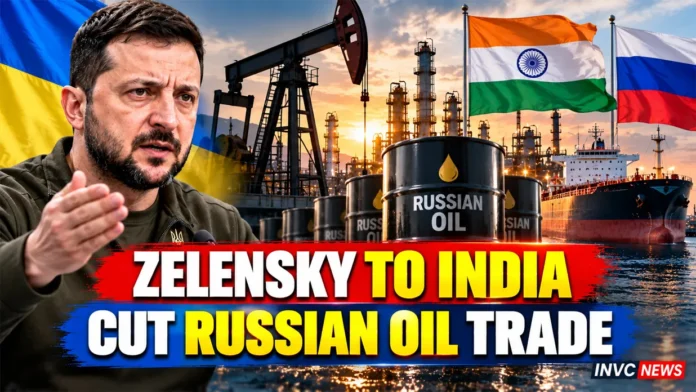
Ukrainian President Volodymyr Zelenskyy has intensified his campaign against Russia’s energy revenues, urging major buyers including India, China and Turkey to reduce or end energy trade with Moscow.
Zelenskyy argues that oil and other energy revenues give Russia the financial capacity to continue its war in Ukraine.
In an interview reported ahead of his United Nations appearance, Zelenskyy said Russia’s economy had become heavily dependent on countries including India, China and Turkey and argued that cutting those energy relationships would put far greater pressure on Moscow to stop fighting.
He carried the same argument to the United Nations General Assembly on September 23, telling world leaders that Russia’s revenues must remain a target and calling for tighter restrictions on trade that generates income for Moscow.
Zelensky Puts India at Centre of Russian Oil Debate
India has become particularly important in the debate because it remains one of the world’s largest buyers of Russian crude.
Zelenskyy’s argument is straightforward: Russia earns money from energy exports, that revenue supports the Russian economy, and weakening those earnings could reduce Moscow’s capacity to finance a prolonged war.
However, the claim that ending energy trade would itself force Russia to stop fighting remains Zelenskyy’s assessment rather than a demonstrated outcome.
Russia receives income from several export markets, while the war is also shaped by military, political, territorial and diplomatic factors.
India’s Russian Oil Imports Have Already Fallen
India’s imports of Russian crude fell 16.5% in August 2026 to around 2.1 million barrels per day, according to trade data reported by Reuters.
Preliminary September figures indicated another decline toward approximately 1.9 million barrels per day.
Despite that fall, Russia remained India’s largest oil supplier.
Indian refiners have simultaneously increased or explored purchases from alternative suppliers as the international energy market adjusts to sanctions risks, Middle East disruption and changing crude-price economics.
India Says Energy Security Comes First
New Delhi has repeatedly rejected the idea that another country should determine where India buys its energy.
India’s Ministry of External Affairs says energy sourcing is guided by national interest, market conditions and the need to secure affordable supplies for 1.4 billion people.
The government has also said India will continue buying energy from diversified sources while monitoring international sanctions developments.
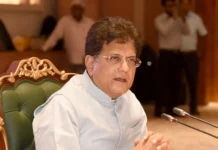
External Affairs Minister S. Jaishankar has previously argued that the Russia-Ukraine war will not be solved simply by one country buying or not buying Russian oil, and has instead emphasised dialogue and diplomacy.
That creates a clear difference between Kyiv and New Delhi.
Ukraine wants energy buyers to reduce Moscow’s revenues.
India says its purchases must remain driven by national energy requirements.
US Pressure Makes the Question More Serious
Zelenskyy’s appeal arrives at a particularly sensitive moment.
US President Donald Trump recently signed the Lindsey O. Graham Sanctioning Russia and Iran Act of 2026, giving Washington authority to impose tariffs of up to 100% on major countries purchasing Russian oil or gas under specified conditions.
India has already raised concerns with the United States over the potential consequences.
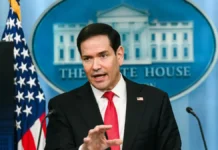
External Affairs Minister S. Jaishankar discussed the legislation with US Secretary of State Marco Rubio on the sidelines of the UN General Assembly, while New Delhi reiterated that it would protect its trade, economic interests and energy security.
That means India now faces pressure from two directions.
Ukraine is asking buyers to cut Russia’s revenue.
Washington has created a legal mechanism that could impose economic costs on major Russian energy customers.
At the same time, India must manage fuel costs and supply security at home.
Russia Pushes Back at Zelensky’s Argument
Moscow has rejected the suggestion that India should stop buying Russian energy.
Russian Deputy Foreign Minister Andrei Rudenko argued that Russia’s energy relationship with India has helped cushion New Delhi against the disruption and price pressures created by the wider global energy crisis.
Russia therefore presents its oil supplies to India as an energy-security benefit rather than simply a source of war financing.
Russia and India have also continued expanding financial mechanisms for bilateral trade, including greater use of rupees and roubles in settlement.
Zelensky Takes the Fight to the UN
Zelenskyy broadened the argument during his speech to the United Nations.
He said restricting Russia’s financial resources should remain a central international objective.
According to his argument, every additional source of revenue gives Moscow more resources and more time to continue the war.
Ukraine has therefore combined diplomatic pressure with military attacks on Russian oil refineries and other energy infrastructure.
Zelenskyy defended that strategy at the UN by arguing that Ukraine is trying to reduce Russia’s capacity to finance its military campaign.
Ukraine Is Also Offering an Energy Ceasefire
There is another layer to Zelenskyy’s position.
Ukraine says it is willing to consider a reciprocal energy ceasefire under which both Russia and Ukraine would stop attacking each other’s energy infrastructure.
Zelenskyy discussed that possibility with President Trump in New York and said Kyiv was ready for such an arrangement if Moscow also stopped attacking Ukraine’s energy system.
Russia has previously expressed conditional support for an energy truce while also linking it to other demands, including sanctions and commercial shipping.
No comprehensive agreement has yet been reached.
Why Russian Oil Matters So Much
Oil and gas exports remain an important source of revenue for Russia.
That explains why sanctions policy has increasingly focused on shipping networks, refineries, financial transactions and the countries purchasing Russian crude.
But the global oil market creates a difficult balancing act.
Removing a large volume of Russian crude from international supply could push prices higher.
That would affect major importers such as India and could also increase the value of Russian barrels that continue reaching the market.
Russian ESPO crude recently traded above $120 a barrel amid tight global supplies and Middle East disruption, illustrating how geopolitical pressure can sometimes drive energy prices sharply higher.
India Faces a Difficult Energy Equation
India imports most of the crude oil it consumes.
That makes price and availability central to government policy.
A rapid halt to Russian purchases would require Indian refiners to replace substantial volumes from other suppliers.
Middle Eastern producers, the United States, Latin America and other markets could provide alternatives, but the price and logistics would determine whether such a shift is commercially viable.
New Delhi has therefore continued to emphasise diversification rather than dependence on any single source.
India-Russia Relations Go Beyond Oil
The energy debate also sits inside a much broader bilateral relationship.
Prime Minister Narendra Modi and Russian President Vladimir Putin met during the BRICS Summit in New Delhi earlier this month and reviewed cooperation covering energy, trade, defence, space and other sectors.
India and Russia are also targeting $100 billion in bilateral trade by 2030.
At the same time, India has repeatedly called for an end to the Ukraine conflict and supported dialogue and diplomacy.
Prime Minister Narendra Modi told President Putin in August that the war should end for the sake of humanity.
That leaves New Delhi trying to maintain relations with Moscow while also expanding ties with the United States and Europe and supporting diplomatic efforts to end the war.
What Happens Next?
The next major question is whether Washington actually uses its new tariff powers against large Russian oil buyers.
If that happens, India could face a difficult choice between Russian crude economics and access to the US market.
Indian refiners are already diversifying supplies and monitoring possible sanctions exposure.
Zelenskyy, meanwhile, is likely to keep pushing governments to squeeze Russia’s energy revenues.
For Kyiv, the argument is simple: less energy money means less capacity for Moscow to sustain the war.
For India, the calculation is different: energy policy must protect affordability, supply security and national economic interests.
That collision between war strategy and energy security is now turning Russian oil into one of the most consequential diplomatic issues surrounding the Ukraine conflict.