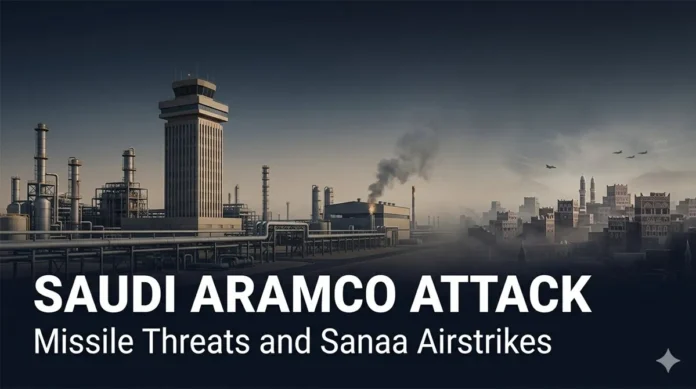
RIYADH, October 14, 2026: Tensions between Saudi Arabia and Yemen’s Houthi movement escalated after an attack targeted an administrative building at Saudi oil giant Aramco in the Eastern Province, while Saudi-led coalition forces launched airstrikes against Houthi-controlled areas in Yemen’s capital, Sanaa. Missile alerts in Riyadh and the Eastern Province added to concerns about the widening regional conflict and the security of critical energy infrastructure.
Saudi Arabia’s Energy Ministry said a limited fire broke out in an administrative building at the Aramco complex in Dhahran on Tuesday. Authorities responded to the incident, and no injuries or deaths were reported in the ministry’s statement. A company source separately told Reuters that a ballistic missile had struck the complex and damaged the top three floors of an office tower. The precise circumstances of the impact were not fully established in the initial official account.
The incident occurred as the Saudi-led coalition and the Houthis exchanged attacks, with both sides accusing the other of threatening important infrastructure. The developments have heightened concerns about civilian safety, regional stability and potential disruption to energy facilities and transport routes.
Saudi Aramco Building Targeted in Dhahran
The attack on the Aramco complex in Dhahran, in Saudi Arabia’s oil-producing Eastern Province, marked a significant development in the latest escalation.
Saudi Aramco is one of the world’s largest energy companies, operating extensive oil production, processing, pipeline and export infrastructure. Its headquarters complex includes facilities that support the management of the company’s operations.
According to Saudi authorities, the attack caused a limited fire in an administrative building, with no casualties reported at the site. Reuters, citing a company source, reported that a ballistic missile hit an office tower and damaged its top three floors.
The distinction between damage to an administrative building and disruption to oil production is important. The available reports confirmed damage and a fire at the complex but did not establish that the incident had interrupted Saudi oil output or exports.
The attack came after the Houthis issued warnings concerning Saudi oil facilities and other locations. The group has threatened additional action amid the intensifying confrontation with Saudi Arabia.
Why Did Saudi-Led Forces Strike Sanaa?
Saudi-led coalition forces carried out airstrikes in Sanaa, the Yemeni capital controlled by the Houthis, following warnings for civilians to leave areas around designated sites.
Houthi-affiliated broadcaster Al Masirah and local residents reported explosions in the city after the coalition announced evacuation instructions. Residents described hearing powerful blasts, while reporting indicated that the strikes targeted fuel-related facilities and other locations associated with the Houthi-controlled authorities.
Coalition spokesperson Major General Turki Al-Maliki accused the Houthis of using a Yemeni Oil Company facility and underground fuel depots to store missiles, drones and related military equipment. The coalition urged civilians to leave the designated areas before its operation.
These allegations form part of the competing claims made by the two sides. The military use of the facilities was alleged by the coalition and should not be treated as independently established without further verification.
The airstrikes also raised concerns about the consequences for civilians who depend on local fuel supplies for transport, electricity generation and other essential activities.
Fuel Shortage Concerns Grow in Sanaa
Reports of attacks on fuel-storage facilities prompted concern among residents in Sanaa about the availability of petroleum products.
Local reports described vehicles lining up at petrol stations as people worried about possible shortages. Fuel availability is particularly important in Yemen, where years of conflict and economic disruption have placed pressure on essential services and household budgets.
Yemen’s Oil Company reportedly said that the targeted storage facility was empty and that supplies had not been affected. That claim would need to be assessed against subsequent information on distribution, inventories and fuel availability.
Any prolonged disruption to storage or distribution infrastructure could increase transport costs and put additional pressure on households and businesses. However, the immediate effects on fuel supply were not fully clear from the initial reports.
Houthis Warn of Further Retaliation
The Houthis warned that attacks on Sanaa would prompt a forceful response against Saudi Arabia. The group has also threatened Saudi oil facilities and airports, increasing concerns about the risk of further missile and drone attacks.
The warnings followed a series of attacks and attempted attacks involving Saudi territory. Saudi authorities and the Saudi-led coalition reported missile alerts and interceptions involving locations including Riyadh and the Eastern Province.
The coalition said it had intercepted and destroyed several incoming missiles and drones. Such interception figures are official military claims and should be understood as statements by the coalition rather than independently verified assessments of every projectile.
Saudi authorities also reported injuries from falling debris in Riyadh. The possibility of debris reaching populated areas illustrates the danger to civilians even when air-defense systems intercept incoming weapons.
Riyadh Missile Alerts Raise Security Concerns
Missile alerts in Riyadh and the Eastern Province underscored the growing security risks facing Saudi Arabia.
The capital is an important political, commercial and transport center, while the Eastern Province is central to the kingdom’s oil industry. Threats to either area can affect public confidence and raise concerns among businesses, airlines and energy-sector operators.
Reports also indicated that some aircraft were moved to other airports amid security concerns. The operational impact on individual flights and airports may vary, and travelers should rely on current notices from airlines and aviation authorities before making travel decisions.
The latest escalation follows earlier attacks on Saudi airports that disrupted operations and caused casualties, according to published reports. Continued threats against aviation infrastructure could lead to further flight changes, temporary restrictions and additional security measures.
Could the Conflict Affect Oil Markets?
The targeting of an Aramco facility has put energy security back in focus. Saudi Arabia is a major global oil producer, and any confirmed disruption to production, processing or exports could have implications for international energy markets.
However, an attack on an administrative building does not automatically mean oil production has been reduced. The key factors for markets will be whether energy operations are disrupted, whether further attacks hit production or export infrastructure, and whether shipping through strategically important regional waterways is affected.
Traders will also be watching the broader regional security situation, including developments in Yemen and risks to shipping routes near the Red Sea and the Bab el-Mandeb Strait.
At this stage, the reported incident demonstrates a security threat to a major energy company, but the available information does not establish a corresponding loss of oil output. Any assessment of market impact should therefore distinguish confirmed operational disruptions from broader geopolitical concerns.
What Happens Next?
It remains unclear whether the Saudi-led strikes in Yemen represent a limited response to recent attacks or the beginning of a more sustained military campaign. The latest exchange of strikes, missile alerts and threats against energy infrastructure points to a heightened risk of further escalation, but the scale and duration of any additional operations remain uncertain.
The immediate priorities include establishing the full extent of damage at the Aramco complex, determining whether fuel facilities in Yemen have suffered operational disruption, and monitoring further missile or drone activity.
Diplomatic efforts, military decisions and the security of civilian infrastructure will help shape the next phase of the confrontation.
For residents in affected areas, the central concern remains personal safety. For energy markets and international businesses, the focus is on whether the fighting spreads to critical oil infrastructure, airports or shipping routes.
The attack on the Aramco complex and the airstrikes in Sanaa mark another dangerous moment in the Saudi-Houthi confrontation. Whether the situation expands into a broader regional crisis will depend on the actions taken by both sides and the possibility of preventing further attacks.