
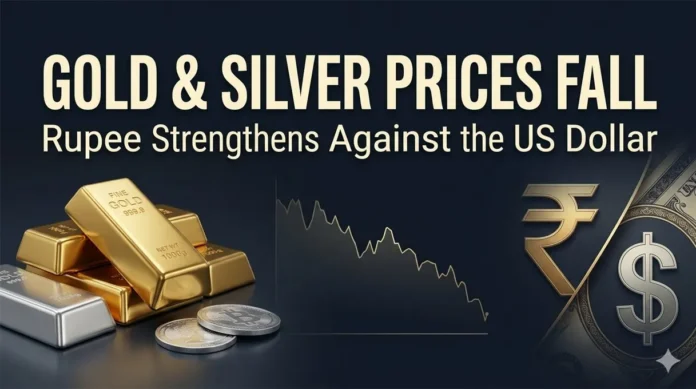
NEW DELHI, October 14, 2026: Gold and silver prices declined in Delhi’s bullion market on Tuesday, October 13, offering some relief to consumers planning to purchase precious metals. Gold prices fell for the second consecutive trading session, while silver also recorded a decline as the Indian rupee strengthened against the US dollar.
According to Manish Verma, owner of Shri Shyam Sunny Jeweller, the price of 99.9% pure gold dropped by ₹400 to ₹1,52,600 per 10 grams on Tuesday, compared with ₹1,53,000 per 10 grams in the previous trading session. Silver prices also declined by ₹500 to ₹2,26,000 per kilogram, down from ₹2,26,500 per kilogram.
The latest movement has drawn attention from jewellery buyers and investors tracking daily bullion prices. However, the decline in wholesale gold and silver rates does not necessarily translate into an identical reduction in the final retail price of jewellery, which can vary according to purity, making charges, taxes and individual jeweller pricing.
Gold Price Today: 99.9% Pure Gold Falls to ₹1,52,600
Gold prices continued their downward movement in Delhi on Tuesday, with 99.9% pure gold becoming ₹400 cheaper per 10 grams. The price declined from ₹1,53,000 in the previous session to ₹1,52,600.
The second consecutive session of losses indicates a softer trend in the reported bullion market. The movement comes as currency fluctuations influence the cost of precious metals imported into India.
According to Manish Verma of Shri Shyam Sunny Jeweller, the reported rate for 99.9% pure gold stood at ₹1,52,600 per 10 grams on Tuesday. Buyers should note that this figure refers to the reported market rate and may not represent the final price charged by every jewellery retailer.
Gold prices in India are influenced by several factors, including international bullion prices, the rupee-dollar exchange rate, import costs, government duties and domestic demand. Changes in any of these factors can affect the price at which gold trades in the local market.
For jewellery customers, the distinction between pure bullion prices and finished jewellery prices is particularly important. Gold jewellery is commonly sold in different purities, including 22-karat and 18-karat, so the applicable rate depends on the product being purchased.
Silver Price Today: Rate Drops to ₹2,26,000 per Kilogram
Silver prices also moved lower in Delhi on Tuesday. The metal declined by ₹500 per kilogram to ₹2,26,000, compared with the previous session’s price of ₹2,26,500.
The reduction in silver prices accompanied the decline in gold, indicating a softer session for both precious metals. Silver is purchased for jewellery, coins, utensils and investment purposes, while it also plays an important role in industrial applications.
Its market price is influenced by international supply and demand, industrial consumption, investor activity and movements in major currencies. As a result, silver prices can fluctuate even when domestic jewellery demand remains steady.
For consumers considering silver purchases, the reported market rate offers a useful reference point. However, the final cost can differ depending on the product, retailer, applicable taxes and any additional charges.
Why Are Gold and Silver Prices Falling?
The strengthening of the Indian rupee against the US dollar was cited as a key factor behind the decline in domestic gold and silver prices.
India imports a substantial portion of its gold and silver requirements, and international prices for these metals are generally quoted in US dollars. When the rupee strengthens, the amount of domestic currency needed to purchase dollar-priced commodities can decrease, provided international prices and other cost factors remain unchanged.
This can reduce the cost of imported precious metals and put downward pressure on domestic bullion prices.
However, currency movements are only one part of the pricing equation. Changes in international gold and silver prices, global interest-rate expectations, import-related costs and domestic demand can strengthen or offset the effect of a firmer rupee.
Consequently, a stronger rupee may support lower domestic bullion prices, but it does not guarantee that gold and silver will continue declining.
Rupee Gains Against the US Dollar
The Indian rupee reportedly strengthened for a third consecutive trading session on Tuesday, gaining 40 paise to close at ₹95.38 against the US dollar.
The currency’s movement came amid measures by the Reserve Bank of India intended to ease pressure in the foreign-exchange market, reduce immediate dollar demand and manage excessive market positions.
A stronger rupee can influence the domestic cost of imported commodities, including precious metals. Because international bullion transactions are largely dollar-denominated, exchange-rate movements can have a direct bearing on import costs and domestic pricing.
Nevertheless, the effect on retail gold and silver prices depends on the extent of the currency movement and the direction of international bullion markets. Consumers should therefore avoid assuming that every rise in the rupee will lead to an immediate or equivalent fall in jewellery prices.
What Does the Price Decline Mean for Jewellery Buyers?
The latest reduction may encourage consumers planning purchases during the festive and wedding-shopping seasons to compare prices and review their budgets.
However, buyers should check the rate applicable to the purity of gold they intend to purchase. The price of 24-karat gold is not directly comparable with that of 22-karat or 18-karat jewellery because the proportion of pure gold differs.
Customers should also ask retailers to explain making charges, applicable Goods and Services Tax (GST), hallmarking details and the final billed amount before completing a purchase.
Rates can differ between cities and jewellery stores, and online bullion quotations may not match the final retail price. Checking the latest local rate and obtaining a detailed invoice can help consumers make informed decisions.
Gold and Silver Price Outlook
The near-term direction of gold and silver prices will depend on international bullion trends, the rupee-dollar exchange rate, global economic developments, investor demand and domestic buying activity.
If the rupee remains stronger and international prices do not rise significantly, domestic bullion rates could face further pressure. Conversely, a weaker rupee or an increase in global precious-metal prices could reverse the recent downward movement.
For now, the reported Delhi market figures for Tuesday show gold down ₹400 to ₹1,52,600 per 10 grams and silver down ₹500 to ₹2,26,000 per kilogram.
Consumers should confirm the latest rates with local jewellers before purchasing, as precious-metal prices can change from one trading session to the next.
Disclaimer: Gold and silver prices may vary by location, purity, retailer and time of purchase. The figures in this report refer to reported Delhi market rates for October 13, 2026, and should not be treated as live quotations for October 14. This article is for informational purposes only and does not constitute investment advice.