Washington, D.C. | August 3, 2026
US Iran Talks are set to begin Monday, according to U.S. President Donald Trump, who said his administration will pursue diplomacy with Iran after postponing a proposed military operation following appeals from Gulf nations. The talks are expected to focus on Iran’s nuclear program, the Strait of Hormuz, and broader regional security.
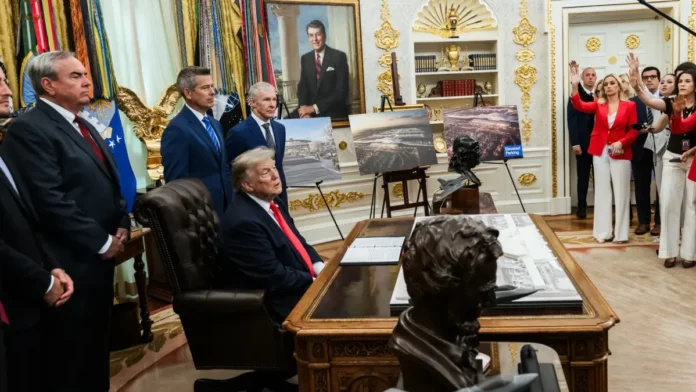
Speaking to reporters aboard Air Force One, Trump said the United States is prepared to negotiate through intermediaries rather than escalate military tensions, expressing hope that an agreement could prevent further conflict in the Middle East.
Trump: Diplomacy Preferred Over Military Action
Trump said his administration remains committed to resolving the crisis through negotiations whenever possible.
“We’re ready to talk,” Trump told reporters, adding that his priority is “saving lives rather than taking them.”
According to the president, if negotiations succeed, they could reduce the risk of a wider regional conflict while creating a path toward long-term stability.
Saudi Arabia, UAE, Qatar, and Iran Requested Delay
Trump said he decided to postpone a planned military strike after discussions with regional leaders.
He said he consulted Saudi Arabia’s King and Crown Prince, who encouraged diplomacy instead of immediate military action.
According to Trump, Saudi Arabia, the United Arab Emirates, Qatar, and Iran all urged the United States to give negotiations a chance before launching any military operation.
He described the proposed strike as potentially one of the largest U.S. military operations since World War II but said allied concerns about regional consequences influenced the decision.
Nuclear Program and Strait of Hormuz Central to Talks
Trump said two issues will dominate the negotiations:
- Iran’s nuclear program
- Security and navigation through the Strait of Hormuz
The U.S. president reiterated that Washington’s primary objective remains preventing Iran from developing nuclear weapons.
Trump also expressed optimism that progress on the Strait of Hormuz could pave the way for a broader nuclear agreement.
Iran Yet to Confirm Trump’s Claims
While Trump stated that Iran has expressed interest in reaching a deal, Iranian officials have not confirmed several of his assertions.
According to media reports, Iranian authorities have denied that any final understanding has been reached regarding the Strait of Hormuz and have not officially confirmed the framework described by Trump.
The negotiations are therefore expected to begin against the backdrop of significant unresolved differences.
Regional Mediation Intensifies
Reports indicate that Qatar, Oman, and several Gulf states have played an active diplomatic role over the weekend by facilitating communication between Washington and Tehran.
These mediation efforts reportedly helped reduce immediate tensions and created an opening for renewed dialogue after fears of imminent military action.
Gulf Countries Hold Different Views
Although Gulf nations broadly support efforts to avoid a wider regional war, their approaches differ.
Saudi Arabia has emphasized a diplomatic solution and regional stability, while reports suggest the United Arab Emirates favors maintaining stronger pressure on Iran over its regional activities and security concerns.
The differing positions underscore the complexity of building a comprehensive regional agreement.
What Comes Next?
If the talks proceed as planned on Monday, they will represent one of the most significant diplomatic engagements between the United States and Iran in recent months.
However, officials from both sides have not announced a finalized negotiating framework, and no agreement has yet been reached. Observers say the outcome will depend on whether negotiators can bridge longstanding differences over Iran’s nuclear activities, regional security, and maritime stability.