By Team INVC | INVC NEWS
Published: September 2, 2026 |10 : 08 AM IST
WASHINGTON, United States | September 2, 2026 —
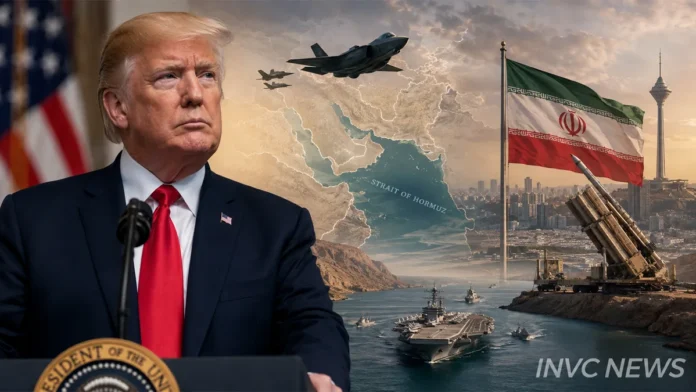
US Iran conflict September 2 2026 entered its most dangerous phase in weeks after American forces launched a new wave of strikes against Iranian military targets and Tehran responded with missiles and drones aimed at US-linked military facilities across the Middle East.
The renewed exchange has shattered the relative lull that had reduced direct military confrontation in recent weeks.
US President Donald Trump has backed the latest American strikes and warned Iran against further retaliation, while Tehran has vowed to respond to attacks on its territory.
The escalation has immediately raised fears of a prolonged regional conflict, fresh disruption in the Strait of Hormuz and another surge in global oil prices.
For India and other major energy importers, the battle carries economic consequences far beyond the Middle East.
US Hits IRGC Air Defence, Radar and Maritime Targets
US Central Command said American forces completed a new wave of strikes against Iranian military targets on September 1.
The US military targeted Islamic Revolutionary Guard Corps facilities, including:
Air defence sites
Radar systems
Maritime assets and facilities
Mine-laying capabilities
Communication sites
CENTCOM said it launched the operation after what it described as recent IRGC attempts to attack commercial shipping in the Strait of Hormuz and American service members.
The Pentagon has positioned more than 50,000 US military personnel across the Middle East, highlighting the scale of the American military presence behind the operation.
Washington says it wants to protect its forces and international shipping.
Iran rejects the American justification and describes the US strikes as military aggression.
Trump Warns Iran of Bigger Attack
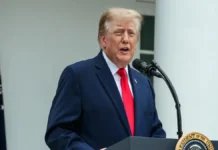
President Donald Trump directly defended the new strikes.
Trump said the United States had acted after Iranian forces allegedly attempted to deploy mines in the Strait of Hormuz and fired missiles toward a US military installation in Jordan.
He also issued Tehran a blunt warning.
Trump said another Iranian retaliation could trigger an even larger American response.
That threat has dramatically raised the stakes.
Instead of signalling an immediate path back to negotiations, Washington has demonstrated that it remains prepared to use additional military force if Iran continues attacking American personnel or shipping.
The conflict could therefore move rapidly from limited retaliatory operations into another sustained exchange.
Iran Fires Missiles and Drones at US Targets
Iran did not accept Trump’s warning.
The Islamic Revolutionary Guard Corps announced retaliatory attacks against American military targets in the region.
Iran said it launched ballistic missiles toward a US Marine facility in Jordan and targeted other American-linked military positions.
Iranian forces also claimed attacks involving targets connected to US forces in other Gulf locations.
Jordan and Bahrain reported intercepting incoming Iranian missiles or drones.
Iran claimed that some of its attacks inflicted significant damage and casualties.
US and allied accounts, however, disputed several of those claims, and no independently verified evidence immediately confirmed the scale of casualties claimed by Tehran.
The competing claims highlight one of the biggest challenges during the rapidly changing conflict: battlefield information remains highly contested.
Strait of Hormuz Moves Back to Centre of Crisis
The Strait of Hormuz has once again become the most dangerous economic pressure point in the conflict.
The narrow waterway carries a significant share of the world’s traded oil and petroleum products.
Iran has repeatedly demonstrated its ability to threaten shipping in and around the strait.
The United States, meanwhile, has increased military efforts to protect commercial traffic and degrade Iranian capabilities that Washington says threaten vessels.
Any sustained disruption could send energy markets sharply higher.
That danger has already returned to oil prices.
Brent Crude Climbs Toward $96
Global oil markets reacted immediately to the renewed fighting.
Brent crude climbed to around $95 a barrel during Asian trading on Wednesday after posting a sharp gain in the previous session.
West Texas Intermediate also moved above $90.
Markets are no longer pricing only the possibility of isolated attacks.
Traders must now consider the risk that prolonged US-Iran fighting could interfere with shipping, insurance, tanker availability and energy exports throughout the Gulf.
A sustained oil shock could raise inflation across several major economies.
It could also complicate monetary policy decisions at a time when governments and central banks are already battling elevated borrowing costs.
Why India Needs to Watch the Conflict Closely
The US-Iran confrontation carries direct economic risks for India.
India imports the overwhelming majority of the crude oil it consumes.
Therefore, every major jump in global crude prices can increase India’s import bill.
Higher crude can also place pressure on:
The Indian rupee
Petrol and diesel economics
Airline fuel costs
Transport expenses
Inflation
Corporate margins
Government finances
A prolonged disruption around the Strait of Hormuz could create additional concerns because India receives substantial energy supplies from the Gulf.
That makes developments in the waterway particularly important for Indian markets.
The sharp fall in the Sensex and Nifty on Wednesday morning already showed how quickly geopolitical risk can reach Dalal Street.
Civilian Casualty Reports Add New Pressure
The latest strikes have also generated serious concern over civilian casualties inside Iran.
Iranian authorities said an attack in the Sirik area hit a location where a wedding was taking place, killing several people and injuring dozens.
Reports put the initial death toll at around five.
The circumstances surrounding the strike and responsibility for the civilian casualties remain subject to competing accounts and continuing verification.
Any rise in civilian deaths could add diplomatic pressure on Washington and further harden public sentiment inside Iran.
It could also make renewed ceasefire negotiations more difficult.
Iran Signals Defiance but Leaves Door Open
Iran has publicly vowed to respond strongly to American attacks.
At the same time, Iranian statements have continued to leave some space for restoring a ceasefire if the United States stops military action.
That creates a narrow diplomatic opening.
However, neither side currently appears ready to make the first major concession.
Washington wants Iran to stop attacks against American personnel and international shipping.
Tehran wants the United States to stop military operations against Iranian territory and ease pressure on its economy.
As long as both sides insist that the other must move first, military escalation remains a serious risk.
A Conflict Trump Wanted to Contain Is Expanding Again
The renewed fighting creates another major political challenge for President Trump.
Trump has repeatedly argued that his administration can use American power to deter adversaries while avoiding endless wars.
The Iran confrontation now tests that promise.
A prolonged campaign could increase pressure on US military resources, raise energy prices for American consumers and become an important issue ahead of the November midterm congressional elections.
Trump therefore faces two competing pressures.
He wants to demonstrate overwhelming strength against Iran.
At the same time, he must prevent the conflict from becoming an open-ended regional war that carries growing political and economic costs at home.
Iran Also Faces Severe Economic Pressure
Iran enters the latest confrontation under major economic strain.
Military pressure, sanctions, disrupted trade and restrictions around energy exports have weakened the Iranian economy.
Higher global oil prices do not automatically solve Tehran’s problem if Iran cannot freely export its own crude.
That gives Washington an important source of leverage.
However, economic pressure can also encourage Tehran to use the Strait of Hormuz as a strategic bargaining tool.
Iran has repeatedly signalled that it will not accept a situation in which other Gulf producers export energy freely while Iranian exports face severe restrictions.
That dynamic makes the shipping route central to both military and economic strategy.
Regional Powers Try to Avoid Wider War
Jordan, Bahrain, Iraq, Oman and other regional governments now face another difficult balancing act.
They want to protect their territory and military facilities.
At the same time, most regional governments want to avoid becoming battlefields in a direct US-Iran confrontation.
Oman has continued diplomatic efforts around maritime arrangements and the Strait of Hormuz.
However, the latest missile and air strikes have reduced the space available for diplomacy.
Every new attack creates another opportunity for miscalculation.
A missile landing in the wrong place, a large number of military casualties or a major tanker attack could trigger a much larger response.
What Happens Next?
Three developments could determine whether the conflict escalates further.
First, Iran must decide whether to launch another major round of attacks after the latest US operation.
Second, Trump must decide whether Iranian retaliation crosses the threshold he has set for additional American strikes.
Third, both sides must decide whether to revive diplomatic talks before the military cycle becomes harder to stop.
Energy markets will closely watch the Strait of Hormuz throughout this process.
Global investors will watch oil prices.
And governments from New Delhi to Beijing and European capitals will assess how the confrontation could affect inflation, trade and energy security.
For US Iran conflict September 2 2026, the immediate message is unmistakable.
Washington has struck Iranian military infrastructure.
Tehran has fired back.
Trump has threatened a larger response.
And the Strait of Hormuz has returned to the centre of a confrontation capable of shaking energy markets and global politics far beyond the Middle East.
Unless diplomacy regains momentum quickly, the next round of retaliation could determine whether this remains a controlled military confrontation — or develops into a much wider regional war.