UNITED NATIONS, United States | September 22, 2026 — Donald Trump came to the United Nations with one message for world leaders: America is using power, pressure and negotiation to reshape global conflicts.
Iran was at the centre of that message.
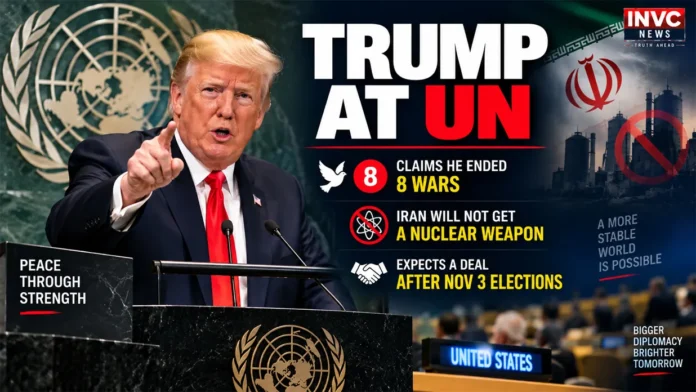
Addressing the UN General Assembly on Tuesday, the US president defended his administration’s military campaign against Iran and argued that Washington’s actions had prevented Tehran from acquiring a nuclear weapon.
Trump also returned to one of his most repeated foreign-policy claims — that he has helped end eight wars or conflicts.
That claim immediately added political spice to an already combative speech.
But there is an important distinction: “eight wars ended” is Trump’s characterization of his diplomatic record, not an uncontested assessment. AP has separately challenged parts of that count and the way some of those disputes are described.
Iran Gets the Sharpest Warning
Trump’s toughest message was reserved for Tehran.
He defended the decision to launch military action against Iran and argued that the confrontation was necessary to stop what his administration sees as a nuclear threat.
Iran has consistently maintained that its nuclear programme is intended for peaceful purposes.
The Trump administration does not accept those assurances.
That disagreement now sits at the heart of a conflict that has lasted for months, shaken oil markets and increased instability across the Gulf.
The political language may be loud.
But the core dispute is brutally simple:
Washington says Iran must never obtain a nuclear weapon.
Tehran says it is not pursuing one.
Trump Again Plays the ‘Eight Wars’ Card
Trump also used his UN appearance to reinforce his image as a dealmaker.
He has repeatedly said he ended eight wars or serious international conflicts during his presidency, including disputes involving India-Pakistan, Cambodia-Thailand, Armenia-Azerbaijan and Congo-Rwanda, among others.
That makes for a powerful political line.
But it needs context.
Some of the situations Trump counts involved ceasefires, diplomatic interventions or agreements rather than fully resolved wars. In several cases, underlying disputes remained.
So the cleanest way to report it is:
Trump says he ended eight wars.
Not:
Eight wars were definitively and permanently ended.
That small difference keeps the headline spicy without turning a political claim into an established fact.
Then Came the Bigger Question: Can Iran Deal With Trump?
Despite the hard rhetoric, diplomacy has not disappeared.
Iran and the United States have both signalled that talks remain possible during UN week.
Iran has floated proposals linked to reopening the Strait of Hormuz, while US officials have said Trump remains open to direct engagement if it can produce results.
Trump has also said he expects the Iran conflict to end after the November 3 US midterm elections, although that remains his prediction rather than an agreed timetable between Washington and Tehran.
That creates the most fascinating contradiction of the entire story.
The two sides are still fighting.
The sanctions remain.
Military pressure remains.
And yet both are still talking about a possible deal.
Iran Delegation Walks Out
The atmosphere inside the UN hall reflected that hostility.
Iran’s delegation walked out during Trump’s address as he defended the US military campaign and criticised Tehran’s handling of negotiations.
For diplomacy, that was hardly a picture of warmth.
But international negotiations often work exactly this way.
Harsh words in public.
Quiet conversations in private.
The real test will not be who walked out of the hall.
It will be whether negotiators eventually return to the table.
Oil Gives Both Sides a Reason to Talk
There is another player in this confrontation that never gives speeches:
oil.
The Iran conflict has disrupted global energy markets and raised concerns about shipping through the Strait of Hormuz.
On Tuesday, Brent crude fell to around $98.23 a barrel after Iran indicated it could reopen the strait within seven days if US pressure and port restrictions were eased.
That gives Washington and Tehran a powerful economic incentive to cool tensions.
Iran wants economic relief.
The US wants lower fuel-price pressure.
Global markets want stable shipping.
Suddenly, diplomacy is not just about geopolitics.
It is also about what motorists pay at the pump.
Ukraine Is the Other War Trump Still Wants to End
Trump’s peace-maker message also faces another uncomfortable test: Ukraine.
Russia’s war against Ukraine continues despite repeated attempts by Trump to broker an agreement.
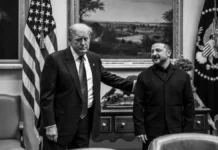
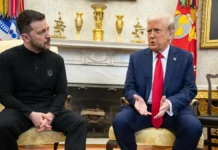
Ukrainian President Volodymyr Zelenskyy was scheduled to meet Trump at the UN to discuss a potential halt to attacks on energy infrastructure.
That makes Ukraine an important counterweight to Trump’s “eight wars” narrative.
Past diplomatic claims are one thing.
Current wars are another.
Iran and Ukraine will ultimately determine how history judges Trump’s present peace efforts.
UN Stage, Trump Style
Trump’s UN speech was not designed to sound cautious.
He defended the Iran war.
He promoted his peace record.
He criticised international institutions.
And he presented American power as the central force capable of pushing adversaries toward agreements.
Supporters will see that as strength.
Critics will question whether military pressure and sanctions are producing lasting peace or simply reshaping conflicts.
That debate is not going away.
The Real Story Starts After the Speech
The applause, walkouts and headlines will fade quickly.
What matters next is harder.
Does Iran return to serious negotiations?
Does the Strait of Hormuz reopen fully?
Can Washington and Tehran reduce military pressure?
Does Trump make progress on Ukraine?
And can any agreement survive beyond the cameras and handshakes?
That is where Trump’s claim of being a global dealmaker will face its real test.
For now, the UN speech delivered plenty of heat.
Eight-war claim.
Iran nuclear warning.
Talk of a future deal.
But in geopolitics, the headline is only the appetizer.
The agreement — if one comes — is the main course.