By Team INVC | INVC NEWS
WASHINGTON, United States | September 18, 2026 —
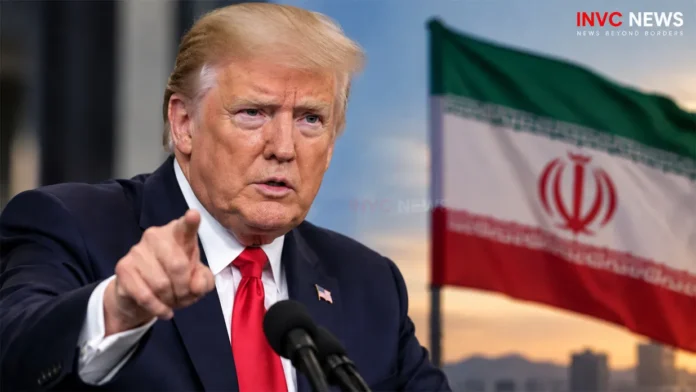
President Donald Trump has delivered one of his strongest warnings yet in the prolonged U.S.-Iran conflict, saying he is approaching a “big decision” over whether to resume massive military attacks against Tehran as Washington searches for a way to bring the seven-month war to an end.
Speaking in an interview with Axios, Trump framed the decision in unusually stark terms, asking whether he should “go in and annihilate” the Iranian regime or choose another path.
His remarks did not amount to an announcement that a new offensive has been authorised.
Instead, they revealed that the White House is actively weighing a major escalation against Iran while keeping diplomacy on the table.
That distinction is crucial.
No new large-scale U.S. attack on Iran has yet been announced.
But Trump’s language makes clear that another major military phase remains under serious consideration.
Trump: ‘I Have a Big Decision Coming Up’
Trump told Axios that he had reached what the outlet described as a critical point in the war.
The U.S. president said he was considering whether to restart major attacks in an effort to force an end to the conflict.
His comments came as Washington maintains substantial military forces in the Middle East and continues economic and naval pressure against Iran.
Trump also said “anything could happen,” leaving open both military escalation and another attempt at diplomacy.
The comment is significant because the United States had stepped back from another broad military push earlier this year after Gulf partners raised concerns about possible Iranian retaliation against energy infrastructure.
Six Gulf Leaders Could Influence Trump’s Next Move
Before making the next major decision, Trump is expected to meet leaders from Saudi Arabia, the United Arab Emirates, Qatar, Bahrain, Kuwait and Oman on the sidelines of the United Nations General Assembly in New York.
According to Axios, Trump wants to hear directly from Gulf governments about the regional situation and what they believe should happen next.
The meeting could become one of the most consequential diplomatic events of UN week.
These countries are geographically close to Iran.
Several host important U.S. military facilities.
Their oil and gas infrastructure could also become vulnerable if the conflict expands.
That gives Gulf leaders a direct interest in whether Washington intensifies the war or makes another attempt to negotiate.
Why Trump Has Not Yet Ordered Another Massive Offensive
The military question is complicated by the risk of retaliation.
Earlier concerns raised by Saudi Arabia and Qatar reportedly included the possibility that Iran could respond to expanded U.S. strikes by targeting critical Gulf energy infrastructure.
Such attacks could have consequences far beyond the Middle East.
Oil prices could rise sharply.
Shipping routes could face additional disruption.
Global inflation could worsen.
Governments dependent on imported energy—including India—could face higher costs.
That explains why Gulf consultation matters before any major American escalation.
Iran War Has Entered a Difficult New Phase
The conflict has now continued for more than six months.
Washington launched Operation Epic Fury earlier this year, saying its objectives included destroying Iranian missile capabilities, degrading Iran’s naval forces and preventing Tehran from obtaining a nuclear weapon.
The White House has repeatedly argued that U.S. operations substantially damaged Iran’s military and nuclear capabilities. Iran has continued to resist U.S. pressure and retaliate directly or through aligned regional forces.
Despite repeated claims of military success, the conflict has not produced a lasting settlement.
The Strait of Hormuz remains a central point of tension.
Iran-backed Houthis have intensified pressure around the Red Sea and Saudi Arabia.
Energy prices and shipping security have therefore become central components of the war alongside conventional military operations.
Houthis and Saudi Arabia Add Another Dangerous Front
The latest Trump warning comes as fighting involving Saudi Arabia and Iran-aligned Houthi forces in Yemen has intensified.
Saudi and Houthi forces exchanged new attacks this week, while more than 100,000 Yemenis have reportedly been displaced by fighting.
A Houthi drone incident also resulted in the first reported civilian death inside Saudi Arabia during the latest round of hostilities.
This wider regional escalation makes any fresh U.S. offensive against Iran more complicated.
A major strike could trigger retaliation against American bases, allied governments, oil facilities or shipping routes.
Iran Says It Still Wants a Deal — Trump Says It Is Not Ready
Trump has also indicated that direct contacts between Iran and the United States have not entirely stopped.
He told Axios that Iranian officials still want an agreement, though he argued that Tehran is not yet prepared to accept terms Washington would consider sufficient.
That creates an important contradiction at the heart of the current moment.
The U.S. is preparing for the possibility of renewed military action.
At the same time, diplomatic contact remains possible.
That means the next phase of the conflict could move rapidly in either direction.
UN General Assembly Could Become the Diplomatic Turning Point
The timing of Trump’s decision is particularly important because Iranian President Masoud Pezeshkian and Foreign Minister Abbas Araghchi have received restricted U.S. visas to attend the UN General Assembly in New York.
That puts senior American, Iranian and Gulf officials in the same city during one of the most dangerous periods of the war.
There is no confirmed Trump-Pezeshkian meeting.
Nor has Washington announced formal negotiations.
But UN week provides opportunities for direct and indirect diplomacy through intermediaries that would otherwise be difficult to arrange.
Trump’s meeting with Gulf leaders could therefore help determine whether Washington gives diplomacy another chance or returns to sustained military attacks.
Does ‘Annihilate’ Mean Trump Has Ordered Regime Change?
Not yet.
This distinction is important.
Trump’s language was severe, but he was describing an option he says he is considering.
He did not announce that the United States has formally adopted regime change as its immediate objective.
Earlier White House statements on the Iran campaign have focused publicly on Iran’s nuclear programme, ballistic missile capabilities, naval forces and support for armed regional groups.
Trump’s latest phrasing broadens the rhetoric, but an actual policy change would require clearer military or governmental action.
For now, the statement should be treated as a warning and an indication of the options under consideration—not as confirmation that the decision has already been made.
A New Attack Could Shake Oil Markets Immediately
For global markets, Trump’s next move may matter almost as much as it does militarily.
Iran sits beside the Strait of Hormuz, one of the world’s most important energy corridors.
Any escalation threatening shipping through the region can push oil prices sharply higher.
India is particularly sensitive because it imports most of its crude-oil requirements.
Higher crude prices can pressure the rupee, inflation, fuel costs and the current-account balance.
That means a White House decision on Iran could quickly become an India economic story as well as a geopolitical one.
Trump’s Iran Decision Also Has a Domestic Political Dimension
The war is unfolding only weeks before the U.S. midterm elections.
Congress has repeatedly debated presidential war powers, and the House recently passed another resolution seeking to restrict continued military operations against Iran without congressional authorisation.
The administration, meanwhile, argues that Iran remains a serious security threat and that military and economic pressure is necessary.
The debate over the war therefore now involves foreign policy, congressional authority, energy prices and domestic politics simultaneously.
What Happens Next?
The sequence to watch is becoming clear.
First comes Trump’s meeting with Gulf leaders.
Then world leaders gather at the United Nations.
Iran’s senior leadership will present its position.
American officials will assess the Gulf states’ concerns.
After that, Trump could make the “big decision” he has publicly signalled.
The options appear to include renewed large-scale military operations, continued economic and naval pressure, another diplomatic push—or some combination of all three.
At this stage, no final choice has been announced.
But Trump’s warning shows that Washington is approaching a potentially decisive moment.
The Iran war may therefore be entering either its most dangerous military phase—or its most important diplomatic opening.
And much could depend on what happens in New York next week.