INVC NEWS | Highland Heights, Kentucky, United States | October 18, 2026
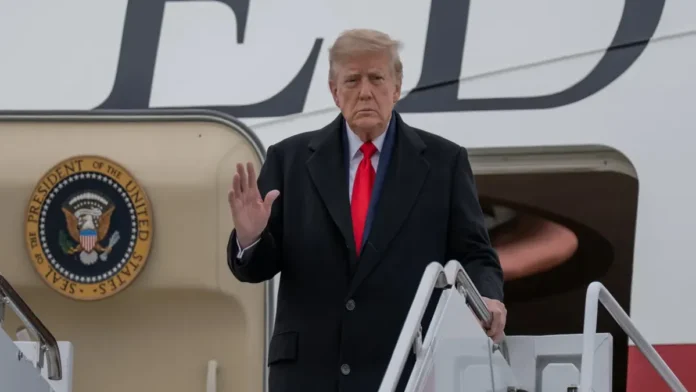
US President Donald Trump has predicted that the war with Iran will end soon and promised that gasoline prices will fall below previous levels once the conflict is over. Speaking at a Republican campaign rally in Highland Heights, Kentucky, on Saturday, October 17, Trump also defended US military strikes against Iranian nuclear facilities and repeated his pledge to provide $5,000 to every adult American if Republicans win control of both chambers of Congress.
The rally came as Republicans seek to maintain their majorities in the House of Representatives and the Senate in the November 2026 midterm elections. Trump used the event to promote his record, encourage support for Republican candidates and argue that his second presidential term has given him greater political power than his first.
His remarks placed the Iran conflict and the cost of living at the centre of the campaign message. However, his prediction that the war will end soon remains a presidential claim rather than a confirmed timeline, and any future decline in gasoline prices will depend on developments in energy markets as well as the course of the conflict.
Trump Says His Second Term Is More Powerful
Addressing supporters in Highland Heights, Trump described his second term as more powerful than his first and said he could now accomplish things that would previously have been difficult.
“I don’t think I could have done this in my first term. This is a much more powerful term,” Trump said, according to an Associated Press report published on October 17.
He also referred to his administration’s decision to use the name “Gulf of America” for the Gulf of Mexico in US federal usage. Trump cited the naming decision as an example of his increased influence and claimed that Google had previously been unwilling to take his calls.
He also referred to his effort to call Lake Ontario “Lake America,” extending his remarks about symbolic decisions and presidential authority.
The comments formed part of a broader effort to present his administration as more decisive while encouraging Republican voters to support the party’s congressional candidates.
Midterm Elections Put Control of Congress at Stake
The November midterm elections will determine the balance of power in the US House and Senate for the remainder of the current congressional term.
Republicans are seeking to retain control of both chambers, while Democrats hope to gain enough seats to change the legislative balance and expand their oversight of the administration.
Trump has increasingly placed himself at the centre of the Republican campaign, appearing at rallies and urging voters to support candidates aligned with his agenda. In Kentucky, he campaigned for Republican House candidate Ed Gallrein, who defeated incumbent Representative Thomas Massie in the party’s primary.
According to the Associated Press, some Republicans have privately expressed concern that Trump’s controversial policies and public image could complicate the party’s electoral prospects. Tariffs, the Iran war and rising household costs have become important issues as voters assess the administration’s performance.
The outcome of the elections will depend on voters’ assessments of economic conditions, foreign policy and the candidates competing in individual races. Trump’s rally was intended to strengthen Republican support ahead of that contest.
Trump Predicts the Iran War Will End Soon
One of the central messages of Trump’s speech concerned the ongoing conflict with Iran.
Trump told the crowd that the war would end soon and argued that the conclusion of the conflict would bring lower gasoline prices for American consumers.
“This is going to end very soon,” he said in remarks reported by the Associated Press. He also predicted that gasoline would become cheaper than it had been before the conflict.
The promise comes as energy prices have become a source of political pressure for the administration. Military conflict involving a major oil-producing region can affect crude prices, shipping routes, insurance costs and expectations about future supplies.
However, an end to hostilities would not automatically guarantee an immediate fall in gasoline prices. The retail price of fuel also depends on crude oil benchmarks, refinery capacity, inventories, distribution costs, taxes and seasonal demand.
Trump’s statement therefore represents his expectation for the economic consequences of ending the war, not a guarantee that motorists will see lower prices by a specific date.
The administration would also need to demonstrate that the conflict is moving toward a durable resolution. The president did not establish a firm timetable for its conclusion during the rally.
Trump Defends Strikes on Iran’s Nuclear Facilities
Trump also defended the US military campaign against Iran, arguing that preventing Tehran from obtaining nuclear weapons was a national security priority.
He has repeatedly maintained that US strikes inflicted serious damage on Iranian nuclear capabilities and has presented the military action as necessary to prevent Iran from acquiring a nuclear weapon.
The issue remains central to the administration’s justification for the conflict. Iran’s nuclear programme and the question of its future capabilities have been major sources of tension between Tehran and Washington.
Trump’s defence of the strikes reflects his administration’s stated security rationale. Assessing the extent of the damage, the longer-term effect on Iran’s nuclear programme and the broader consequences of the campaign requires evidence beyond political statements.
The conflict also carries economic implications for the United States and international markets. Disruptions to oil production or shipping can increase energy costs, while prolonged military operations can place additional demands on government spending.
For Trump, connecting the military campaign to national security and lower future fuel prices is part of the broader argument that the conflict will ultimately benefit the United States.
Trump Repeats $5,000 Payment Promise
Trump also repeated his promise that every adult American would receive $5,000 if Republicans win control of both the House and Senate.
The proposal would represent a substantial financial commitment. The Associated Press has reported that the plan could cost more than $1 trillion and would likely require congressional approval.
The United States already faces a large federal budget deficit, estimated at approximately $1.8 trillion annually in the figures cited in the report. A payment programme of this scale would raise questions about its funding, eligibility rules, implementation and effect on federal borrowing.
Trump has presented the proposal as a potential financial benefit for Americans if Republicans retain control of Congress. However, the pledge should not be treated as an approved payment programme. Its implementation would depend on legislative action and the details of any formal proposal.
Voters would need to know whether the payment would be financed through borrowing, savings, revenue from tariffs or another source, and how the government would determine eligibility.
Until those details are established and the necessary approvals are secured, the $5,000 figure remains a campaign promise rather than a guaranteed payment.
Economic Pressure Remains a Challenge for Republicans
Trump’s Kentucky rally highlighted the connection between foreign policy and domestic economic concerns ahead of the midterms.
The administration is seeking to convince voters that its approach to Iran will ultimately reduce energy costs and that its broader policies will improve household finances. At the same time, the war and tariff policies have contributed to debate over prices and the cost of living.
Gasoline prices are particularly visible to consumers because changes at the pump can affect commuting expenses, freight charges and the cost of transporting goods.
Even if energy prices decline after the conflict, the timing and scale of any reduction will depend on market conditions. Other household expenses may follow different trends, meaning that cheaper gasoline alone would not necessarily resolve broader affordability concerns.
Republicans must also contend with questions about the fiscal implications of the proposed $5,000 payments and whether Congress would support such a plan.
What Happens Next?
Three developments will be important in assessing Trump’s claims.
First, any concrete progress toward ending the Iran conflict will determine whether his prediction of a near-term conclusion becomes reality. Second, movements in crude oil and gasoline prices will show whether American consumers receive the relief he has promised. Third, the details and legislative prospects of the proposed $5,000 payments will clarify whether the pledge can become an actual government programme.
The midterm elections will provide a further test of how voters respond to the administration’s handling of the economy, foreign policy and domestic priorities.
The Bottom Line
Trump used his Kentucky rally to project strength, rally Republican voters and link the Iran war to promises of lower gasoline prices and direct financial relief. He predicted that the conflict would end soon, defended strikes on Iranian nuclear facilities and repeated his proposal for $5,000 payments to adult Americans if Republicans win control of Congress.
Those statements outline the administration’s political message, but their outcomes remain uncertain. The war’s end date has not been established by the remarks alone, gasoline prices will continue to depend on market conditions, and the proposed payments would require further policy development and congressional approval.