LAS VEGAS, Nevada | August 6, 2026
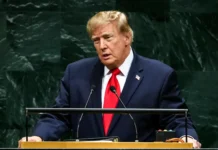
Trump Iran Deal took center stage Thursday after US President Donald Trump said Washington remains open to reaching an agreement with Tehran but will never allow Iran to acquire nuclear weapons. His remarks came as Iranian President Masoud Pezeshkian accused foreign adversaries of attempting to destabilize the Islamic Republic and overthrow its government.
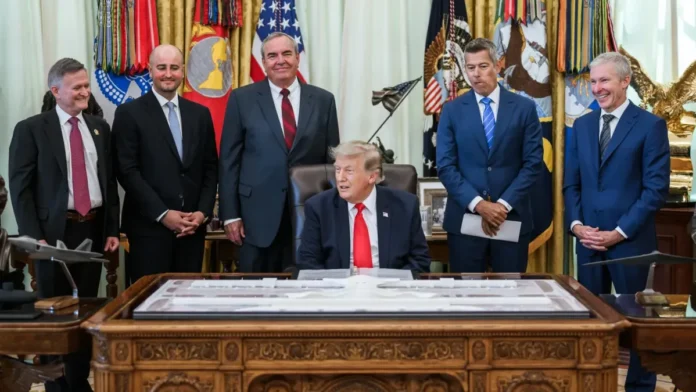
Speaking at a public event in Las Vegas, Trump said the United States is pursuing an approach toward Iran similar to the strategy it used in Venezuela. He argued that recent US military actions had weakened Iran while emphasizing that diplomacy remains Washington’s preferred path forward.
“I would rather make a deal because I don’t want to see people lose their lives,” Trump said, reiterating that preventing Iran from developing nuclear weapons remains a non-negotiable objective of US policy.
Trump Claims Major Military Operation Was Halted
Trump also claimed that the United States had prepared what he described as the largest military operation since World War II but decided not to proceed after Iran allegedly expressed interest in negotiations.
According to Trump, Iranian officials later denied making such overtures, but communication between the two sides has continued. He added that developments over the coming 48 hours could provide greater clarity on the direction of the talks.
The US president further asserted that recent events have changed Tehran’s perception of Washington, saying Iran now “respects” the United States following the latest military and diplomatic developments.
Despite expressing optimism about diplomacy, Trump repeated that the United States would never permit Iran to obtain nuclear weapons under any circumstances.
Trump Highlights Venezuela Policy and ICE Operations
During the same speech, Trump drew comparisons between US policy toward Iran and Venezuela.
He praised US Immigration and Customs Enforcement (ICE) for its actions against the Venezuelan criminal organization Tren de Aragua, describing the agency’s efforts as effective in protecting US national security.
Trump also said the United States continues to receive significant oil supplies connected to Venezuela and suggested that relations with Caracas have improved. He described Venezuela as one of the world’s wealthiest oil-producing nations and said stronger engagement had benefited the United States.
Trump Says Progress Has Been Made in Contacts With Iran
The president claimed there has been “substantial progress” in communications with Iranian officials and said Tehran had initiated recent diplomatic outreach.
Trump expressed confidence that the next two days could be critical in determining whether both sides move closer to a formal agreement, adding that reaching a deal would be the “smart decision” for Iran.
No additional details regarding the reported contacts or the status of negotiations were immediately disclosed.
Pezeshkian Says Iran Defeated Destabilization Efforts
Meanwhile, Iranian President Masoud Pezeshkian addressed the nation and said Iran had successfully resisted attempts by hostile forces to destabilize the country and engineer a coup.
According to Pezeshkian, external actors sought to weaken Iran through military pressure, sanctions, and political campaigns in an effort to create conditions similar to those experienced by Syria.
He said those efforts failed because of national unity and the resilience of the Iranian people.
Pezeshkian also stated that Iran remains united under the leadership of the country’s new Supreme Leader, Mojtaba Khamenei, and emphasized that preserving national unity is the country’s strongest defense against external threats.
The Iranian president paid tribute to the late leader of Iran’s Islamic Revolution, saying the late leader consistently supported the government and expressing confidence that the current leadership will continue safeguarding Iran’s sovereignty and stability.
Outlook
Trump’s latest remarks signal that Washington is continuing to pursue a dual-track strategy of diplomatic engagement backed by military pressure. While both US and Iranian leaders have indicated that communication channels remain open, significant differences persist over Iran’s nuclear program and broader regional security issues.
The coming days could provide greater clarity on whether ongoing contacts evolve into formal negotiations or whether tensions between Washington and Tehran continue.