WASHINGTON, D.C. | August 7, 2026
Trump Signs New Birthright Citizenship Orders, Targets Birth Tourism After Supreme Court Ruling
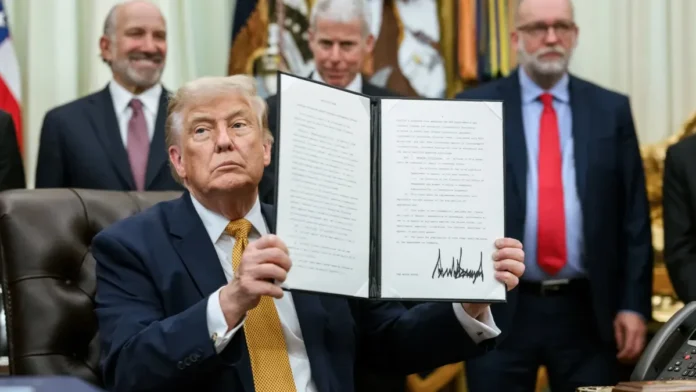
Trump Birthright Citizenship Orders have reignited one of the most contentious debates in U.S. immigration policy after President Donald Trump signed two new executive orders aimed at restricting automatic citizenship by birth and curbing what the administration calls “birth tourism.”
The executive actions come just weeks after the U.S. Supreme Court struck down an earlier Trump administration order seeking to narrow birthright citizenship, setting the stage for another likely legal battle over the scope of the 14th Amendment to the U.S. Constitution.
First Order Targets “Birth Tourism”
The first executive order is designed to crack down on individuals who travel to the United States primarily to give birth so their children can obtain U.S. citizenship—a practice commonly referred to as birth tourism.
According to the Trump administration, some foreign nationals allegedly use tourist visas while intending to deliver a child in the United States, allowing the child to qualify for citizenship under existing constitutional provisions.
The White House argues that the policy is being exploited for long-term immigration and economic benefits.
Second Order Expands Citizenship Restrictions
The second executive order broadens the categories of individuals whose children could become ineligible for automatic U.S. citizenship under the administration’s interpretation.
According to the White House, the expanded categories include certain children born to:
- Individuals traveling to the U.S. for birth tourism.
- People associated with designated terrorist organizations.
- Employees or representatives of foreign governments.
- Certain children born in U.S. territories where automatic citizenship is not granted under federal law.
The administration has indicated that additional implementation guidelines will be issued by relevant federal agencies.
Supreme Court Previously Rejected Similar Order
On June 30, the U.S. Supreme Court invalidated Trump’s previous executive order on birthright citizenship.
The Court reaffirmed that, under more than a century of constitutional interpretation, nearly everyone born on U.S. soil is entitled to American citizenship under the Citizenship Clause of the 14th Amendment.
That ruling represented a significant legal setback for the administration’s earlier effort to reinterpret birthright citizenship through executive action.
Trump Criticizes Supreme Court Decision
Speaking from the Oval Office after signing the new orders, President Trump described the Supreme Court’s earlier decision as “very unfortunate.”
He said the administration believes changes are necessary to prevent what it considers abuse of birthright citizenship laws.
Trump argued that the 14th Amendment was adopted following the Civil War to guarantee citizenship for formerly enslaved people and said it was never intended to encourage birth tourism.
White House Defends the New Policy
White House Deputy Chief of Staff Stephen Miller said the administration believes some foreign nationals intentionally travel to the United States so their children automatically receive citizenship.
According to Miller, citizenship obtained in this manner can eventually provide access to government benefits and other legal rights for family members.
The administration says the new measures are intended to preserve the original purpose of birthright citizenship while strengthening immigration enforcement.
Legal Experts Predict Court Challenges
Immigration law experts immediately questioned the legality of the new executive orders.
New York-based immigration attorney Cyrus Mehta argued that the orders conflict with the Citizenship Clause of the 14th Amendment and are likely to face constitutional challenges in federal court.
The American Civil Liberties Union (ACLU) also criticized the executive actions, saying the Supreme Court has already affirmed that birthright citizenship is constitutionally protected.
Legal analysts expect multiple lawsuits to be filed shortly after the orders are formally implemented.
What the 14th Amendment Says
Ratified on July 9, 1868, the 14th Amendment provides that all persons born or naturalized in the United States and subject to its jurisdiction are U.S. citizens.
The amendment has long served as the constitutional foundation for birthright citizenship in the United States.
Whether the administration’s new interpretation can withstand judicial scrutiny is expected to become the central legal question in the coming months.
Birth Tourism by the Numbers
According to the Migration Policy Institute, an estimated 22,000 to 26,000 children are born each year in the United States through birth tourism.
However, official U.S. government data indicate that approximately 9,600 births in 2024 involved mothers who listed foreign residential addresses.
The figures have fueled ongoing political debate over immigration enforcement, constitutional protections, and executive authority.