Former prime minister thanks India for shelter, urges US to support democracy and calls for an inclusive political process
WASHINGTON | October 20, 2026 | INVC NEWS
Former Bangladesh Prime Minister Sheikh Hasina has declared that she intends to return to her country despite the possibility of arrest, imprisonment, torture or threats to her life. Addressing a press conference virtually from Washington, she said she could not remain away while her supporters and other Bangladeshis faced difficulties at home.
“Whatever the risks of returning, I do not care. I must go back,” Hasina said, according to the account of her remarks.
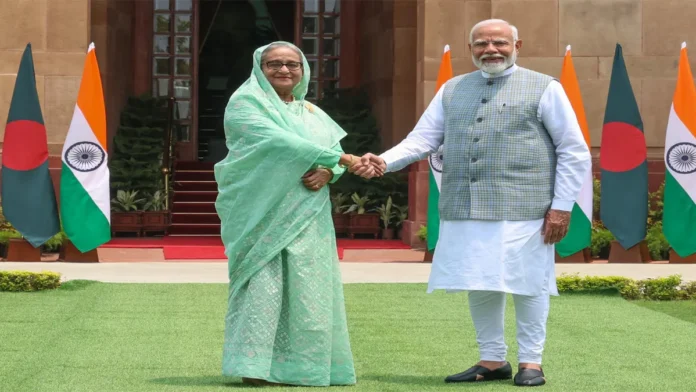
Hasina left Bangladesh in August 2024 after her government fell amid widespread protests. She has since been living in India, which she thanked for providing shelter and support during a difficult period.
Her latest remarks highlighted both her determination to return and the political and legal uncertainties surrounding her future. She did not announce a specific date for her return.
Hasina Thanks India for Support
Hasina expressed gratitude to the Indian government and people, as well as political parties in India, for their support.
“I am grateful to the Indian government, the people here and all the political parties. They welcomed me in the same way they did in 1975,” she said.
She referred to the killing of several members of her family in 1975, when her father, Bangladesh’s founding leader Sheikh Mujibur Rahman, was assassinated. Hasina and her sister survived because they were abroad at the time.
Hasina also recalled her return to Bangladesh in 1981 after spending several years overseas. She cited that experience, along with her decision to return during the political emergency of 2007 despite criminal allegations against her, as examples of previous occasions when she had returned despite serious risks.
She argued that a political leader has a responsibility to stand alongside supporters, even when doing so involves personal danger.
Former Prime Minister Questions Cases Against Her
Hasina alleged that Bangladesh’s current political leadership was using legal proceedings against her and Awami League leaders to suppress political opposition.
She questioned the legitimacy of the cases and called for allegations against political leaders to be examined through a fair and impartial judicial process.
Her remarks come amid continuing political and legal disputes following the fall of her government. The allegations and proceedings involving Hasina remain a significant part of the wider debate over accountability, political participation and the future of Bangladesh’s institutions.
Hasina acknowledged that serious questions remained about her government’s conduct, the 2024 protests and the events that followed.
“I acknowledge that there are serious questions about my government, the events of 2024 and the circumstances that followed,” she said.
She maintained that allegations against her or any other political figure should be investigated through transparent legal procedures rather than being decided through political considerations.
Hasina Appeals to Washington to Support Democracy
Hasina also urged the United States to support democratic institutions, multiparty politics and free and fair elections in Bangladesh rather than backing any particular political leader or party.
“My message to America is not to choose Sheikh Hasina or any other leader, but to choose democracy,” she said.
She argued that Bangladesh’s future should be determined by its people through a free and inclusive political process.
Hasina called for an independent judiciary, freedom of expression, the right to organise politically, protection for minorities and respect for due process under the law.
She also warned that excluding a political party from democratic participation could deepen divisions and undermine efforts toward national reconciliation.
According to Hasina, political differences should not deprive citizens of their rights or prevent them from participating in the country’s political future.
Calls for Reconciliation Rather Than Retaliation
Hasina said Bangladesh’s political future should be based on reconciliation rather than revenge. She stressed that even people who opposed her government were citizens whose rights deserved protection.
Her remarks sought to frame the country’s next political phase around inclusive participation and institutional safeguards, while acknowledging that her own administration’s record and the handling of the 2024 protests remained subjects of serious scrutiny.
The question of accountability remains central to Bangladesh’s post-2024 political transition. Any credible resolution will depend on transparent legal processes, respect for fundamental rights and the ability of political institutions to operate without undue interference.
Hasina’s demand for impartial proceedings reflects her position that legal cases should not be used to exclude political opponents. Her critics, however, have raised questions about the conduct of her government and its response to the protests. Those issues require examination through reliable evidence and fair legal procedures.
No Return Date Announced
Despite her firm declaration that she intends to return, Hasina has not specified when she plans to do so.
Her son, Sajeeb Wazed Joy, later told journalists that no date had been finalised and that an announcement would be made when the time was right.
For now, her statement signals an intention rather than a confirmed travel plan. The circumstances surrounding a possible return—including legal proceedings, security concerns and Bangladesh’s evolving political situation—remain uncertain.
What happens next: Hasina’s possible return will depend on decisions that have yet to be announced. Her appeal to Washington and her calls for an inclusive political process also place renewed attention on the broader questions facing Bangladesh: political participation, accountability, minority protection and the independence of the judiciary.
Her central message was that Bangladesh’s future should be decided by its people through a democratic process, with rights protected and allegations against political figures addressed through fair and transparent legal procedures.