By Team INVC | INVC NEWS
NEW DELHI, India | September 22, 2026 —
As Pitru Paksha 2026 approaches, millions of Hindu families are preparing to remember their ancestors with Shraddha, Tarpan and Pind Daan. But one question is creating confusion in homes across India:
If Purnima Shraddha falls on September 26, does Pitru Paksha begin on the same day — or does the main Shraddha period start with Pratipada?
The answer lies in an important distinction that is often missed.
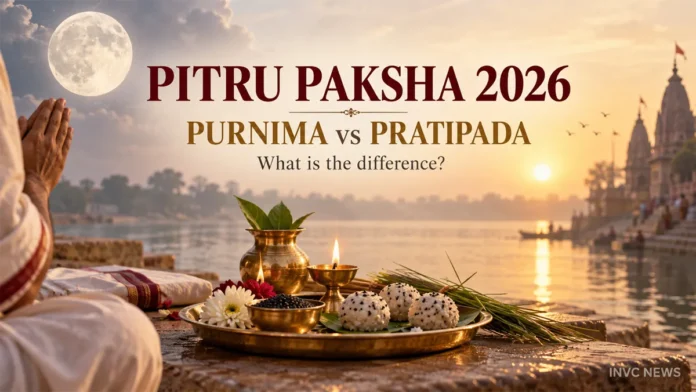
In 2026, Purnima Shraddha falls on September 26, while Pratipada Shraddha falls on September 27. Although the two dates come back-to-back, they do not carry exactly the same ritual meaning.
And that difference matters deeply for families trying to perform ancestral rites on the correct Tithi.
The first big confusion: Is Purnima Shraddha part of Pitru Paksha?
Not in the usual tithi-wise sense.
Purnima Shraddha is observed on Bhadrapada Shukla Purnima, immediately before the main Pitru Paksha period begins.
Traditional Panchang calculations treat it as a separate Shraddha observance rather than the first formal day of Pitru Paksha.
That is why September 26 carries religious importance, but September 27, the day of Pratipada Shraddha, marks the beginning of the regular sequence of Pitru Paksha Shraddhas.
This one-day difference is the key to understanding the entire calendar.
Why is Purnima Shraddha performed?
Purnima Shraddha is also known in traditional calendars as Shraddhi Purnima or Proshthapadi Purnima Shraddha.
On this day, families may perform Shraddha, Tarpan and related ancestral rites according to their family tradition and guidance from priests.
However, an important religious rule often surprises people:
Purnima Shraddha is not simply the standard Pitru Paksha Shraddha for every ancestor who passed away on a Purnima Tithi.
Traditional Panchang guidance distinguishes Bhadrapada Purnima Shraddha from the later Mahalaya observances.
This is exactly why families should not assume that “Purnima means first day of Pitru Paksha.”
It does not.
Then what makes Pratipada Shraddha special?
Pratipada Shraddha is the first tithi-wise Shraddha of the main Pitru Paksha cycle.
It is observed for ancestors who passed away on Pratipada Tithi, whether that death occurred during Shukla Paksha or Krishna Paksha.
The day is also known as Padwa Shraddha.
According to traditional practice, Pratipada Shraddha may also carry special significance for maternal grandparents in certain circumstances, particularly when their exact death Tithi is unknown or when no one is available to perform the rite in the maternal family.
For many families, this is where Pitru Paksha truly begins in ritual terms.
Purnima vs Pratipada Shraddha: the easiest way to remember
Think of it this way:
Purnima Shraddha is the sacred doorway.
Pratipada Shraddha is the first step inside Pitru Paksha.
September 26 prepares the spiritual ground.
September 27 begins the regular tithi-based ancestral observances.
That single distinction removes most of the confusion surrounding Pitru Paksha 2026.
Why does the exact Tithi matter so much?
In Hindu tradition, Shraddha is not performed merely according to an English calendar date.
The Tithi of the ancestor’s death traditionally holds greater importance.
This is why families often consult a Panchang before performing Shraddha.
A person whose ancestor passed away on Dwitiya traditionally performs Shraddha on Dwitiya. Someone whose ancestor passed away on Tritiya observes it on Tritiya, and so on.
The sequence continues through the fortnight until Sarva Pitru Amavasya, when families may honour ancestors whose death Tithi is unknown or whose Shraddha could not be performed earlier.
Why is the afternoon considered important?
Traditional Shraddha practice gives special importance to Kutup Muhurta, Rohina Muhurta and Aparahna Kaal.
Unlike many Hindu rituals that favour early morning hours, Shraddha is traditionally associated strongly with the afternoon period.
Families therefore often perform offerings, Pind Daan, Tarpan and prayers during the prescribed Shraddha window rather than simply choosing any convenient time.
The exact timing can vary by city because sunrise, Tithi transitions and local Panchang calculations differ.
What do families traditionally offer during Shraddha?
Practices vary across regions, communities and family traditions, but common offerings may include:
water mixed with sesame seeds, Pind made from rice or other prescribed ingredients, simple vegetarian food, Kush grass, flowers and acts of charity.
Many families also feed Brahmins, cows, birds or people in need.
The central idea is not extravagance.
It is remembrance.
Shraddha itself comes from the Sanskrit idea of Shraddha — faith, reverence and heartfelt devotion.
For believers, Pitru Paksha is therefore less about fear and more about gratitude toward those whose lives made the present generation possible.
Pitru Paksha is not about mourning alone
This is where the deeper meaning of the fortnight often gets lost.
Pitru Paksha is certainly associated with remembrance of the departed, but traditionally it is also viewed as a period of duty, gratitude and continuity between generations.
Families remember parents, grandparents and earlier ancestors.
They speak their names.
They offer water.
They pray for peace.
And in doing so, they keep memory alive.
For many Hindu families, that emotional connection is what makes Pitru Paksha one of the most intimate periods in the religious calendar.
So when does Pitru Paksha 2026 actually begin?
For practical understanding:
September 26, 2026 — Purnima Shraddha
September 27, 2026 — Pratipada Shraddha and the beginning of the main tithi-wise Pitru Paksha observances
That is the distinction families should remember.
Calling both days the same can create unnecessary confusion.
One final rule that can prevent a major mistake
Do not select a Shraddha date only because a calendar shows “Pitru Paksha.”
The correct Shraddha day traditionally depends on the ancestor’s death Tithi, not simply the date on the English calendar.
If that Tithi is unknown, families generally follow the tradition associated with Sarva Pitru Amavasya or seek guidance according to their family custom.
Regional Panchangs can also differ slightly because ritual timings depend on location.
So, when in doubt, check the Panchang for your own city and follow your established family tradition.
The deeper message of Pitru Paksha
Pitru Paksha carries a simple but powerful idea:
We may move forward in life, but we do not forget those who came before us.
The rituals may differ from one family to another. The offerings may be simple or elaborate. Yet the emotion remains the same — remembrance, gratitude and respect.
And in 2026, remembering one small calendar distinction can prevent one very big confusion:
Purnima Shraddha comes first on September 26.
Pitru Paksha’s regular Shraddha sequence begins with Pratipada on September 27.
Two consecutive days.
Two different ritual roles.
And one sacred purpose — honouring the ancestors.