By Team INVC | INVC NEWS
Published: September 1, 2026 |09 : 27 AM IST
NEW DELHI, India | September 1, 2026 —
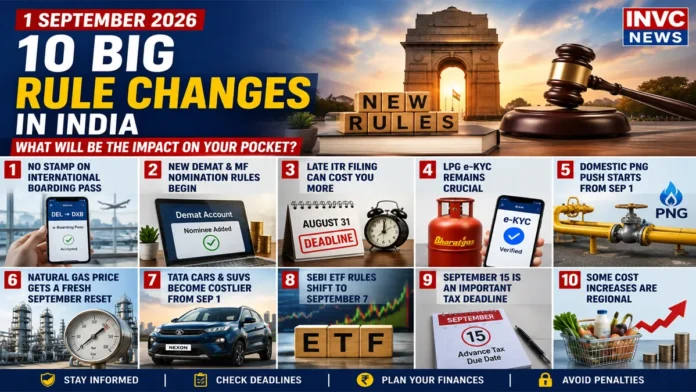
New Rules From September 1, 2026 are bringing important changes for Indian households, taxpayers, investors, international travellers and car buyers as the new month begins.
Some changes take effect directly from September 1, while others are important September deadlines that could affect your money if ignored.
From easier airport immigration and new demat nomination rules to late ITR filing costs, gas-related changes and higher vehicle prices, September could alter both household spending and financial compliance.
Here are the 10 important changes and deadlines you should know.
1. International Flyers No Longer Need Boarding Pass Stamps
One of the biggest changes from September 1 is good news for people travelling abroad from India.
International passengers will no longer be required to get their boarding passes physically stamped at immigration counters.
Travellers can show an e-boarding pass on their smartphone during immigration clearance.
Physical boarding passes will also continue to be accepted, but immigration officials will no longer stamp them.
The move is expected to make international departure procedures quicker and reduce unnecessary paperwork.
2. New Demat and Mutual Fund Nomination Rules Begin
Investors should pay particular attention to the new SEBI nomination framework.
From September 1, investors opening a new single-holder demat account or mutual fund folio will have to provide nomination details unless they specifically opt out through the prescribed declaration.
Investors can nominate up to three people.
For jointly held accounts and mutual fund folios, nomination remains optional.
The reform is designed to reduce unclaimed investments and make transmission of assets easier for families.
3. Missing the August 31 ITR Deadline Can Now Cost You
Taxpayers covered by the August 31 deadline who failed to submit their Income Tax Return on time can still file a belated return.
However, late filing may now carry a financial cost.
Under the applicable provisions, the late filing fee can be:
- Up to ₹1,000 where total income does not exceed ₹5 lakh
- Up to ₹5,000 in other applicable cases
Interest may also become payable where tax remains outstanding.
Therefore, taxpayers who missed the deadline should not delay filing simply because August 31 has passed.
4. LPG e-KYC Remains Critical for Domestic Consumers
LPG consumers should check whether their Aadhaar-based e-KYC is complete.
Oil marketing companies have intensified verification of domestic LPG connections to ensure subsidised or domestic-rate benefits reach eligible consumers.
Consumers with incomplete verification could face difficulties in continuing to receive cylinders at the applicable domestic rate, depending on the instructions applicable to their connection and location.
Users should therefore verify their KYC status through their LPG distributor or the official app of their oil marketing company.
5. New Domestic PNG Push Starts From September 1
A government-backed programme to accelerate domestic piped natural gas connections becomes effective from September 1.
The initiative is aimed at converting inactive or unbilled PNG connections into working household connections and expanding access to piped cooking gas.
For families in areas already covered by city gas networks, this could provide another cooking-fuel option and reduce dependence on cylinder refills.
6. Natural Gas Price Gets a Fresh September Reset
The government has notified the domestic natural gas price applicable for the period from September 1 to September 30, 2026.
Changes in upstream natural gas pricing can influence the economics of city gas distribution.
However, consumers should remember that this does not automatically mean the same nationwide increase in CNG or PNG retail prices.
Retail rates depend on individual city gas distributors, taxes and other pricing factors.
7. Tata Cars and SUVs Become Costlier
Anyone planning to buy a Tata passenger vehicle may have to spend more from September 1.
Tata Motors Passenger Vehicles is increasing prices across its ICE and electric vehicle portfolio by up to ₹25,000, depending on the model and variant.
The move could affect buyers entering the festive-season car market.
Customers with existing bookings should check with their dealer whether the applicable price depends on the booking date, invoicing date or delivery date.
Also Read – : Tata Motors Price Hike: Cars and SUVs to Cost Up to ₹25,000 More From September 1
8. SEBI ETF Rules Shift to September 7
Investors should note an important date correction.
SEBI’s revised framework governing ETF base prices, price bands, pre-open call auctions and close-out procedures was earlier expected from September 1.
However, implementation has now been postponed to September 7, 2026.
This matters mainly to market participants and active ETF investors rather than ordinary household banking customers.
9. September 15 Is an Important Advance-Tax Deadline
Taxpayers liable to pay advance tax have another important date approaching.
The next advance-tax instalment is due on September 15, 2026.
Eligible taxpayers are generally required to ensure that the prescribed cumulative portion of their annual advance-tax liability has been paid by this stage.
Missing the deadline can result in interest liability.
Business owners, professionals and taxpayers with income on which adequate tax is not deducted at source should check their liability early.
10. Some Cost Increases Are Regional, Not Nationwide
September is also beginning with several city- and state-specific price changes.
For example, Mumbai consumers are facing higher costs in areas such as milk and local transport.
These changes should not be confused with nationwide central-government rules.
This distinction is important because many “September 1 rule change” lists circulating online mix national regulations with local price revisions.
Will September Put a Four-Way Burden on Your Pocket?
Not necessarily.
Some September changes can increase costs, such as late ITR filing or higher vehicle prices.
However, others are meant to simplify life.
The removal of immigration boarding-pass stamping should make international travel smoother, while SEBI’s nomination framework is intended to make investment succession easier.
The biggest financial risk comes from missing a compliance requirement that actually applies to you.
Consumers should therefore check their LPG KYC status, taxpayers should deal with pending returns or advance tax, and investors opening new demat or mutual fund accounts should understand the revised nomination process.
Most importantly, do not assume that every change being circulated as a “September 1 rule” applies nationwide.