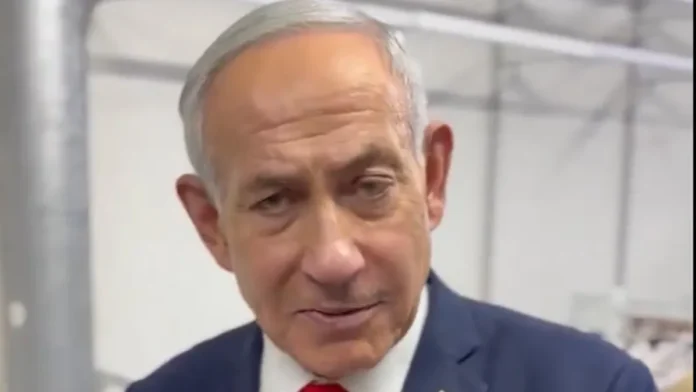
Israel’s election leaves Benjamin Netanyahu’s bloc eight seats short of a parliamentary majority. His Likud party has accused Arab-led parties of voter fraud, bribery and irregularities, but election officials say there is no basis for claims that the integrity of the vote was systematically compromised.
JERUSALEM, ISRAEL | October 30, 2026: Israeli Prime Minister Benjamin Netanyahu is facing a difficult political situation after his alliance failed to secure a majority in the country’s parliamentary election. The final results have given his bloc 53 seats in the 120-member Knesset, while Arab-led parties have secured a combined 19 seats — their strongest representation yet.
The election outcome has triggered a sharp political dispute. Netanyahu and his Likud party have alleged that Arab-led parties benefited from voter fraud, suspected bribery and irregularities at polling stations. The allegations have been strongly contested, while Israel’s Central Elections Committee has said there is no basis for claims of systematic damage to the integrity of the election.
The controversy has added another layer of uncertainty to coalition negotiations, with the country’s political parties now facing the challenge of assembling a government supported by at least 61 lawmakers.
60-Second Brief: What Happened?
- Netanyahu’s pro-government bloc secured 53 seats in the 120-member Knesset.
- The main opposition bloc won 48 seats.
- Arab-led parties secured a combined 19 seats.
- A minimum of 61 seats is required for a parliamentary majority.
- Likud accused Arab-led parties of vote theft and alleged irregularities at polling stations.
- Election officials said there was no basis for claims that the election’s integrity had been systematically compromised.
- Investigations into specific allegations and suspected foreign interference are continuing.
Why Is Netanyahu Challenging the Election Outcome?
Netanyahu’s Likud party has raised allegations of suspected election fraud following the strong performance of Arab-led political parties.
The party called for investigations by the police and Israel’s domestic intelligence agency, Shin Bet, into suspected bribery, intimidation and irregularities at polling stations in Arab towns. Likud said it had evidence of such activity, although the material had not been made public in the reporting available on October 30.
Netanyahu also alleged that Arab parties had effectively stolen votes. His claims have intensified the political debate over the role of Arab representatives in Israel’s next government.
It is important to distinguish between allegations and established findings. The claims made by Likud have not been publicly substantiated as evidence of widespread electoral fraud.
What Did Israel’s Central Elections Committee Say?
Israel’s Central Elections Committee has pushed back against claims that the election process was systematically compromised.
In a letter published by the committee, it said there was no basis for allegations of systematic harm to the integrity of the election. The committee also clarified that the investigation into suspected foreign interference would not affect the final election results or target any particular section of the population.
The committee’s position is significant because it separates inquiries into specific suspected incidents from allegations that the entire voting process was compromised.
Committee chairman and Supreme Court Justice Noam Sohlberg had asked the Shin Bet to investigate suspicions that unidentified foreign actors may have attempted to interfere in the election. However, he said he could not independently verify the claims.
The committee has sought the findings of the investigation, while officials have maintained that the inquiry should not be used to cast suspicion on voters as a community.
Police and Shin Bet Investigations: What Is Known?
Israeli police have reportedly arrested at least seven people since election day in the country’s south on suspicion of voter fraud.
Separately, the Shin Bet has been asked to investigate possible foreign interference. Likud alleged that Qatar was involved in the suspected interference, but Qatar denied the accusation.
The Shin Bet has stressed that its investigation concerns individuals and specific suspicions. It has cautioned against casting doubt on an entire community that exercised its democratic right to vote.
These investigations do not, by themselves, establish that the election results were manipulated. Their findings will be important in determining whether specific offences took place and whether any foreign actor attempted to influence the process.
Israel Election Results 2026: Who Won How Many Seats?
The final results published by the Central Elections Committee show the following distribution in the 120-member Knesset:
| Party | Seats |
|---|---|
| Likud | 27 |
| Yashar | 21 |
| B’Yachad | 12 |
| Joint List | 11 |
| The Democrats | 8 |
| Ra’am | 8 |
| Yisrael Beytenu | 7 |
| United Torah Judaism | 7 |
| Otzma Yehudit | 7 |
| Shas | 6 |
| Religious Zionism | 6 |
The broad political grouping leaves Netanyahu’s bloc with 53 seats, the main opposition bloc with 48 and Arab-led factions with 19. These are political bloc calculations, not separate official categories in the party-wise election results.
With 61 seats needed for a majority, Netanyahu’s bloc is eight seats short.
Why Are the 19 Arab-Party Seats So Important?
The combined 19 seats won by the Joint List and Ra’am have become central to the post-election political calculations.
Neither Netanyahu’s bloc nor the main opposition grouping has secured a majority independently. This means Arab-led parties could influence government formation, depending on the position taken by the other political groups.
However, winning seats does not automatically mean that Arab parties will join a governing coalition. Their participation, outside support or decision to remain independent will depend on negotiations and the positions of the other parties.
Netanyahu has publicly opposed forming a government with Arab parties. His stance has made the question of cooperation with Arab representatives a major issue in the negotiations.
Opposition Leaders Criticise Netanyahu’s Allegations
Arab political leaders have rejected Netanyahu’s accusations and described the campaign against them as an attempt to undermine their democratic participation.
Ahmad Tibi of the Joint List accused Netanyahu of trying to discourage opposition leader Gadi Eisenkot from seeking parliamentary support from Arab parties.
Ra’am leader Mansour Abbas also denied his party’s involvement in wrongdoing and called for a full investigation.
Eisenkot, meanwhile, said any investigation into possible election interference should proceed without political intervention. He accused Netanyahu and Likud of trying to delegitimise the election results.
President Isaac Herzog has also called for allegations to be investigated, while warning against tarnishing an entire community that participated in the democratic process.
What Happens Next?
The election has not yet produced a clear parliamentary majority, and negotiations between political parties are expected to continue.
The final results are due to be submitted to President Isaac Herzog on November 4 after checks and inquiries. The newly elected Knesset is scheduled to be sworn in on November 10.
The president will consult party representatives before assigning a candidate to form the next government. The candidate will need to secure sufficient parliamentary support.
For now, Netanyahu remains prime minister, but the election has left his bloc without the numbers required for a majority.
The Bottom Line
Israel’s election has created a political deadlock, with Netanyahu’s bloc at 53 seats, the opposition at 48 and Arab-led parties holding 19. The allegations of election fraud have intensified tensions, but election officials have said there is no basis for claims of systematic damage to the vote’s integrity.
The police and Shin Bet investigations may establish whether specific incidents occurred. Until then, allegations must remain allegations — not be treated as proof that the election was stolen. The immediate political question is whether any group can assemble the 61 seats needed to form Israel’s next government.