INVC NEWS | Rome, Italy | October 18, 2026
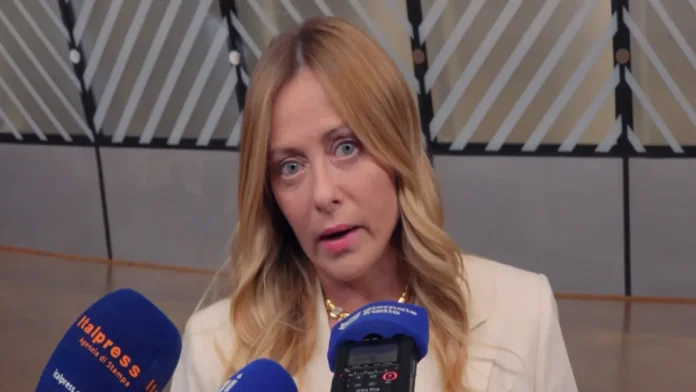
Italian Prime Minister Giorgia Meloni has condemned violence and vandalism during cost-of-living protests in several Italian cities, insisting that the right to demonstrate must not be used to justify attacks on police or damage to public property. Clashes erupted in Milan and Bologna on Saturday, October 17, as demonstrators protested rising prices, stagnant wages and concerns about public services.
Authorities reported widespread disruption, damaged storefronts and confrontations between protesters and law enforcement. In Milan, approximately 50 people were taken to police headquarters following the unrest, nearly half of them minors, according to Italian news agency ANSA. In Bologna, four minors were arrested on charges related to aggravated resistance, while other people were questioned or identified. Police also reported injuries among law enforcement personnel.
The demonstrations were organised under the banner of “Italia in Piazza” and drew students, young people, workers and other residents concerned about household costs and the condition of public services. While many participants marched peacefully, violence involving smaller groups overshadowed parts of the demonstrations.
Meloni responded by defending peaceful protest as a fundamental democratic right while urging opposition parties to condemn the violence unequivocally.
Meloni: Peaceful Protest Is a Right, Violence Is Not
In a statement posted on X, Meloni praised people who had participated in peaceful demonstrations, including those who joined events called by the CGIL trade union.
She stressed that the subject of a protest should not determine whether the right to participate is respected. Peaceful demonstrations, she said, are an essential part of a healthy democracy.
However, she drew a clear distinction between lawful political expression and attacks on public order.
“Demonstrating is a right. Setting our cities on fire is not,” was the message Meloni delivered in response to the unrest.
The prime minister said police officers had faced stone-throwing and other attacks in several cities. She also referred to property damage in Milan, the discovery of potentially dangerous objects in Turin and the precautionary closure of Bologna’s railway station amid disturbances.
Meloni called on opposition leaders to take an unambiguous position against violence, arguing that political disagreements should not become a justification for attacks on law enforcement or public property.
Her remarks placed pressure on opposition parties to distinguish their support for protesters’ economic demands from their response to the violence.
Milan Clashes Leave Storefronts Damaged
Milan was among the cities most seriously affected by Saturday’s unrest. The demonstration, organised by the Italia in Piazza committee, brought together people protesting against rising living costs, fuel prices, inadequate wages and the state of public services.
The gathering included students and young demonstrators, with thousands participating in the wider mobilisation.
Tensions escalated around Piazza del Duomo and nearby central streets. According to ANSA and Italian public broadcaster Rai News, groups of masked or hooded youths threw objects, damaged shop windows and used fireworks or explosive devices during confrontations with police.
Reports also described damage near a construction site and disturbances along central streets. Police intervened as some groups attempted to break through security lines.
Authorities took approximately 50 people to police headquarters following the disturbances, according to ANSA. Nearly half were minors, the agency reported. The precise legal status of each person was not the same, and being taken in for questioning should not automatically be interpreted as a formal arrest.
The incidents prompted renewed debate over how authorities should protect public safety while allowing peaceful demonstrations to continue.
Bologna Railway Station Becomes a Flashpoint
In Bologna, clashes were concentrated around Piazza Medaglie d’Oro, outside the city’s central railway station.
Rai News reported that groups of hooded youths threw stones, glass bottles, smoke bombs and metal barriers during confrontations with police and Carabinieri officers. Shared rental bicycles were also knocked over, while objects from nearby streets and construction areas were reportedly used during the unrest.
Law enforcement officers deployed riot-control measures, including water cannon and tear gas, to disperse groups and prevent them from advancing towards the station entrance.
The disruption forced authorities to restrict access to the area as the situation developed.
ANSA reported that four people, all minors, were arrested in Bologna on suspicion of aggravated resistance. Other individuals were reported as having been taken to police headquarters or identified for further investigation.
Italian media subsequently reported dozens of injured or affected law enforcement personnel in Bologna. The police figures included officers who required medical assessment as well as personnel reported to have suffered lesser injuries or contusions.
The incidents demonstrated how a demonstration focused on economic grievances can be disrupted when confrontations escalate, affecting commuters, businesses and other residents who are not directly involved in the protest.
Inflation, Low Wages and Public Services Fuel Anger
The protests were driven by concerns that household expenses are rising faster than many people can comfortably manage.
Participants raised issues including the cost of food, fuel and utilities, inadequate wages, public healthcare funding and conditions in state schools. Some demonstrators also criticised government priorities, arguing that more resources should go towards families and essential services.
Students and younger participants were prominent in the Italia in Piazza mobilisation, reflecting concerns about education, employment prospects and the affordability of everyday life.
The economic grievances are distinct from the violence that occurred in some locations. Acknowledging the reasons people protest does not mean endorsing attacks on police or damage to property. Equally, condemning violence does not resolve the underlying concerns about purchasing power and public services.
That distinction is central to the political debate now facing Italy’s government and opposition.
For Meloni, the immediate challenge is to respond to public disorder while addressing questions about living costs and the quality of essential services. For opposition parties, the demonstrations present an opportunity to press their economic criticisms while making clear their position on violence.
Protests in France Reflect Wider Cost-of-Living Concerns
Italy was not the only European country to experience unrest over economic pressures on October 17. France also saw large demonstrations against rising living costs, inequality and concerns about deteriorating public services.
According to reports by the Associated Press and other international news organisations, hundreds of thousands of people took part in demonstrations across France. While many marches were peaceful, confrontations, fires, looting and attacks on public buildings were reported in several cities.
French authorities reported arrests following the violence, although published figures varied as the situation developed and different reports were updated.
The demonstrations in France and Italy had their own national and local circumstances. However, both highlighted public frustration over prices, wages and the perceived quality of essential services.
The parallel protests also showed how economic grievances can draw together students, trade union members, workers and other groups with different political priorities.
What Happens Next?
The next steps in Italy will involve police investigations into the incidents, assessments of damage and decisions about possible charges against those detained or arrested.
The political response will also matter. Meloni has called for opposition parties to condemn the violence, while the demonstrations have brought economic grievances back into public debate.
Whether the unrest leads to changes in government policy will depend on the response to concerns about wages, fuel costs, healthcare and education, as well as the wider economic outlook.
Authorities will face the task of protecting public safety without restricting lawful peaceful assembly. Political leaders, meanwhile, will need to address the issues motivating demonstrators while maintaining a clear distinction between protest and violence.
The Bottom Line
Italy’s October 17 demonstrations began with demands over the cost of living, low wages and public services but were marred by clashes in Milan and Bologna. Approximately 50 people were taken to police headquarters in Milan, while four minors were arrested in Bologna, according to Italian media reports.
Meloni has defended the right to peaceful protest while condemning vandalism and attacks on police. The events underline a difficult balance for democratic governments: maintaining public order while responding to legitimate concerns about household costs and essential services.
The scale of the damage and the arrests will shape the immediate legal response. The longer-term political question is whether the concerns raised in the streets translate into substantive action on wages, living costs and public services.