Baghdad wants a more dependable path to global buyers. The challenge is turning its Mediterranean pipeline option into a stronger export lifeline.
By Team INVC | INVC NEWS
ANKARA, Turkiye | October 3, 2026 — Iraq has oil to sell. The harder question is how to keep it moving when conflict disrupts the waters connecting its export terminals to global markets. Now, Iraq Turkiye energy talks are putting a northern alternative at the center of a broader partnership. Negotiations opened in Ankara on Friday, with a pipeline to the Mediterranean offering Baghdad something the Hormuz crisis has made increasingly valuable: another way out.
The stakes reach beyond Iraq’s borders. For buyers, dependable export routes mean more predictable deliveries. For Baghdad, they help protect the income that oil shipments generate.
A Pipeline Becomes a Strategic Priority
Iraqi Oil Minister Bassem Mohammed Khudair Al-Abadi and Turkish Energy and Natural Resources Minister Alparslan Bayraktar opened negotiations on a framework covering oil, gas and energy cooperation.
Iraq’s Oil Ministry said the proposed roadmap includes infrastructure, petrochemicals and energy trade. Officials also examined how the countries would coordinate their work.
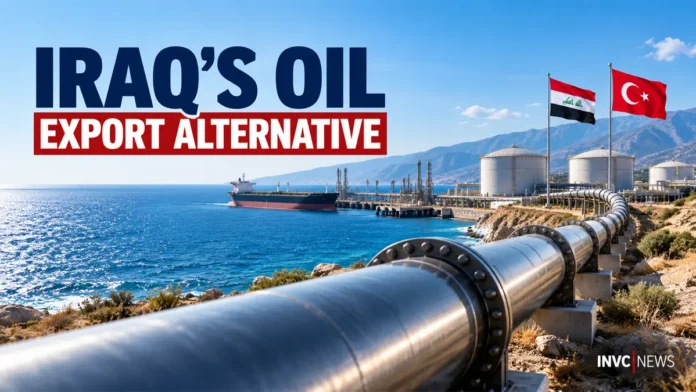
At the heart of the export discussion sits the Kirkuk–Ceyhan pipeline. It links northern Iraq to Turkiye’s Mediterranean coast, giving crude transported through it access to international buyers without crossing the Strait of Hormuz.
That makes the route more than a commercial connection. It gives Baghdad an option when Gulf shipping becomes dangerous, expensive or unpredictable.
The Ambition Extends South Toward Basra
Bayraktar identified a possible extension toward Basra and increased pipeline capacity as important to building a stronger alternative to Gulf export routes.
The significance is straightforward: extending the network could connect more Iraqi oil to the Mediterranean corridor.
However, that remains a proposed direction. Friday’s talks did not announce a completed extension, construction schedule or approved financing package.
The countries must still translate the strategic ambition into infrastructure and commercial commitments.
The Number That Matters: Actual Barrels Delivered
A one-year arrangement announced in August brought together Turkiye’s BOTAS and Iraq’s SOMO and North Oil Company while negotiations continued on a wider agreement.
Bayraktar described that arrangement as covering daily transit capacity of 750,000 barrels. Turkish figures at the time put actual pipeline flows at approximately 170,000 barrels a day.
That gap captures the central challenge.
Capacity creates an opportunity. Sustained throughput delivers the benefit.
Consequently, the most meaningful measure of progress will be the volume of crude that reliably reaches Ceyhan—not simply the scale of the agreement announced.
Iraq’s Exports Are Recovering. So Why Push Now?
Because recovery does not remove the vulnerability that the crisis exposed.
September reporting showed Iraqi exports improving substantially from earlier disruption. Iraqi energy officials put August exports at approximately 2.34 million barrels a day, compared with about 1.35 million in July.
Later, Basra Oil Company chief Bassem Abdul Karim reported southern exports of approximately 2.6 million barrels a day during September.
Those figures cover different periods and export measures, but they show why describing Iraq’s exports as still more than 80% below previous levels would give readers an outdated picture.
The stronger story is what Baghdad does after the initial shock: build alternatives before another disruption forces its hand.
Why This Matters Beyond Baghdad and Ankara
For oil buyers, the attraction is greater delivery flexibility. A stronger Mediterranean corridor could offer another sourcing route when shipping conditions in the Gulf deteriorate.
For Turkiye, additional transit strengthens Ceyhan’s role in regional energy trade.
Meanwhile, Iraq wants cooperation that extends beyond moving crude. The proposed framework includes gas, refining and petrochemicals, opening the possibility of a broader industrial partnership.
The talks alone do not guarantee cheaper fuel or an immediate increase in global supply. Those outcomes depend on the agreement, its implementation and the wider market.
Nevertheless, the direction is clear: both countries want infrastructure to give them more control over how energy reaches customers.
The Next Headline Must Be About Delivery
Negotiators now face the practical questions: which projects move first, who funds them, how much capacity becomes available and when additional oil can flow.
A signed framework would mark progress. Reliable shipments would demonstrate its value.
Iraq’s challenge is to ensure that the next shipping crisis meets a stronger export network. The Ankara talks could help build it—but the decisive result will arrive in barrels delivered to market.