Tehran , August 14, 2026
Iran-US war tensions could persist until President Donald Trump leaves office in January 2029, according to a senior adviser to Iran’s Islamic Revolutionary Guard Corps, as Washington signals that it is prepared to maintain military and economic pressure on Tehran.
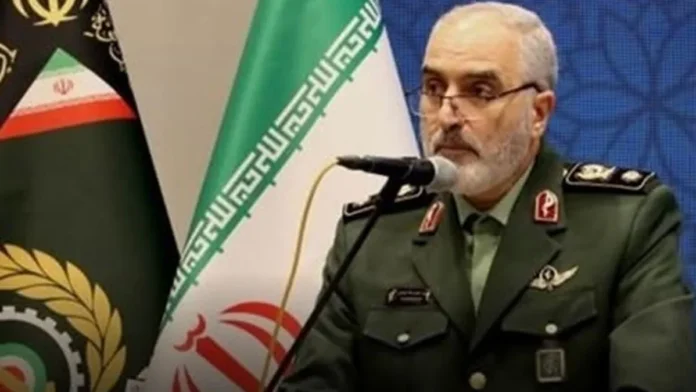
Brig. Gen. Mohammad Reza Naghdi, a senior adviser to the IRGC commander, presented prolonging the conflict as one possible Iranian strategy rather than announcing a formal military timetable.
Speaking in a televised interview, Naghdi argued that Iran must create conditions that discourage its adversaries from launching future attacks. He said extending the conflict while inflicting mounting costs could be one way to strengthen Iran’s deterrence.
Trump’s current presidential term is scheduled to end on January 20, 2029. Naghdi’s remarks therefore suggest that Tehran believes it could withstand a prolonged confrontation lasting approximately two-and-a-half more years.
His comments do not establish that Iran has formally decided to continue fighting until that date. They nevertheless underline how far apart Washington and Tehran remain nearly six months after US-Israeli strikes on Iran began on February 28.
What Is the Current US Position on Iran?
The Trump administration is combining military pressure, restrictions on Iranian shipping and additional economic measures while continuing to leave open the possibility of negotiations.
US Defense Secretary Pete Hegseth said Washington has the resources to maintain its naval blockade around Iranian ports for an indefinite period by rotating vessels and personnel. The administration is also preparing further financial pressure intended to reduce Tehran’s ability to fund military operations and export energy. The United States says its naval posture can be sustained indefinitely.
Trump has described two broad options: allowing continued economic pressure to weaken Iran or ordering substantially heavier military action. His public comments indicate that Washington is seeking greater leverage at the negotiating table while keeping the threat of escalation in place. Trump outlined the administration’s latest options for dealing with Tehran.
The original US campaign was presented by the White House as an operation targeting Iran’s nuclear capabilities, ballistic-missile infrastructure, naval forces and regional armed networks. The White House described its objectives when the operation began.
The administration has not publicly endorsed Naghdi’s proposed timeline. Its current position instead suggests that pressure will continue until Tehran accepts terms addressing Washington’s nuclear, missile and regional-security demands.
Strait of Hormuz Remains a Major Flashpoint
The Strait of Hormuz remains one of the most dangerous pressure points in the Iran-US war. The waterway is crucial to international oil and liquefied natural gas shipments, making any disruption a threat to energy supplies and prices far beyond West Asia.
Iran and the United States have issued competing claims about control of the strait. Tehran maintains that vessels cannot operate there without Iranian authorization, while Washington says its naval deployment is protecting passage for non-Iranian shipping.
A short-lived interim ceasefire failed to produce a lasting settlement, and military operations subsequently resumed. Continued attacks on vessels, restrictions around Iranian ports and competing naval operations have kept the risk of a broader regional confrontation elevated.
Gaza Diplomacy Continues Alongside the Iran Conflict
Diplomatic efforts concerning Gaza are continuing even as the Iran conflict strains US military and political resources across West Asia.
Jared Kushner, Trump’s son-in-law and adviser, is expected to travel to Israel and Egypt for discussions on the Gaza peace framework. Former UN diplomat Nickolay Mladenov and former British Prime Minister Tony Blair are also expected to participate in the diplomatic effort.
The delegation is due to visit Israel before holding discussions in Cairo with regional mediators and officials involved in proposed arrangements for Gaza’s future administration. The planned meetings are intended to advance the US-backed Gaza framework.
The plan calls for Hamas and other armed groups to disarm, Israeli forces to withdraw in stages and a Palestinian technocratic administration to oversee Gaza’s reconstruction. An international stabilization force and a newly trained Palestinian police service are also envisioned.
Hamas has indicated conditional support for parts of the framework, but disagreements remain over the sequence and terms of disarmament. Israeli Prime Minister Benjamin Netanyahu has said Israeli forces will not withdraw until Hamas has been fully disarmed.
The US-backed roadmap therefore remains active, but its implementation is stalled by disagreements over verification, weapons decommissioning and the timing of an Israeli withdrawal. Negotiations continue despite the unresolved conditions.
Report Says US Has Lost at Least 45 Reaper Drones
The military cost of the Iran-US war is also coming under greater scrutiny.
The United States has reportedly lost at least 45 MQ-9 Reaper drones during the conflict, equivalent to approximately one-quarter of its fleet. The estimate is based on information attributed to three unnamed US officials and has not been accompanied by a complete public Pentagon inventory.
The potential replacement cost exceeds $1.3 billion because an MQ-9 equipped with advanced sensors and weapons can cost between $30 million and $50 million. The reported losses include drones destroyed or lost during operations.
Not every aircraft was necessarily shot down. Some reportedly crashed after communication links failed, highlighting the operational difficulty of conducting sustained unmanned missions in heavily contested airspace.
The MQ-9 is used for surveillance, intelligence collection and precision strikes. Losing a substantial portion of the fleet could affect deployment planning, replacement costs and the availability of aircraft for operations in other regions.
Could the War Really Continue Until 2029?
Naghdi’s statement should be viewed as a strategic warning, not a confirmed end date for the conflict.
Iran may be attempting to convince Washington that military and economic pressure will not produce a rapid surrender. Extending the war could also impose financial, equipment and political costs on the United States.
However, Iran would face significant costs of its own, including damaged infrastructure, constrained energy exports, economic pressure and the possibility of heavier US strikes.
A prolonged conflict would also increase risks for neighboring countries, commercial shipping and global energy markets. Accidental escalation, attacks by allied armed groups or a miscalculation in the Strait of Hormuz could widen the confrontation.
For now, the United States appears committed to sustained pressure, while Iran is signaling that it is prepared for a long struggle. Whether that posture produces negotiations or further escalation will depend on ceasefire diplomacy, maritime security and the willingness of both governments to compromise.