INVC NEWS | Baghdad, Iraq | October 18, 2026
Iran is prepared to negotiate with the United States but will not surrender its sovereign rights under pressure, Iranian Foreign Minister Abbas Araghchi said in Baghdad, linking Tehran’s willingness to pursue diplomacy to what he described as mutual respect and credible guarantees against renewed attacks.
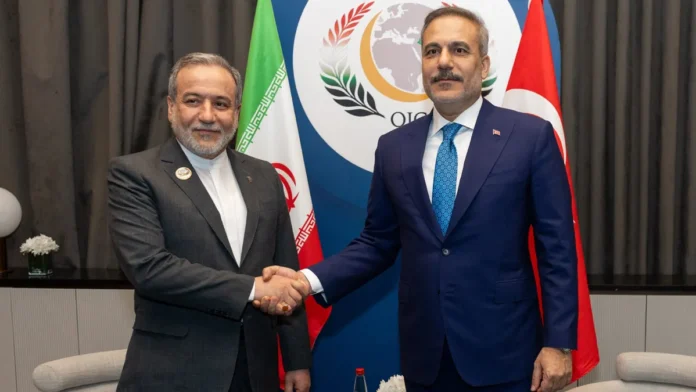
Speaking on Saturday at the 52nd session of the Council of Foreign Ministers of the Organization of Islamic Cooperation (OIC), Araghchi also said Iran had conveyed a seven-day proposal to Washington through Qatar that could allow normal maritime traffic to resume through the strategically important Strait of Hormuz, provided the necessary conditions were met.
“The choice now rests with the United States,” Araghchi said, according to reports of his remarks.
His comments come as efforts to resolve the conflict and restore normal shipping through the strait remain stalled. The waterway is a critical route for international energy shipments, making its security a concern for oil markets, global trade and economies that rely on imported fuel.
Araghchi’s statement presented two central messages: Tehran says it remains open to diplomacy, but it rejects negotiations conducted under military pressure and wants assurances that any agreement will not be followed by renewed attacks.
Iran Rejects Negotiations Under Pressure
Araghchi said Iran would not accept coercion, threats or intimidation and would continue to defend its people, sovereignty and legitimate interests.
He argued that protecting Iran’s rights did not conflict with pursuing peace. However, he said renewed negotiations would require credible guarantees that military action against Iran would not resume.
The Iranian foreign minister also referred to the damage caused by the conflict, presenting it as a reason to pursue a diplomatic settlement rather than continue hostilities.
Tehran’s position reflects deep mistrust between the two sides after military confrontation and unsuccessful efforts to establish a lasting agreement. Iran has argued that previous diplomatic efforts were followed by attacks, making assurances about future security central to any new negotiations.
The United States has its own demands, including concerns over Iran’s nuclear programme and regional security. The two sides have therefore faced difficulty agreeing on the sequence of steps needed to restore confidence and reach a broader settlement.
Araghchi’s remarks did not establish that a new agreement had been reached. Instead, they outlined Iran’s stated conditions for further diplomacy and placed responsibility for the next step on Washington.
Seven-Day Plan Could Reopen the Strait of Hormuz
A major element of Araghchi’s statement was Iran’s proposal to restore normal maritime passage through the Strait of Hormuz within seven days.
He said Tehran had sent a concrete plan to the United States through Qatar, which has acted as an intermediary in communications between the two countries. According to Iranian accounts of the proposal, implementation would depend on Washington meeting the necessary conditions.
The seven-day period would not automatically begin with the announcement of the proposal. Araghchi said the timeline would start once the United States accepted the plan and the required steps were taken.
The proposal is significant because disruptions in the strait have affected international shipping and raised concerns about energy supplies. The route connects the Persian Gulf with the Gulf of Oman and the wider Arabian Sea, making it an important passage for oil, liquefied natural gas and other commercial cargoes.
Any sustained disruption can increase shipping costs, complicate delivery schedules and intensify uncertainty in energy markets. Countries that depend on imported oil and gas may face additional economic pressure if supply risks persist.
However, Iran’s announcement should not be interpreted as confirmation that the strait has reopened or that normal shipping has been restored. The proposal remains conditional on agreement and implementation.
Tehran Says Regional Security Should Be Managed by Regional Countries
Araghchi also argued that countries in the region should work together to resolve their security problems rather than rely on outside powers.
He said the territory, airspace and infrastructure of regional countries should not be used as platforms for attacks against neighbouring states.
Iran has maintained that its military actions targeted U.S. military installations and facilities in the region rather than neighbouring countries themselves. That is Tehran’s account of its operations; the conflict has involved wider regional security concerns and disputes over attacks on military and civilian locations.
Araghchi said no country could achieve lasting security at the expense of the security of others. He called for regional cooperation as a way to reduce the risk of further conflict and prevent outside powers from using regional disputes as a justification for military intervention.
The argument places regional diplomacy at the centre of Iran’s stated approach. But reaching a workable regional security arrangement would require agreement among countries with different threat perceptions, alliances and strategic interests.
For Gulf states, the priority includes protecting territory, energy infrastructure and maritime routes. For Iran, the issues include foreign military deployments, sanctions and assurances against further attacks. Bridging those differences remains a major diplomatic challenge.
How the Conflict and Earlier Agreement Reached an Impasse
The latest diplomatic effort follows the conflict that began with U.S. and Israeli strikes against Iran on February 28, 2026. Iran responded with missile and drone attacks against Israel and U.S. military assets in the region, while the confrontation disrupted security around the Strait of Hormuz.
A ceasefire took effect on April 8, but it did not resolve the underlying disputes. Further diplomatic efforts culminated in a memorandum of understanding between Washington and Tehran in June.
The memorandum was intended to establish a 60-day period for negotiations on a broader agreement, including Iran’s nuclear programme, sanctions and maritime navigation. The deadline passed on August 17 without a final settlement.
The two sides continued to disagree over the terms and sequencing of the proposed arrangements, including the conditions required to restore normal maritime traffic and move towards a wider agreement.
The failure to reach a comprehensive deal has left major questions unresolved. These include the future of Iran’s nuclear programme, the scope of sanctions relief, security guarantees and the arrangements governing access to the Strait of Hormuz.
Araghchi’s latest proposal seeks to create a possible route towards restoring shipping and restarting diplomacy, but its prospects depend on whether Washington and Tehran can agree on the conditions.
Why the Strait Matters to the Global Economy
The Strait of Hormuz is one of the world’s most important energy transit routes. Significant volumes of oil and liquefied natural gas pass through the narrow waterway, linking major Gulf producers with international markets.
When shipping becomes uncertain, the effects can extend beyond the immediate region. Higher insurance premiums, longer routes and concerns about supply interruptions can affect energy prices and freight costs. Those increases can then feed into transport, manufacturing and household expenses.
For major energy importers, including countries across Asia, reliable passage through the strait is particularly important. A prolonged disruption could complicate energy planning and increase exposure to price volatility.
Restoring safe and predictable maritime traffic would therefore have implications well beyond Iran and the United States. But a durable reopening would require more than a public declaration: it would depend on agreed terms, implementation and sufficient confidence among governments and shipping operators that vessels could transit safely.
What Happens Next?
The immediate question is whether Washington will accept the conditions attached to Iran’s seven-day proposal and whether the two governments can agree on a practical sequence of steps.
Even if the maritime issue moves forward, a broader settlement would require further negotiations over the nuclear programme, sanctions and security arrangements. The missed deadline for the June memorandum illustrates how difficult it has been to turn diplomatic commitments into a lasting agreement.
Regional governments and international markets will also be watching for evidence that shipping conditions are improving and that any arrangement can be sustained.
The Bottom Line: Araghchi says Iran is willing to negotiate with the United States on the basis of mutual respect and credible guarantees, while refusing to give up its sovereign rights under pressure. His seven-day proposal offers a possible path towards restoring normal passage through the Strait of Hormuz, but the plan remains conditional. Whether it leads to renewed diplomacy or further deadlock depends on the next decisions by Washington and Tehran.