MUMBAI | August 11, 2026, 9:25 a.m. IST
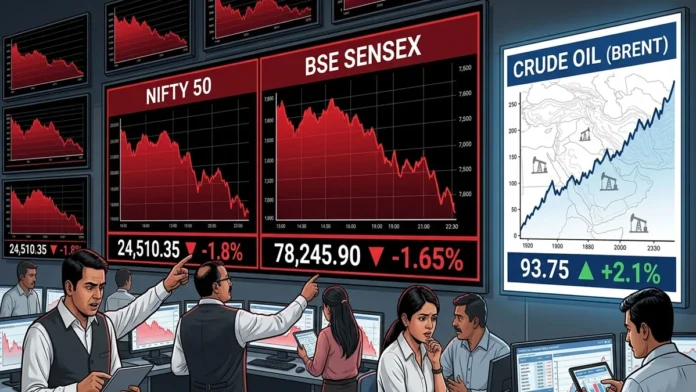
Indian stock market today opened sharply lower as rising oil prices and geopolitical tensions weakened investor sentiment. The Sensex dropped around 300 points, while the Nifty hovered near the important 24,500 level.
Selling pressure emerged immediately after trading began on Tuesday. Moreover, concerns surrounding escalating tensions in the Middle East pushed investors toward a more cautious approach.
Bharti Airtel and InterGlobe Aviation, which operates IndiGo, were among the prominent early laggards. Their declines added pressure to the broader benchmark indices.
How Much Did Sensex and Nifty Fall?
At approximately 9:25 a.m. IST, the BSE Sensex traded 297.45 points lower at 78,244.99.
The decline represented a fall of 0.37% from Monday’s closing level of 78,542.44.
Meanwhile, the NSE Nifty 50 declined 83.75 points to 24,500.05. The index was down approximately 0.34%.
The Nifty briefly tested the psychologically important 24,500 zone. Therefore, traders closely monitored whether the index could maintain that support level.
| Benchmark | Early level | Point change | Percentage change |
|---|---|---|---|
| BSE Sensex | 78,244.99 | -297.45 | -0.37% |
| NSE Nifty 50 | 24,500.05 | -83.75 | -0.34% |
These figures represent an early trading snapshot. Consequently, index levels may change substantially during the remaining session.
Why Did the Indian Stock Market Fall?
Two primary factors influenced Tuesday’s weak opening. Rising global oil prices created the first major concern.
India imports most of its crude oil requirements. Therefore, sustained price increases can raise the country’s import bill and pressure the rupee.
Higher crude prices can also increase inflationary risks. Additionally, companies dependent on fuel and transportation may face rising operating expenses.
The second major factor involved worsening geopolitical tensions across the Middle East.
Fresh uncertainty surrounding the region raised concerns about global energy supplies and shipping routes. Consequently, investors reduced exposure to risk-sensitive stocks during early trading.
How Rising Oil Prices Affect Indian Markets
Rising crude oil prices can affect Indian equities through several economic channels.
First, expensive oil increases costs for aviation, logistics, chemicals, paints, and manufacturing companies. Businesses may struggle to transfer those expenses entirely to consumers.
Second, a larger import bill can widen India’s current-account deficit. Moreover, increased dollar demand may place additional pressure on the rupee.
Third, higher fuel costs can push consumer inflation upward. Persistent inflation may influence future monetary policy and household spending.
Therefore, the market often reacts negatively when oil prices rise rapidly during geopolitical uncertainty.
However, higher energy prices can benefit certain oil producers and related companies. The broader effect varies according to each company’s business model.
Bharti Airtel and IndiGo Face Selling Pressure
Bharti Airtel and IndiGo were among the stocks placing pressure on the indices during early trade.
IndiGo remains particularly sensitive to changes in aviation turbine fuel prices. Fuel represents a significant operating expense for airlines.
Therefore, rising crude prices can create concerns about future costs and profit margins. However, the eventual impact depends on fuel prices, fares, and passenger demand.
Bharti Airtel also witnessed early selling pressure. Nevertheless, the available opening data did not establish a specific company announcement behind the decline.
Investors should avoid attributing every intraday movement to a single event without confirmed corporate information.
Why Middle East Tensions Matter for Investors
The Middle East remains central to global crude oil and liquefied natural gas supplies.
Any disruption near major production centers or shipping routes can affect energy prices worldwide. Additionally, conflict can raise freight costs and insurance premiums.
Foreign investors may also reduce exposure to emerging markets during heightened uncertainty. Such withdrawals can pressure equities and national currencies.
Therefore, developments in the region could continue influencing Indian markets, oil prices, and the rupee.
What Should Investors Monitor Today?
Investors may track several factors during the remaining session.
- Movements in international crude oil prices
- Developments involving Middle East security
- The Nifty’s behavior around 24,500
- Selling pressure in heavyweight index stocks
- Foreign and domestic institutional activity
- Movement in the rupee against the US dollar
Live benchmark information remains available through the BSE and National Stock Exchange.
Market Outlook
Tuesday’s decline reflects immediate concerns about energy prices and geopolitical risks. However, an early fall does not necessarily determine the market’s closing direction.
Oil prices, global markets, institutional flows, and domestic corporate developments could alter sentiment during the session.
The 24,500 level may remain an important reference point for the Nifty. Meanwhile, the Sensex could experience further volatility around its opening range.
Investors should evaluate decisions according to their financial goals and risk tolerance. This report provides market information and does not constitute investment advice.