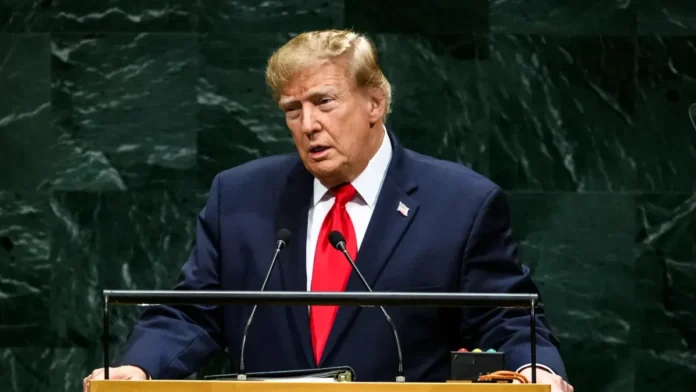
Students, teachers and parents have rallied over staffing shortages and deteriorating classrooms. Trump’s claim about migration and religion offers a different explanation without establishing a connection to those demands.
By Team INVC | INVC NEWS
Published: October 7, 2026 | 10 : 03 AM IST
PARIS, France | October 7, 2026 —
France school protests have become the subject of an international political controversy after U.S. President Donald Trump linked the unrest to immigration and Islam. His remarks followed nationwide demonstrations on Tuesday over inadequate education resources. For readers trying to understand the crisis, the central distinction matters: protesters have described problems with teachers, classrooms and school funding, while Trump has advanced a religious explanation that the reported demands do not support.
INVC NEWS | BEYOND THE HEADLINE
THE 60-SECOND BRIEF
- Students, teachers and parents joined nationwide demonstrations on October 6.
- Complaints include staffing shortages, overcrowding and deteriorating school facilities.
- Trump attributed the unrest to mass migration and Islam in a Truth Social post.
- Government and protest organizations have offered different estimates of participation and school disruption.
What Trump said
In his Tuesday post, Trump rejected education as the explanation for the demonstrations. He instead attributed events to uncontrolled mass migration and claimed Islam wanted to take over France.
Moneycontrol reported the statement and contrasted it with participants’ concerns about school conditions. The post did not supply evidence establishing the alleged connection between the movement and a religious takeover.
Trump’s characterization therefore remains his political claim. It does not establish the identity, motives or demands of everyone participating in the protests.
What brought people into the streets
Reporting from France describes an education-centered movement that began in September and expanded beyond its initial student participants.
Teacher shortages, inadequate resources and deteriorating buildings feature prominently in the complaints. Parents and educators have joined students, giving the demonstrations a wider social base.
These grievances concern access to functioning public education. They are distinct from an immigration-policy campaign or a religious movement.
Reuters explicitly reported that students’ demands focus on understaffing and funding rather than religion or migration. That distinction provides the clearest answer to why Trump’s comments have drawn scrutiny.
More than 250,000 participated—but estimates differ
The Associated Press reported that France’s Interior Ministry counted 266,000 demonstrators nationwide on Tuesday, including 56,000 in Paris.
Organizers offered a higher national estimate of approximately 450,000, according to Reuters.
Both figures should retain their attribution. Neither should become an undisputed count.
The same principle applies to school disruption. AP cited the Education Ministry’s figure of 891 schools with classes fully or partially suspended. Meanwhile, student organizations reported a substantially larger number of affected schools.
A school blockade, an administrative closure and a partial suspension describe different conditions. Consequently, readers should avoid treating competing estimates as directly comparable without knowing what each count includes.
Peaceful marches and violent incidents require separate attention
The demonstrations included large peaceful gatherings. However, clashes, fires and police interventions also occurred in some locations.
Those incidents matter because they threaten safety and can disrupt education further. Nevertheless, footage of violence cannot establish the motives of an entire national movement.
Similarly, a peaceful march does not erase violence elsewhere. A factual account must describe both without assigning collective responsibility to students, migrants or a religious community.
The authorities’ handling of demonstrations has also become a point of contention. Allegations about excessive force require investigation, just as allegations about attacks on police or damage to schools require evidence.
Why did Trump make the statement?
His post shows that he chose to interpret the unrest through immigration and religion. It does not explain what evidence he relied on or establish a private political motive.
The available reporting cannot determine whether electoral considerations, diplomatic positioning or another calculation prompted the remarks.
For that reason, an explanation of the controversy should focus on the observable difference between his statement and protesters’ documented concerns. Speculation about motive would add certainty the evidence does not provide.
Why the distinction matters
The explanation attached to a protest influences how people understand the possible response.
An education dispute calls attention to staffing, facilities and resources. A claim about religious takeover redirects attention toward a community and away from those practical demands.
For families affected by interrupted lessons, the immediate questions remain concrete: how authorities will address school conditions, how students can demonstrate safely and when regular teaching can resume.
Readers sharing this story should preserve that context alongside Trump’s remarks. The claim attracted international attention, but the education grievances explain what participants say brought them into the streets.